America’s most historic attractions in their heyday

Slide 1 of 39: Step back in time for a nostalgic tour around the USA. From bridges to dams, monuments to boardwalks, we've dug around the archives to find historic images of America’s greatest-ever tourist spots.

Slide 2 of 39: Thanks to its sandy beach and Atlantic Ocean views, Coney Island became a hot spot for New Yorkers in the early 1900s. And those looking to escape the city's hustle and bustle were helped by the expansion of the railroad to the southern part of Brooklyn. Luna Park was one of the many amusements and rides that sprung up, opening in 1903, with the boardwalk added in the early 1920s.
Slide 3 of 39: Due to a fire in 1944 Luna Park closed permanently. However other rides and attractions remained, with the New York Aquarium, first opened in the 1950s, remaining a big draw for families. Pictured here are some daring holidaymakers in 1946.

Slide 4 of 39: Today Deno’s Wonder Wheel is still twirling amid the sticky smell of cotton candy and legendary Nathan's hot dogs. Bigger and faster attractions have risen up all around it, but it’s this creakily low-tech family-run Ferris wheel that makes the memories.

Slide 5 of 39: Measuring an impressive 746 feet high (above the water) and 4,200 feet long (the distance between the towers), San Francisco’s Golden Gate Bridge is one of America’s top-visited attractions, and it’s easy to see why. On top of being an architectural feat, it also defied critics at the time, who believed building a bridge across the windy straight to the Pacific would be impossible.
Slide 6 of 39: Golden Gate Bridge opened to the public on 27 May 1937. Celebrations lasted for a week and amassed more than 200,000 foot passengers (some even wore roller skates). At the time, it was the longest and tallest suspension bridge in the world. Here the bridge is pictured in the early 1950s.

Slide 7 of 39: Today, the Golden Gate Bridge is one of the most Instagrammed places in San Francisco, and one of the most photographed bridges in the world, attracting more than nine million visitors a year.

Slide 8 of 39: Built by local businessman Fred Swanton, the Santa Cruz Beach Boardwalk opened in 1907 and is still every bit as popular today as it was in its heyday. Here, Santa Cruz’s annual Easter Egg Hunt is in full swing in the Eighties, but these events were later canceled as they became too popular.
Slide 9 of 39: Boasting more than 40 attractions including restaurants, bars, roller coasters, and even a pier, this Boardwalk receives its fair share of visitors. As the oldest theme park in California, it’s loved by locals and tourists alike.

Slide 10 of 39: Today, the Boardwalk employs over 1,600 staff and hosts a number of yearly events including the annual Clam Chowder Cook Off every February – not to be missed.

Slide 11 of 39: New York’s iconic 103-story Art Deco skyscraper is one of the city's most-visited landmarks. Construction was completed in 1931, taking just one year and 45 days to build. It was the world’s tallest building up until the 1970s.

Slide 12 of 39: While its construction garnered much publicity and fanfare at the time, it remained relatively empty and unvisited until the 1950s. By 1976, the Empire State Building Observatory had welcomed its 50 millionth visitor.
Slide 13 of 39: Today, more than four million visitors from around the world visit the Empire State Building’s 86th and 102nd floor observatories each year. Soaring more than a quarter of a mile above Manhattan, it’s easy to see why.
Slide 14 of 39: Located on the border of Nevada and Arizona to the southeast of Las Vegas, the Boulder Dam was constructed between 1931 and 1936, during the Great Depression. It was officially renamed the Hoover Dam by the then-president, Herbert Hoover, in 1947.

Slide 15 of 39: The Hoover Dam opened for tours in 1937, but this was suspended during the Second World War. It consequently reopened after the war (pictured here in 1948) with tourism hitting 448,000 by 1953. In 1995, a new visitors center was built and the annual number of tourists hit a peak.

Slide 16 of 39: While the Hoover Dam still attracts thousands of visitors a year, it’s reported that numbers are beginning to dwindle, perhaps due to the Hoover Dam bypass bridge, which opened in 2010.
© superjoseph/Shutterstock

Why Finland Is Consistently the Happiest Country on Earth

a boat is docked next to a body of water: Jetty on a sunny summer day neat Helsinki, Finland

If you’re feeling low, it may be time to book a trip to Finland.

The results of the seventh annual World Happiness Report have revealed that residents of Finland are the happiest in the world — for the second year in a row. But it’s not something inherent in Finnish DNA, according to the researchers.

“It’s true that last year all Finns were happier than rest of the countries’ residents, but their immigrants were also happiest immigrants in the world,” John Helliwell, co-editor of the report and a professor of economics at the University of British Columbia, told CNN. “It’s not about Finnish DNA. It’s the way life is lived in those countries.”

And that same sentiment can be extended to countries geographically near Finland. Despite winters without much sunlight, Scandinavian residents are the happiest in the world, according to this report. The following most happy countries were Denmark, Norway, Iceland and The Netherlands.

The report, which is produced by the United Nations Sustainable Development Solutions Network, ranks 156 countries around the globe based off of “how happy their citizens perceive themselves to be.” Categories considered include wealth, life expectancy, social support, freedom to make life decisions and levels of government corruption.

While Scandinavia may have reason to celebrate, the rest of the world is not so happy. According to the report, world happiness has fallen in recent years, largely driven by a significant decrease in India. Emotions like worry, sadness and anger have increased throughout Asia and Africa in that same time.

The U.S.’s ranking in the survey slipped from 18 to 19, which researcher credit in large part to rampant “compulsive pursuit of substance abuse and addictive behaviors,” including consumption of digital media and gambling.

“We are living a moment of transition to a new age and this generates a sense of uncertainty,” Andrea Illy, Chairman of illycaffè and Member of the Board of Fondazione Ernesto Illy, which co-sponsored the study, said in a statement. “Social happiness is therefore even more relevant, in order to give a positive perspective and outlook for the present and for the future.”

3 Los Angeles Neighborhoods Worth Exploring

a large body of water with a city in the background: Los Angeles, California, USA downtown cityscape at sunny day (Photo via choness / iStock / Getty Images Plus)

We all know Hollywood, Santa Monica and Downtown LA, but there are so many areas in Los Angeles worth exploring, and you probably haven’t heard of half of them unless you live there. Even then, the city is so vast, you could probably dine somewhere new every day for years and still not traverse the whole City of Angels.

Below are three parts of town we think deserve a shout out either for their walkability, diversity, food and beverage options or all of the above. Next time you head west, make sure you take a day—or at least a few hours—to tour these neighborhoods. They’ll 100 percent win you over.

Encino

In LA’s San Fernando Valley, there’s a place called Encino. You may have never heard of it or if you have, there’s a chance you know it as the land of the strip mall. There’s actually quite a bit you can do here, though. From escape rooms and the Getty Center to Lake Balboa and even a Japanese Garden, there are many things to do that are family-friendly and chock-full of local culture.

There is also a little hidden gem here called Scratch Bar & Kitchen, which really makes Encino special and worth visiting. Located on the second story of an unassuming shopping center, Scratch boasts a 20+ course tasting menu with wine pairings and possibly the coolest and most down to earth chefs, bartenders and kitchen staff in all of LA.

Dinner starts at the bar and then moves to either bar seating or tables overlooking an open kitchen. It’s truly an experience worth writing home about and one you’ll want to experience again and again.

Next door to Scratch is Woodley Proper, the restaurant’s sister bar. If you’re looking for a very elevated experience and want to get out of town for a couple of days, head to Scratch’s newest concept in Montecito, the exciting (and pricey) fine-dining establishment, Silver Bough.

Highland Park

A neighborhood (like much of LA) that gets its culture, food, street art and more from its Latin roots is teeming with things to do as many shops and restaurants either pick up and move to Highland Park or open second outposts of their already existing and successful stores there.

There are plenty of coffee shops in the area (Civil Coffee, Cafe de Leche, Kindness & Mischief Coffee to name a few), artisanal stores that sell every perfume, oil, smudge stick and greeting card you could ever want or need and delicious restaurants and bars (can’t-miss the Moroccan-spiced fried chicken at Cafe Birdie or house cocktails like the One Way Ticket at Good Housekeeping).

Park your car here and plan to explore the area on foot. The first ever Forever 21 (since 1984) is here, as is Highland Park Bowl, which was renovated a few years back and has kept some original fixtures, for a throwback day or night of bowling with pizza and beer you won’t soon forget.

If you want pastries, there’s Mr. Holmes Bakehouse—be sure to visit early before your favorites sell out—and Silverlake Wine when you need to pick up a bottle. Dog lovers can visit Rosie Bunny Bean for treats, toys and personalized dog tags and music lovers will rejoice at Gimme Gimme Records.

Possibilities are endless here, with food trucks parked in the area regularly and Block Partyto satisfy all your beer and frozen drink cravings. On a nice day (who are we kidding, they’re all nice days in Cali!) head to the backyard, have a snack and some drinks and stick around a while. There is nothing like a Los Angeles sunset with a drink in hand and great company to share it all with.

Los Feliz

Sandwiched between Atwater Village, Silver Lake and East Hollywood, this neighborhood is also walkable and a great place for date night, girls’ night or taking a stroll with the whole family.

There is the classic Dresden bar/restaurant, where scenes from “Swingers” were filmed, a theater down the block, Skylight Books (an incredible bookstore that hosts book signings and speakers on the regular), thrift stores and, of course, great food.

Little Dom’s and Figaro Bistro are cult favorites, while All Time and Atrium bring something new and beautiful (not to mention delicious) to the table. While All Time’s menu is handwritten daily, this homey spot has the most carefully curated and locally-sourced dishes for breakfast, lunch and dinner.

Because it changes so often, All Time will list its menu on Instagram so head there to read everything in mouthwatering detail. If it’s a beautiful dinner or weekend brunch you’re looking for, the hidden-ish Atrium will hit the spot. With high ceilings and a hip-hop playlist, what’s not to like here? You must try the grilled cauliflower shawarma and the octopus al pastor tostada. Both will leave you wanting more.

HOW TO PACK THE PERFECT CARRY-N FOR YOUR TRAVELS: PACKING GUIDE: CARRY-ON ESSENTIALS

(Source – Arzotravels.com)


Whenever I travel, packing my carry-on is very important. However, it sometimes changes – whether it is a long-distance or short-distance flight.  Find out what I pack when I have long-distance flights and what the best carry-on essentials are n my eyes.

Here is my Packing Guide: Carry-on must have items for long distance flights. Find out what to do before an international flight.

Carry-on only. What to pack, the ultimate guide. Travel

 Shares

Carry-on only. What to pack, the ultimate guide. Travel


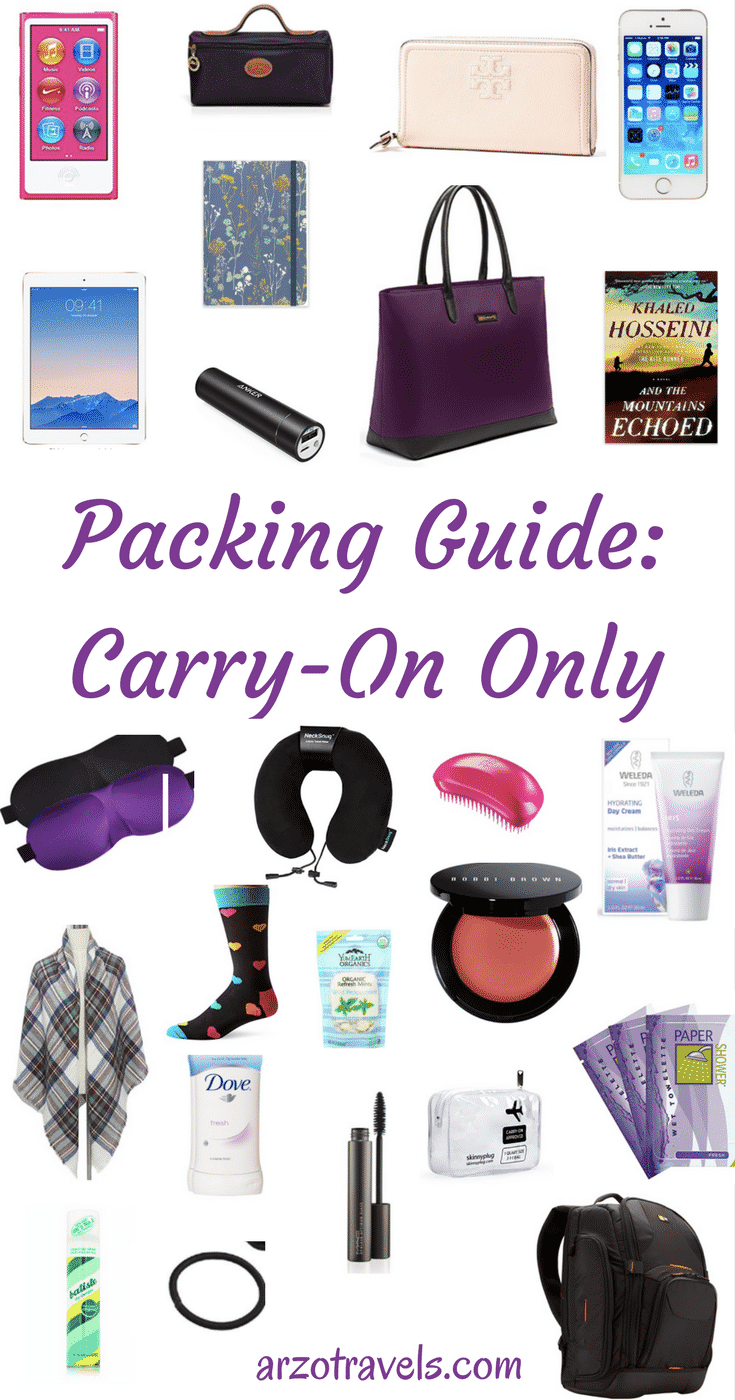
Here are my favorite carry-on items for long distance flights and which I always pack (unless I am not well organized which can happen once in a while, but this is what my perfect carry-on items look like).

STAY ORGANIZED

  • A big handbag and often also a wheeled extra carry-on luggage – for the more sporty ones I recommend a backpack
  • Plastic bag with a zipper for liquids – more eco-friendly and handy if you travel often is this TSA approved clear travel toiletry bag
  • Passports/ID & tickets  (extra big wallet)
  • Pens and a small journal

ENTERTAINMENT / TECH GEAR

  • I have my  laptop with me whenever I fly, as I can work etc. – new TSA regulations are stricter now, so you are probably not allowed to take your laptop as a carry-on item, so double-check before you fly.
  • A while ago, I thought my tablet is the most useless item I bought in a while – since I can download from Netflix (and thus watch my shows offline) I have found one good argument bringing my tablet with me whenever I travel
  • My phone– without doubt one of my most useful and important (travel) item
  • Pack a camera I love taking shots from my window seat – and since I take valuables with me, this is in my carry-on bag
  • I have to admit, that I still don’t have a kindle, so a “real” book is often an essential
  • What would a flight be without music? If I love one thing more than traveling it is actually listening to music with my iPod
  • Power charger– how long does your phone battery last? Not long? Neither does mine, so this is an essential.

Wondering what you can do to survive a long-distance flight?

COMFORT / CLOTHES

  • Neck pillow – my best friend when traveling for more than 4 hours
  • Warm socks which are also stylish
  • I personally do not use a sleeping mask but a must-have for many travelers
  • A big and warm scarf is my absolute must-have (which I can use for different purposes)
  • Flat shoes which can be easily taken off
  • A cardigan which I use occasionally as an extra blanket
  • For long-distance flights, compression socks are a must

BEAUTY / STAY FRESH

  • Dry shampoo – though I do not use it normally it is perfect after long-distance flights (check size, and choose the small travel size)
  • My favorite hairbrush (especially for longer hair) – or if you have less space take a comb
  • Refreshing towelettes  – though I think they are not eco-friendly sometimes they are just essential and a must.
  • Face cream (which I also use as a hand cream, so I do not have to take another cream)
  • A small cosmetic bag for your makeup
  • Peppermint drops or chewing gums (though I heard chewing gums are not good when you fly, so probably stick to peppermint drops
  • Deodorant – I don’t think, I need to explain this further 🙂
  • Invisibobble hair ties – I hate my hair open when I am in the plane
  • Toothbrush & paste should also be self-explanatory as well as mouthwash
  • I do not wear much makeup normally, rouge &mascara are my lifesavers, though
  • I have dry eyes and so eye drops are a must for me
  • I am normally sick when I fly and always have some tissues with me

So, girls (and boys) I hope, this list is comprehensive and all important items are listed. If I have forgotten something leave a comment, so I can add it.

15 Best Places to Eat Like a Local in Tokyo

Slide 1 of 11: What can you tell us about this place?
Onigiri Asakusa Yadoroku, Tokyo's oldest onigiri restaurant, has a quaint, inviting charm. Behind a counter designed for eight diners, owner Yosuke Miura is hard at work sculpting his famous flavor bombs by hand. Surrounding him is a crowd of voracious diners, eager to gulp down the snack as fast as he can build them.
What's the crowd like?
They are an enthusiastic bunch, ordering their onigiri a half-dozen at a time.
What should we be drinking?
Tea and soft drinks.
Main event: the food. Give us the lowdown—especially what not to miss.
A reliable Japanese snack parlor is an increasingly precious commodity; thankfully, this place does it dependably, just as it has for decades. Start with the the shrimp and miso onigiri, then see how far outside your comfort zone you're willing to climb.
And how did the front-of-house folks treat you?
Keep it moving, they say. They've got a lot more onigiri to get through today.
What’s the real-real on why we’re coming here? Anything we should keep in mind?
This is a quick and easy snack stop for a small group of friends. Consider it an opening act for dinner and do the the main event elsewhere.

Slide 2 of 11: So, what can you tell us about this place?
Asakusa Imahan is a massive, multi-leveled shrine to sukiyaki and shabu-shabu. Slip your shoes off, climb into a private booth, and heat up some top-quality meat.
Got it. Who else is here?
Couples on first dates, businessmen bunched into booths, and full families crowding around in-table skillets.
What should we be drinking?
Sake and pints of Sapporo.
Main event: the food. Give us the lowdown—especially what not to miss.
Asakusa Imahan excels in traditional sukiyaki, with impeccable, finely marbled beef that's ready to hit the grill. Adding to the experience, you'll sit cross legged on a tatami mat.
And how did the front-of-house folks treat you?
Although they're not often visible, they routinely check in, just to be sure you're set.
What’s the real-real on why we’re coming here?
Sukiyaki is for all occasions, whether it's a business dinner, date night, or family meal.

Slide 4 of 11: What can you tell us about this place?
Han no Daidokoro Kadochika is a sleek lounge tucked into the fourth floor of the Dogenzaka Center Building. Inside, the wood appointments are inlaid with a circular metal thatch—the key indicator of yakiniku, or grilled meats. The name of the game here is wagyu, but not just any wagyu; rather, beef from Yamagata, a prefecture second to none in its caliber of cattle-raising.
What's the crowd like?
Somber businessmen (loosening up with each passing round) and gregarious groups of carnivorous friends.
What should we be drinking?
Ice-cold lagers: the perfect accompaniment to seared wagyu beef.
Main event: the food. Give us the lowdown—especially what not to miss.
Seared Yamagata beef is a beautiful thing—and not just for your Instagram feed. It melts in your mouth, leaving nothing but a trail of unctuous umami in its wake. Order the Yamagata Gyu Ittougai, a sampling of as many as six varieties of wagyu, all sliced thin and ready to hit the grill.
And how did the front-of-house folks treat you?
Incredibly helpful and eager to please. If they suspect you need help with the grilling, they'll cheerfully step in.
What’s the real-real on why we’re coming here?
Come here with your favorite carnivores, and leave the vegetarians at home.

Slide 5 of 11: What can you tell us about this place?
Taiyaki Wakaba's glass-encased kitchen is viewable from the street and bordered by a green awning. Inside, craftsmen crank out a traditional seafood dessert as they've been doing so skillfully here for more than a century. Most Americans have never heard of taiyaki; here you can discover firsthand what you've been missing.
What's the crowd like?
A mix—everyone who lines up is excited to try this time-honored Japanese treat.
What should we be drinking?
Free hot green tea.
Main event: the food. Give us the lowdown—especially what not to miss.
Sea bream, red bean paste, and batter combine to form an unlikely confection. Molded into the shape of an actual fish, this afternoon snack strikes the perfect balance between salty, sweet, and savory.
And how did the front-of-house folks treat you?
They take your money; they give you taiyaki. There's pretty much nothing more to the transaction.
What’s the real-real on why we’re coming here?
A lighthearted spot to take your kids or an unexpected detour on a day date.

Slide 6 of 11: You can spot Shichisai by its white brick façade and hungry crowd of ramen devotees queuing up outside. The noodles here are pounded and shaped from dough in front of your very eyes. It isn't just impressive to watch; it makes for a profoundly more satisfying noodle that's thick, chewy, and perfectly wavy. Don't be afraid to pile on extra chashu, but if you're craving something lighter, go for the hiyashi chuka, which features thinner noodles in a tomato-based broth.
Slide 7 of 11: So, can you tell us a little about this place?
Tamai Nihonbashi Honten, an anago—or eel—destination, is a dense space with black-painted wood and a paper lantern hanging high overhead.
What's the crowd like?
A spirited assortment of salarymen and Ginza locals, young and old.
What's the drink situation?
Non-alcoholic: hot green tea, assorted soft drinks.
Main event: the food. Give us the lowdown—especially what not to miss.
Anago, or saltwater eel, is the star of the show here. And if you want to enjoy its full flavor potential, start with the hako-meshi; the signature preparation of Conger eel that's been seared and basted in a warm paste of sugar-sweetened soy.
And what's the service like?
Staff work hard to keep everyone moving, but don't expect to make friends.
What’s the real-real on why we’re coming here?
If you're traveling with seafood enthusiasts who want to experience an under-appreciated aspect of Japanese cuisine, this is the spot for them. Loud and compact, it's not exactly a romantic setting; for date night, head elsewhere.
Slide 8 of 11: With unadorned concrete walls, Seirinkan, Tokyo's original pizza hideaway, feels like it’s built inside a bunker. Susumu Kakinuma, the owner and pioneering pizzaiolo, cut his teeth in Naples, returning to his native land well equipped to roll some dough. Here he keeps the menu purposely simple, with just two pies: a traditional margherita and a cheese-less marinara. The crust bubbles and chars in small pockets, thanks to a short blast in the wood-fired oven, and holds a crisp exterior before revealing a satisfying underlying chew.
Slide 9 of 11: Tadashi Hosokawa is a soba whisperer, having earned a Michelin star for his Zaru-style preparation: thick buckwheat strings served alongside a smoky and salty tsuyu dipping sauce. At his pint-size restaurant, you can opt to enhance your soba with tempura or fried vegetable and dashi. The plate might appear minimal—even boring—but you'll be wowed by the flavors and textures once you did in. It’s enough to inspire the endless queues that form every afternoon.
Slide 10 of 11: Tokyo is home to thousands of noodle shops. So how, exactly, do you set yourself apart in the world of ramen? First: patience. At Nakiryu, a Michelin-starred destination, it takes days to refine and condense the rich and unctuous broth before hand-pulled noodles and house-made sauces added. Top it off with tender roast pork so tender, and it's no wonder why folks stand in two-hour queues just to taste it. If you’re willing to brave the line, try the tongue-tingling Spicy Tantanmen, a gritty orange broth with complex aromas and flavors.

Incredible pictures of tourist attractions that no longer exist

Slide 1 of 31: These days when we travel there are more accessible adventures and amazing opportunities on offer than ever before. But as the following pictures prove there are some experiences that money can’t buy – a glimpse of the attractions and hot spots from yesteryear that have disappeared off the map. Whether because of nature, mankind’s unthinking actions or climate change, we take a peek at travel hot spots that we'll never get to visit.

Slide 2 of 31: The former Penn Station, which opened in 1910, was a striking sight: designed in the Beaux Arts style, it featured pink granite, vaulted glass windows, giant stone pillars and archways. Unfortunately, like many grand buildings, it cost a hefty sum to maintain, so in 1962 it was demolished – despite the backlash of many New Yorkers.

Slide 3 of 31: Today’s Penn Station is a far cry from what it once was, a smaller, underground network complete with neon lighting and all the mod cons. But its modest size means that the now-increasing number of rail passengers create a strain on the building, so new plans have been put in place to expand it. Check out these stunning pictures of abandoned train stations from around the world.

Slide 4 of 31: Once a Victorian masterpiece, this impressive glass and steel structure was built in 1851 in London’s Hyde Park but it was later moved to Penge Place, where it remained for 82 years. In its heyday, it was home to a mind-boggling array of delights: a roller coaster, festivals, cricket matches and even a garden complete with model dinosaurs all featured within its grounds in the south of the capital.

Slide 5 of 31: Tragically, the building was swallowed up by flames in 1936 and it’s still not known how the fire was started and if it was intentional. Currently, remnants of the palace including terraces, sphinxes, and a huge bust of its designer Sir Joseph Paxton can be seen in the park, which has been renamed Crystal Palace Park.

Slide 29 of 31: When heavy storms hit the Maltese archipelago in March 2017, the world was devastated by the announcement that the iconic arch had collapsed. However, it wasn’t all bad news, as the fallen rock formation has now added to the intrigue underwater, attracting scuba diving enthusiasts to the area.

Slide 30 of 31: This ancient city, which was built in the third millennium BC, combines Greco-Roman, Persian and Arabian architecture. A UNESCO World Heritage Site, among its ruins are the Temple of Bel, the Great Colonnade, Damascus Gate and a Roman amphitheater. But tragedy hit in 2015, when the site was captured and partially destroyed by Isis.

Discover 15 destinations around the world that are nearly impossible to visit 

Nearly 100 Million Americans Planning a Family Vacation in 2019

Family packing luggage for a summer road trip

AAA projects that nearly 100 million Americans will take a family vacation at some point in 2019.

While the figure is slightly higher than last year, it still only represents about four in 10 U.S. adults. According to the recent AAA Travel survey, many families are planning spring and summer road trips.

In fact, more than half (53 percent) plan to take a road trip in 2019.

The good news for those families is that gas prices have averaged nearly a quarter cheaper so far this year compared with the first few months of 2018, AAA reported, pointing out that summer gas prices are also expected to be cheaper than they were a year ago.

The AAA Travel survey also found that approximately two-thirds of all family travelers (68 percent) plan to enjoy a summer getaway. However, fewer Americans are gearing up for spring travel, with only 45 percent of family travelers making plans, according to AAA.

Meanwhile, travelers in the South are more likely to be making plans for a family trip this year (62 percent) compared to travelers in the Northeast (35 percent), the survey found.

“The great American road trip is still one of the best ways for families to relax and reconnect with one another,” said AAA Travel Information & Content executive director Stacey Barber in a statement. “This is quickly shaping up to be another busy year for family travelers, both on the roadways, as well as other popular travel destinations and attractions. To make the most of their vacations, AAA recommends families plan and research as far ahead as possible to avoid missing out on popular activities and fun.”

While planning and budgeting for a family vacation can be daunting and sometimes the biggest obstacle to getting away with your loved ones, there are plenty of tips and tools to make the process fun and easy.

First, consider working with a travel agent who can take the stress out of planning while also saving you money and ensuring you’ve got assistance in the event that something goes wrong. The U.S. Travel Association’s Vacation Planning Tool is also extremely helpful if you and your family choose to do it yourselves.

What to see and do on a day trip to Lille

Slide 1 of 12: When in France, the classical way to start your day off is with having a nice traditional breakfast. France is most famous for its tasty, mouth-watering baked goods and you can find bakeries serving fresh, hot croissants and pain au chocolats everywhere you turn. Some of the most famous bakeries around the city center are the Boulangerie Brier, Patisserie du Lion d'Or and Maison Doucet.

Slide 2 of 12: After you've had some nice food, start your sightseeing tour in the main central square known as Grand Palace. The square is actually officially named Place du Général de Gaulle as a tribute to Lille's most famous resident, president Charles de Gaulle. Here you can gaze the 17th century Flemish buildings surrounding the square, creating an impressive sight. The square is a meeting point for locals and a famous hub for cafes and restaurants, so to get a glimpse of everyday life in Lille, sit at one of the nearby cafes, drink coffee and watch people pass by and admire the marvelous architecture around you.

Slide 3 of 12: The historic center of the city is known as Le Vieux Lille. It's characterized by colorful Flemish buildings, old redbrick houses and churches. Get lost in the labyrinth of narrow cobblestone streets that are full of cafes, boutiques, souvenir shops and cute restaurants ideal for a light brunch. From luxury goods to delicacy shops and affordable clothing boutiques, Lille is famous as a shopping destination. In the neighborhood you'll find the Cathedral Notre Dame de la Treille, an impressive example of Gothic architecture. Streets are paved with stone and lined with impressive tall medieval buildings, making an ideal setting for a pleasant stroll.

Slide 4 of 12: Lille is famous for housing the largest flea market in Europe every year, taking place during the last week in August and the first week in September. If you're not in town then, don't be disappointed because Lille has some good markets open all around the year. The most famous farmers market is the vibrant Wazemmes market, open during the weekend. It's the prime spot in the city for buying fresh groceries and experiencing the city as a local. The market is a paradise for foodies, with famous French cheese at every turn and pastry shops serving warm baked goods. Flowers, antiques, material, souvenirs and almost everything you can think of can be bought here!

Slide 9 of 12: Vieille Bourse or Old Stock Exchange is one of the most beautiful sites in Lille. The architecture of the landmark is just majestic as the building consists of 24 identical houses built around an arched courtyard. With its unique architecture and lavish ornament facade, it's dubbed as the finest building in the city. For the full experience, visit the Flemish masterpiece in the afternoon when booksellers sell second-hand books and locals play chess on the little square

Slide 10 of 12: In Lille there's no shortage of amazing pastry and food shops. If you've gotten an afternoon sweet craving, there's a seemingly endless list of delicious patisseries. A must try in Lille is the Merveilleux cake, originating from Belgium and also very popular in France. As the name suggests, the cake is really marvelous and the typical desert to eat in this region of France. For the most famous waffles in town, visit La Maison Meert. Meert is a sweet-tooth's paradise, serving iconic waffle sandwich filled with vanilla cream. With an impressive selection of chocolates and pastries, this 170-year-old place is a bit pricey, but definitely worth the splurge!
Slide 11 of 12: Lille's town hall is one of the most impressive landmarks in town, so it's no wonder it's protected by UNESCO. The beautiful Flemish-style building is crowned by an impressive 340 feet belfry that dominates the whole city. For the best picture-postcard view of Lille, climb 100 steps to the top of the building and enjoy the imposing panorama view.

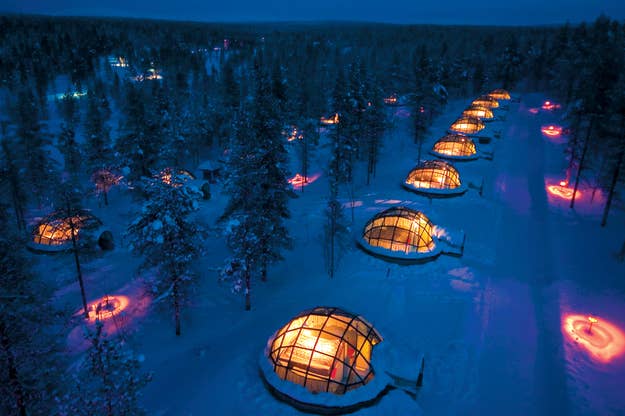
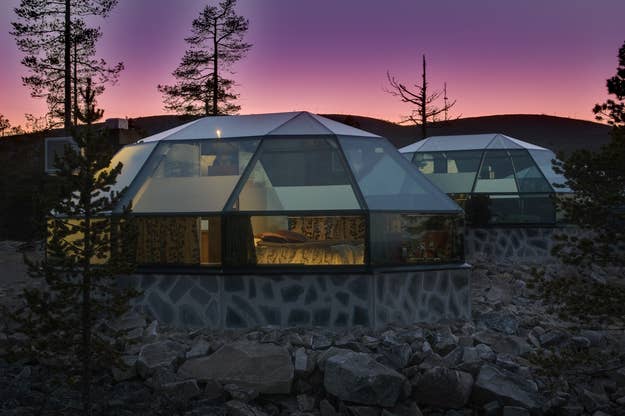
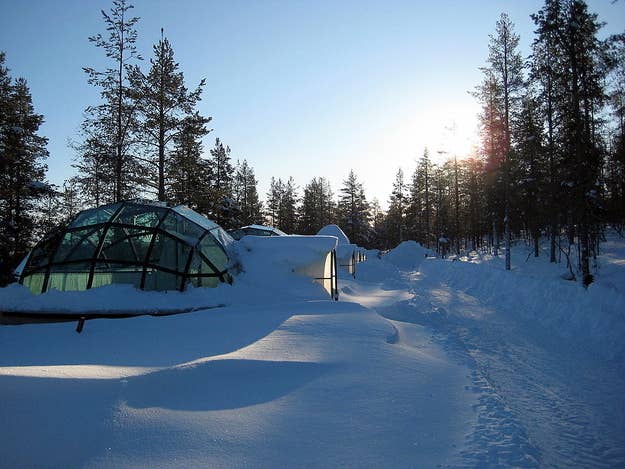
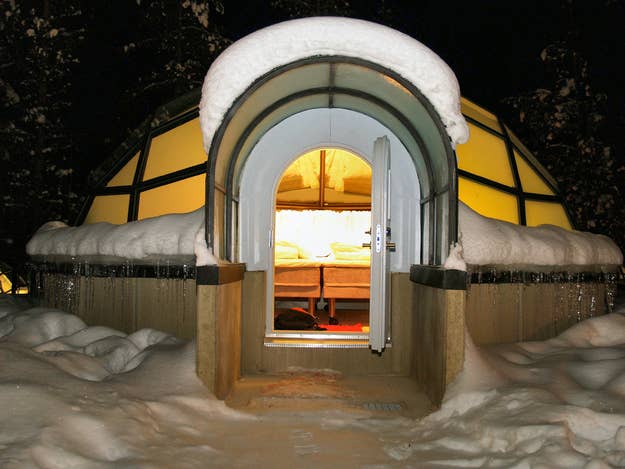
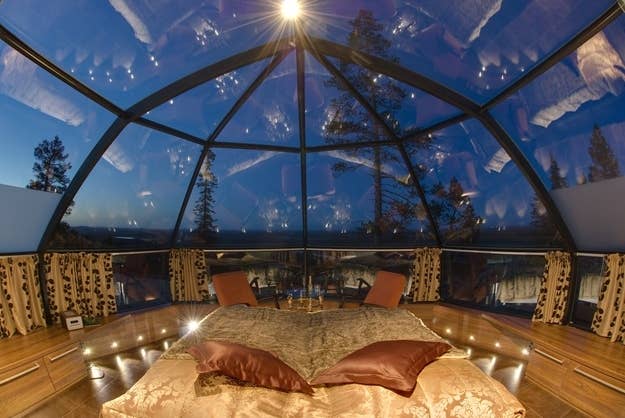
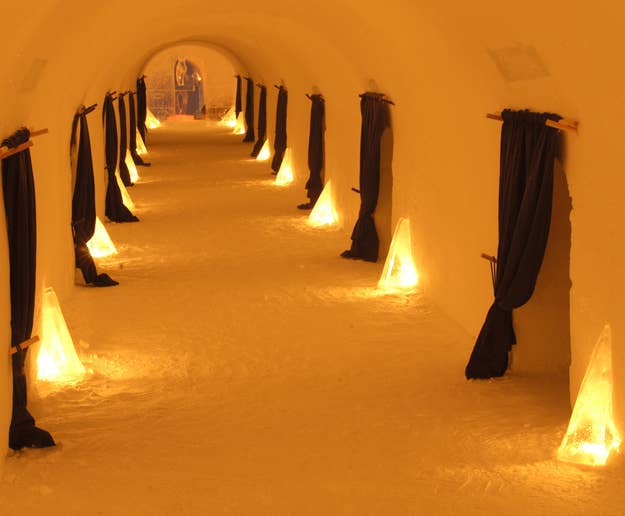
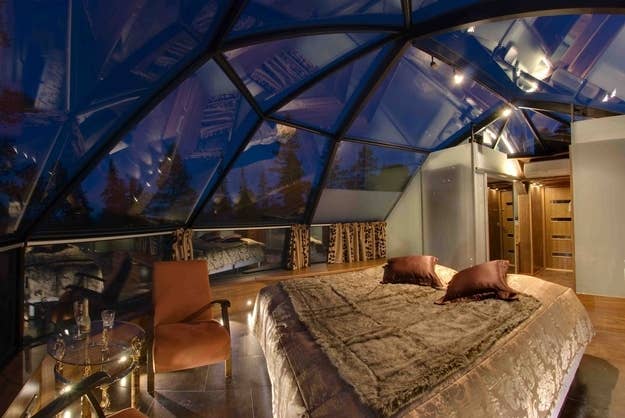
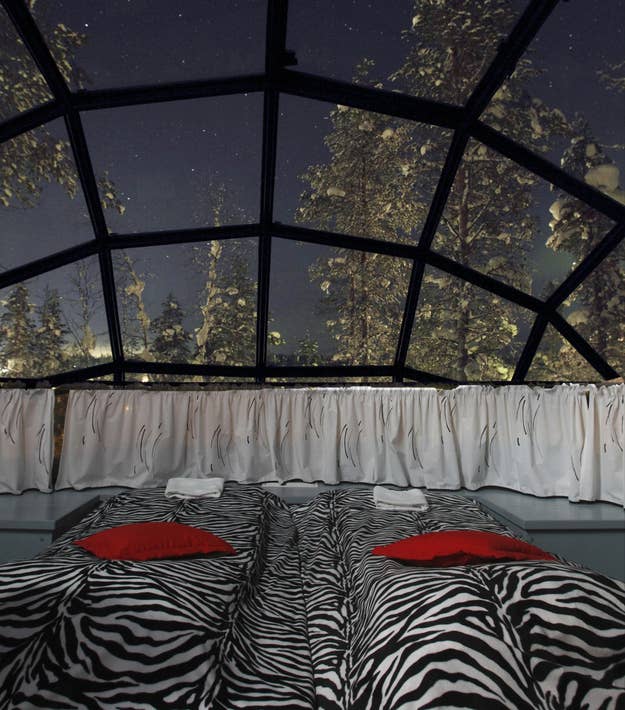
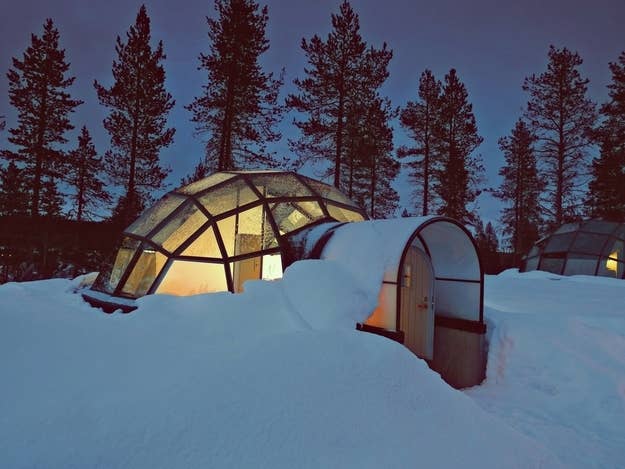
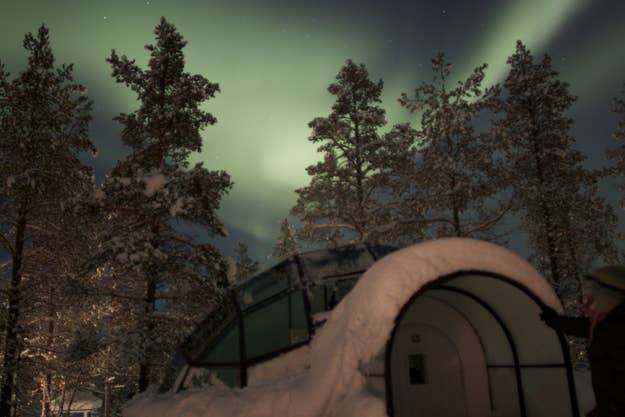
You Can Rent A Glass Igloo In Finland To Watch The Northern Lights

You Can Rent A Glass Igloo In Finland To Watch The Northern Lights

Imagine looking up at the Northern Lights from a cozy hotel room 250 km above the Arctic Circle.

From the resort’s website

Glass igloo provides an one of a kind opportunity to admire the northern lights and millions of stars of the crystal clear sky in a comfortable room temperature. Built from a special thermal glass the temperature inside the igloo always stays a normal level. It also prevents the glass from not getting white frosted, hence keeping the view clear even when the temperature outside drops to under -30°C. Every igloo is equipped with a toilet and luxury beds.


What to know about tipping in Canada

Toronto Canada Ontario Queen Street West trendy neighborhood corner historic building 1886 Black Bull Tavern restaurant student.

Though servers in Canada make around $11 an hour, more than the minimum requirement for restaurant employees in the United States, they very nearly mirror US tipping customs in the hospitality industry.
Even in places gratuity is not exactly expected, it is still surprisingly popular.
Here’s how it works.

From the big city to the little town

In Toronto, the calculation’s easy. There’s a 13% HST (harmonized sales tax) charge at the bottom of every bill. Take that amount, round it up, and you’ll be in the neighborhood of the 15% that Torontonians consider the minimum tip on a meal.
Especially good service will take it up to 18% or beyond.
Pubs are the classic drinking establishments in a city where cocktails are still considered fancy (and so merit percentage tipping), and the standard tip for a beer or equivalent drink is $1 per drink.
Vancouver’s tax system is more complicated — 5% on meals, 5% plus 10% provincial tax on alcohol — but the standard tip remains the same; you just may have to use your phone to figure it out.
According to a recent study by national pollsters Angus Reid, tips in small towns tend to be closer to the 10% mark for restaurants, with a similar buck-a-beer system for bars.

Quebec stands alone

In Quebec, French is spoken, and the provincial government is called the National Assembly. It’s maybe not surprising then that Quebecois tip differently.
The expectation is that you’ll be more generous in la belle province — and you will be called out if you fail to meet the standards surrounding gratuity.
There was a flurry of controversy last year when a popular tourist restaurant in Quebec City, the province’s second largest urban center, tacked on a 15% charge to a Vancouverite of Asian descent, revealing a long-standing practice of charging Asian tourists what amounted to a service charge. The overt racism caused a ruckus, but there was another underlying message: Don’t leave without tipping.
Eighteen percent is the norm, 20 not unusual, and if you have a really good time, 25% is not going to raise eyebrows.
Be ready to tip if you plan to visit Montreal. It is expected in hotels, bars and restaurants.

Be ready to tip if you plan to visit Montreal. It is expected in hotels, bars and restaurants.
EVA HAMBACH/AFP/AFP/Getty Images
But it’s not only Quebec restaurants — where servers and bartenders make a minimum of $9.80 an hour — that expect a tip. The Montreal Yellow Pages — remember those? — has a whole section on tipping in hotels, just in case you decide to do some research.
It’s quite a long section, but the takeaway — confirmed by Eve Paré, CEO of the Hotel Association of Greater Montreal: $2-$5 a day for cleaning staff, $2-$5 for the parking valet, and $1-$2 a bag for the bellhop, and up to $20 for a concierge who gives you any advice you end up using.
A server in a Quebec City diner writes down an order.

A server in a Quebec City diner writes down an order.
RosaIreneBetancourt 3/Alamy Stock Photo

How tourism dictates tipping

Tourism is extremely seasonal in Canada, meaning the people working in tourist spots, like Niagara Falls in the summer, and Whistler in the winter, have limited earning windows. This is reflected in tipping expectations and, for the most part, behavior. Expect those table-side credit card point-of-sale devices to suggest 20% and even 25% as the default. Of course, you can tip whatever you want, but the floor in tourist destinations tends to hover around 18% rather than 15%.
whistler british columbia

Staff in establishments in heavily touristed spots such as Whistler have limited earning windows and do typically expect you to tip.
Pixabay/Creative Commons
Same for drivers — taxi and ride-share. Instead of rounding up, think 15%, and then round up on that figure. And don’t forget the guides, bus and boat tour narrators, paddle board instructors…the list goes on. These types of tour operators are usually looking for a little extra something.

Taxis, hotels and coffee and more

Across the country, in cities and small towns alike, the rule of thumb is to round up to the nearest $5 whenever you take a taxi.
The Montreal Yellow Pages model — $1-$2 a bag for bellhops, etc. — is a good one to reference whenever you stay in a Canadian hotel.
Not just a doughnut shop, Tim Horton’s is a national institution. And to some, the kerfufflesurrounding news earlier this year that one location was forbidding its employees to accept tips might have seemed curious.
With average bills of $2-$3, you wouldn’t have thought tipping was much of an issue.
But it most definitely is.
A nationwide boycott ensued, Canadian Twitter erupted in outrage, and people were standing outside Tim Horton’s locations handing out tips to employees when they finished their shifts or took mid-shift breaks.
Beck Mageau, a Tim Horton’s employee in Nova Scotia, even took to Quora to clarify the matter. Despite the low prices and largely take-out nature of the place, at least half of patrons tip their Timmy’s staff, often with round-up tips, but sometimes as much as $10 on a $6 box of Timbits (doughnut holes to the uninitiated).
Many Canadians also tend to be generous when traveling by train. Canada’s national rail service is often mocked, but much loved — a fact that is illustrated by about a third of its passengers on the busy Windsor-Quebec City rail corridor tipping their attendants when they order coffee or snacks. According to VIA server Alexandre Beland, it’s mostly a rounding-up tip. “A coffee is $2.25,” he says, “so people will sometimes just give $3.”
Unsurprisingly, he says he gets the most tips on Quebec routes between Montreal and Quebec City. Foreign-traveling tourists aren’t obligated to leave a tip in this situation, but the gesture won’t be rejected either.

New frontiers of tipping

With the proliferation of point-of-sale machines, everything from bike shops to dry cleaners can now suggest a tip when you pay by card. You’re free to do as you like, of course (minimum wage in Canada hovers around the $14-an-hour mark), but if a business does not have a clear system for distributing tips, you do so at your own risk.
There has been a flurry of no-tip restaurants popping up across the country since a spot called Smoke ‘n Water in tiny Parksville, British Columbia floated the idea in 2014. The latest is trendy upscale spot Bistro Rosie in, of all places, Montreal.
Instead of accepting gratutity, they charge a flat fee ($44 for two courses, $55 for 3, etc.). Staff, according to owner Sophie Duchastel de Montrouge, make between $15 and $25 an hour.
It’s not a trend yet, and given that Smoke ‘n Water gave up its policy after three months due to protests of customers who wanted to leave more money, it’s unlikely to be the tip of any iceberg.
Design a site like this with WordPress.com
Get started