Longtime Kingwood Travel owner sells business to Frosch Travel

From left, Diane Blanco from Lone Star College-Kingwood, Sharon Lewis from Kingwood Travel, Hazel Morrett with Trafalgar Tours and Ann Chamberlain with Kingwood Travel recently hosted a document party at Amedeoâ??s wine room for a group of prominent Kingwood citizens going to tour Italy over spring break.

After 41 years of serving the Kingwood community with world-class travel ventures, Kingwood Travel is now has new ownership and a new location.

Kingwood Travel, which is now owned by Frosch Travel, is now located in the Galleria area at 1 Greenway Plaza Ste. 800, Houston. All Kingwood Travel employees will work from the new location and clients will still receive the same services as before.

Kingwood Travel Owner Sharon Lewis said that after 41 years of serving the Kingwood community with various world adventures, it was a hard decision to sell the business to Frosch as part of a two year buyout program.

Hurricane Harvey created an incentive for Lewis to sell — she sustained flood damage to her home and her business.

One Lewis’s biggest accomplishments for Kingwood Travel was setting up Exxon Mobile’s annual retirement trip. Aside from her professional accomplishments, Lewis is been involved in several charities such as Mothers Against Cancer and organizations such as the Kingwood Rotary Club. She has also donated trips to several local causes.

“I’m still sad about it. I have a lot of close friends here and they’ve supported me all these years, and I appreciate that,” Lewis said. “We’ve (given) a lot of memories to people with nice trips.”

Kingwood Travel’s previous location on Kingwood Drive will be leased out to a new company.

4 Amazing Pueblos Blancos of Colombia

Source : Connectedhorizons.co.uk

In recent years, Colombia has been a very common destination on the backpackers radar. The country’s relatively cheap prices and great variety of landscapes – from wild jungle to pristine beaches – have always been the perfect match for seeing the best of Colombia even for those on a tight budget. Nevertheless, those travelers who opt to stir away a bit from the most touristy destination and pay a visit to the less-known Pueblos Blancos will be greatly rewarded.

The Pueblos Blancos is a category of small villages (usually isolated) that the Colombian government has listed as being crucial to the country’s cultural heritage. That said, these villages also happen to be the most gorgeous and unique in their own way!

Currently, there are 17 villages on the list scattered all over the country and after visiting some of them here’s the list of our 4 Top Favorites!

1. Santa Cruz de Mompox (Bolivar)

Among the ones we visited, this was undoubtedly the pueblo that took us more by surprise. At the time, we were traveling to Mompox from Rodadero (a small beach department of Santa Marta) and the journey that was supposed to last 6hrs ended up being a hellish 10hrs night ride. Thankfully, even at night the village seemed perfectly safe and – it may sound weird – kind of welcoming. Anyway, the next day we we spent it visiting town and we literally fell in love with it.

https://i0.wp.com/connectedhorizons.co.uk/wp-content/uploads/2018/06/MG_9348.jpg?fit=1200%2C800&ssl=1

https://i0.wp.com/connectedhorizons.co.uk/wp-content/uploads/2018/06/MG_9330.jpg?fit=1200%2C800&ssl=1

https://i1.wp.com/connectedhorizons.co.uk/wp-content/uploads/2018/06/MG_9340.jpg?fit=1200%2C800&ssl=1

Gorgeous architecture, lots of nature, a river nearby and plenty of very friendly locals made our stay better than we could have ever expected. Whether you’re planning for a short half-day or more days stop, there’s no way you won’t enjoy spending sometime around here. And did we mention that during our stay we met just ONE tourist ?

2. Barichara (Santander)

Not so far from the adventure town of San Gil, this village is a popular stopover for all those planning to see/hike the breathtaking Chicamocha Canyon. Even though Barichara is a well-known destination along the tourist route, the presence of tourism thankfully doesn’t spoil the undeniable beauty of the place.

https://i0.wp.com/connectedhorizons.co.uk/wp-content/uploads/2018/06/MG_9867.jpg?fit=1200%2C800&ssl=1


https://i1.wp.com/connectedhorizons.co.uk/wp-content/uploads/2018/06/MG_9690-1.jpg?fit=1200%2C800&ssl=1

https://i0.wp.com/connectedhorizons.co.uk/wp-content/uploads/2018/06/MG_9658.jpg?fit=1200%2C800&ssl=1

The colonial architecture, a beautiful cemetery and overall a friendly atmosphere are just some of the town’s highlights. But should that not be enough, the surroundings of Barichara offer plenty of outdoor activities from hiking to paragliding and even walking on a part of the ancient Inca Road.

3. Jardin (Antioquia)

If you’re looking for something truly Colombian then don’t hesitate to visit Jardin. This little village somewhere halfway-through Medellin and the coffee triangle, is the one place in Colombia where we actually managed to see some real colombian lifestyle. On top of that, the village boasts some beautiful colorful houses, plenty of hiking trails in the surroundings coffee plantations and the only national reserve for the rare bird species Gallito de Roca.

https://i0.wp.com/connectedhorizons.co.uk/wp-content/uploads/2018/07/MG_9904.jpg?fit=1200%2C800&ssl=1

https://i0.wp.com/connectedhorizons.co.uk/wp-content/uploads/2018/07/MG_9791.jpg?fit=1200%2C800&ssl=1

https://i0.wp.com/connectedhorizons.co.uk/wp-content/uploads/2018/07/MG_9984.jpg?fit=1200%2C800&ssl=1

If you can make sure to be there during week-days to make the most of it as on weekends loads of people from surrounding towns come over to take a break from their jobs. TIP: If you wanna visit the national reserve for the Gallito de Roca, make sure to head there – just on the village outskirts – as early as 5am in the morning to get the best results.

4. Villa de Leyva (Boyaca)

After sometime traveling throughout Colombia, it was in Villa de Leyva that we experienced the first cold mountain weather, long forgotten from our days in Europe. During our time in the town, finally having a chance to walk and hike around with sweaters was a big relief from the overwhelming heat of Tayrona. Villa de Leyva – or as many locals refer to it VDL – is the perfect place to relax, sip over some tasty artisanal beer and take a break from the backpacking routine.

https://i0.wp.com/connectedhorizons.co.uk/wp-content/uploads/2018/06/MG_9956.jpg?fit=1200%2C800&ssl=1

https://i1.wp.com/connectedhorizons.co.uk/wp-content/uploads/2018/06/MG_9948.jpg?fit=1200%2C800&ssl=1

https://i2.wp.com/connectedhorizons.co.uk/wp-content/uploads/2018/06/MG_9971.jpg?fit=1200%2C800&ssl=1

That said, the old part of the town feature some great pre-colonial architecture (similar to an ancient borgo) and a huge plaza once used as a marketplace. Nowadays, even though the town is pretty touristy, finding cheap accommodation and places to eat is pretty easy, making a great stop also for budget-travelers.

Whether you decide to visit some of these towns or any other in the list of the Pueblos, we’re 100% sure you won’t regret it. There has not been a town in the list that we visited that didn’t let us down: from the North to the deep South of Colombia every new town was a new and beautiful discovery.

Meet the Spanish family traveling the world in a truck

Marta Bruyel, Daniel Gimeno and their three young children have left behind their home in Madrid to begin a six-year journey across America, Asia and Africa

Source : elpais.com

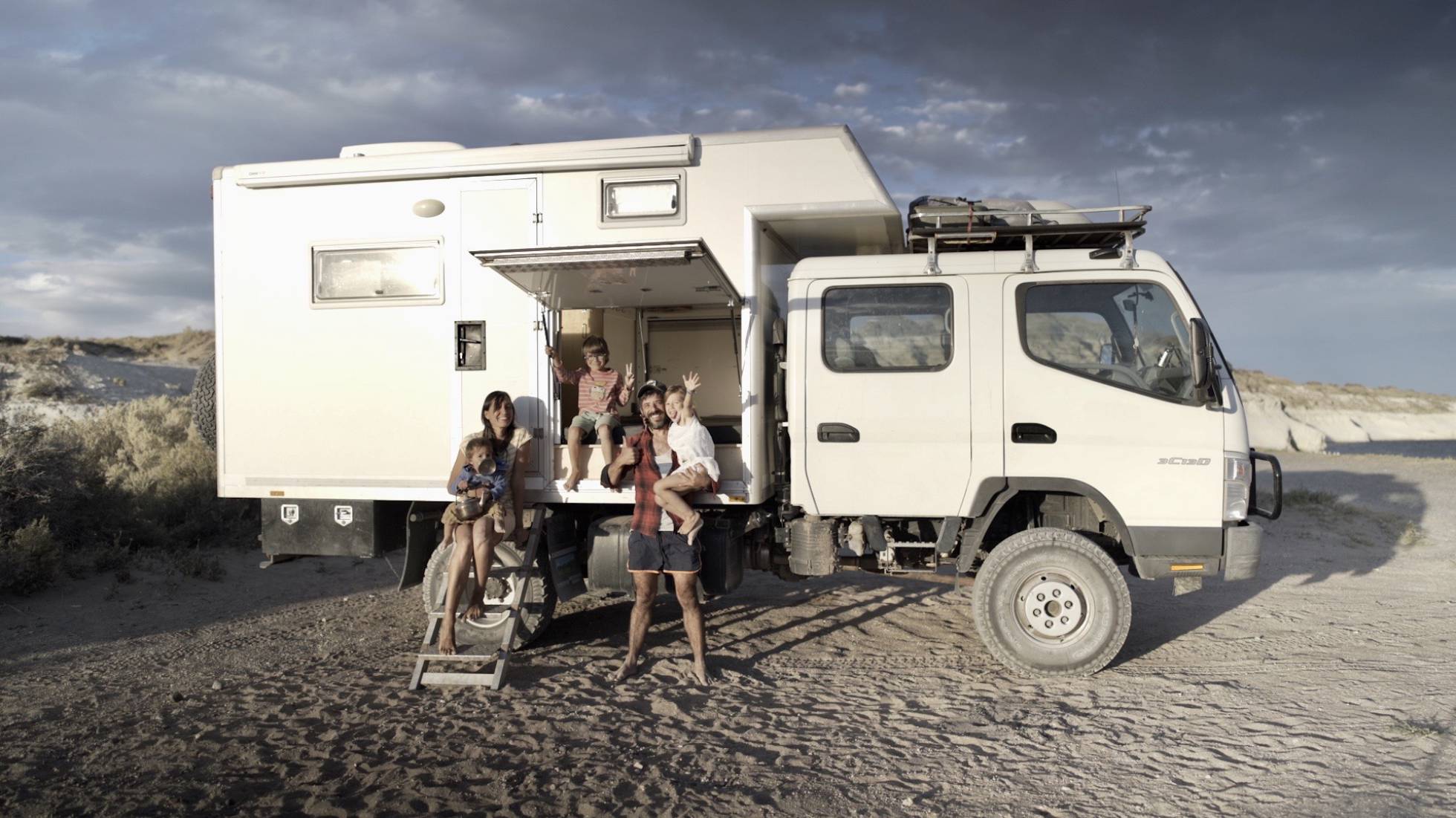
The Spanish family planning to travel the world in a truck. M. B.

After many trips together and a lot of thought, 38-year-old Martya Bruyel and 42-year-old Daniel Gimeno decided to leave everything behind and travel the world in a truck with their three small children, who are aged one, three and six. They have left behind school, their apartment and the locksmith company that supported them, but also Madrid’s traffic, pollution and noise.

In the first part of their trip, which began in December, the family will spend two years traveling across the Americas, all the way from Patagonia to Alaska. After that, they plan to travel throughout Asia for two years and then around Africa for another two. However, these exciting adventures do have their complications. The family has had to learn how to live together in an eight-square-meter truck and work out what to do when the children become agitated, explains Bruyel on a video call from a parking lot south of Chile, while the children wave in the background. “We try to give the children a routine within which every day is different,” she says.

After waking up and eating breakfast, Tao and Dhara, the eldest children, are home schooled by Bruyel, who teaches them to read, add and subtract, while Gimeno looks after the youngest.

Bruyel is currently following the textbooks that her children began in September in Madrid. Starting next year, Tao will be enrolled in the Education Ministry’s online distance education program (CIDEAD) and will have to study the regulated content so he can be examined online. But his parents value more the kind of education that isn’t found in textbooks, such as communication skills and the lessons learned while traveling. “I obviously passed natural science,” says Tao.

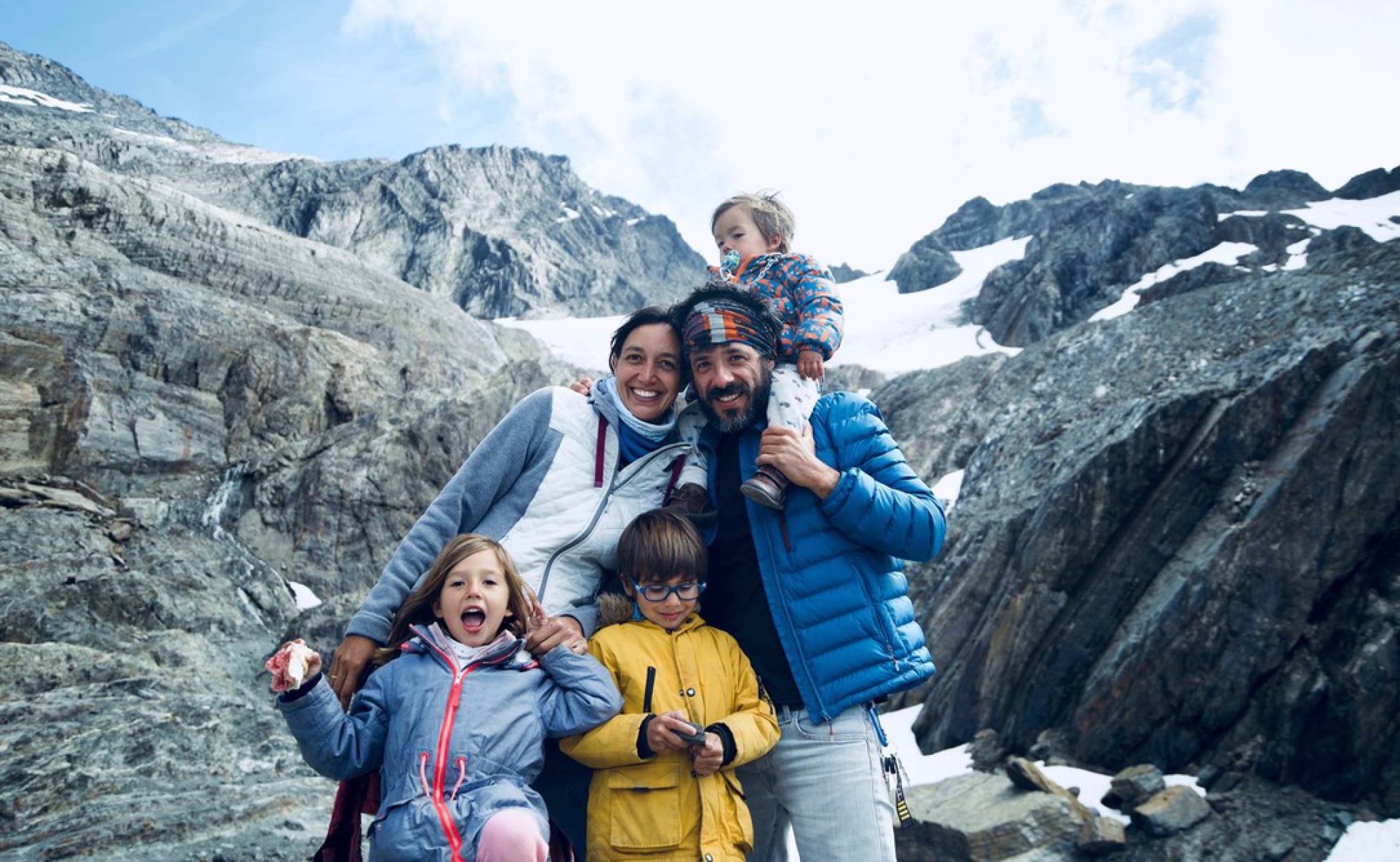
The family in the Martial Mountains in Argentina in January. M. B.

Although they have an itinerary, Bruyel understands that it’s not easy to plan such a long and ambitious trip. “We want to learn how people live in other countries,” she says, explaining that they have proposed shooting a documentary series as a way to finance their adventures, which are currently being paid for by their family savings.

Since the family’s truck arrived in Uruguay at the end of 2018, they have been driving south to reach the end of the continent. The family spent Christmas in the Sierra de la Ventana, a village in Argentina, where the children painted images on the truck to help Santa Claus in case he got lost, and Three King’s Day in the province of Río Negro, in the Patagonia region of Argentinian. Bruyel’s birthday was spent in Ushuaia, the southernmost city in the world. After Christmas they drove north to the Perito Moreno Glacier in Argentina and into Patagonia on the Chilean side.

Before starting their international adventure, “Los Mundo” (The Worlds), as the family is called on social media, went on a few trips to practice traveling with the children. In 2017, they visited Thailand and Vietnam with the two children they had at the time, and last year they traveled around Morocco in a van that they also slept in. It was in Vietnam where the couple decided to leave everything behind and travel the world. “We saw our children playing with Vietnamese children and we recognized their ability to communicate through the game they had created,” says Bruyel.

The internet, although not always available, has allowed the family to remain in contact with relatives and friends back in Spain. Tao and Dhara frequently write to their classmates and Bruyel and Gimeno periodically send videos back to their parents, who never understood their decision to travel. “My parents fought almost until the last day,” says Bruyel. The next time the grandparents will see their grandchildren will be in the summer. And it won’t be in Spain, it’ll be in Peru.

A Reader’s Guide to Travelers’ Rights When Crossing the Border

While law enforcement has greater power at the border than elsewhere inside the country, it may not go as far as you think – especially if you’re a U.S. citizen. But there’s still a lot gray area involved in what happens at ports of entry, so we’ve laid out what we know about what CBP officers can do there, what rights people have when they’re crossing the border and what is still nebulous.

Hundreds of travelers wait in long lines at the Otay Mesa Port of Entry after Customs and Border Patrol officials shut down crossing lines in San Ysidro. / Photo by Adriana Heldiz

Government officials have different authority at ports of entry than they do elsewhere.

That’s because people trying to enter into the United States are effectively presenting themselves to the government for search and analysis when they come through ports of entry, which are designated areas for entering the country like seaports, airports and land crossings.

As a result, interacting with U.S. Customs and Border Protection officers at one of these locations is not like interacting with a police officer after getting pulled over. The difference owes in part to the legal authority given to border officials that allows them to stop, detain and search any person or item at the border, even without probable cause.

The unique legal authority on the border is newly relevant after the discovery by NBC San Diego that border officials kept a database of advocates, attorneys and journalists who worked with or covered the fall’s migrant caravan. Officials kept dossiers of some individuals in the database, pulled others aside for additional questioning during crossing attempts and placed security alerts on the others.

It is not the first case to draw scrutiny on the limits of this special authority. The American Civil Liberties Union is challenging how that authority extends to electronic devices and whether people can take photos and record in parts of ports of entry that are in public view, for instance.

“The fact is that someone trying to enter the United States has fewer rights than someone who has actually entered,” said Barbara Hines, an adjunct law professor at the University of Texas at Austin.

Following NBC San Diego’s scoop, the Department of Homeland Security’s Office of the Inspector General announced it was investigating whether border officials had nonetheless infringed on those limited rights. The office said it opened an investigation to “ensure that all appropriate policies and practices were followed.”

But Josiah Heyman, director of the Center for Interamerican and Border Studies at the University of Texas El Paso, said it’s time for the public to debate how unrestrained the government’s authority should be at ports of entry. “None of that has been really fully resolved and I think it’s important for us to have a serious discussion just exactly how helpless are you before the power of the state at borders,” he said.

While law enforcement has greater power at the border than in the interior, it may not go as far as you think – especially if you’re a U.S. citizen. There’s still a lot of gray area involved in what happens at ports of entry, so we’ve laid out what we know about what CBP officers can and can’t do there, what rights people have when they’re crossing the border and what is still nebulous.

How CBP’s Authority at the Border Works

Border officials have broad powers in the 100-mile border zone.

CBP officers can inspect any person trying to enter the country and their belongings or vehicle. They can question individuals about their citizenship or immigration status and ask for documents that prove they can enter the United States. At ports of entry, officers don’t need a warrant or reasonable suspicion to do this.

A person’s first encounter at a port of entry is in primary inspection. It’s where a person either walks or drives up to an officer, and shows their documentation, like a passport, SENTRI card, green card or visa.

A lot of things happen during and before this encounter, Heyman said.

When people present themselves at the border, they are making themselves available to be searched, making it a suspicion-less search, Heyman said.

But large, sophisticated ports of entry, like the one in San Ysidro, gather information before you get to an officer. Technology can take pictures of people’s faces or read license plates and share the information with the inspectors. Sometimes travelers scan their documents before reaching the officer, giving the officer time to go through information about the person before they ask any questions.

CBP’s databases flag criminal history, warrants and other issues. Those flags can lead to secondary questioning.

To ensure flagging in these databases is accurate and not abused, CBP said it follows “standard operating procedures when inputting information into law enforcement databases which are reviewed by supervisors to ensure full compliance with all policies and procedures.” There have been instances of abuse in the past, though, like this case where an officer placed a bogus security alert on an innocent man.

Information in the databases isn’t the only thing that can lead to secondary. Inspectors also look at body language and gauge whether people’s explanations for why they’re crossing are suspicious.

“The officer looks at this person as a social caricature,” Heyman told me in August. “If you fit into a suspect story, they’ll wonder about you. That’s one part. At another level, they’ll look at bodily behavior. Do they look uptight? Are they clenching their teeth?”

Officers also randomly pull a certain percentage of travelers into secondary.

CBP officers have to maintain the flows of people crossing at ports of entry while trying to find those smuggling people or drugs or who may pose a threat to national security. Their authority comes with a lot of discretion.

Officers cannot, however, determine someone should be searched or sent to secondary inspection based on their religion, race, national origin, gender, ethnicity or political beliefs.

CBP has the same wide-ranging authority to conduct searches without a warrant in secondary as it does in primary inspection, an agency spokesperson told Voice of San Diego. That authority only ends when CBP decides to undertake a more invasive procedure, such as a body cavity search. For those kinds of actions, the CBP official needs to suspect a person is engaged in illicit activity.

Former Department of Homeland Security officials and other experts told the Union-Tribune that intelligence-gathering from travelers is also not out of the agency’s purview if it’s for national security purposes.

“I don’t think the gathering of the information is surprising or objectionable,” said Alan Bersin, who served as CBP commissioner under President Barack Obama, told the U-T.

Border-Crossers’ Rights

The rights of travelers crossing the border vary by situation. They also differ if someone is a U.S. citizen versus a lawful permanent resident or a visa holder.

A U.S. citizen who has presented officials with a valid passport must be let into the country. They don’t have to answer officers’ questions, though refusing to answer questions, particularly about the nature and purpose of your travel, may result in further inspection. U.S. citizens can’t stop CBP officers from searching their vehicle or luggage at ports of entry.

“For U.S. citizens, once citizenship has been established, CBP has to admit you into the United States,” said Mitra Ebadolahi, a senior staff attorney for the ACLU’s Border Rights Project. “If that’s not happening that’s an abuse of authority. We’re seeing increased reports of that, which is troubling.”

Lawful permanent residents or non-citizen visa holders are in a stickier situation. Non-citizen visa holders in particular can be denied entry for refusing to answer officers’ questions.

“People always have the right to remain silent, but obviously a failure to answer questions at least sufficiently to establish citizenship can lead to denial to entry,” Ebadolahi said.

For questions that seek information beyond citizenship, the purpose of travel and what someone is bringing in the country, U.S. citizens and lawful permanent residents can push back a little harder.

One American photographer in the database unearthed by NBC 7, for example, told the outletshe was asked about what she observed at migrant shelters and whether she rented or owned her home.

U.S. citizens do not have to answer questions about religious or political beliefs, associations and practices, which are protected under the First Amendment. Non-citizen visa holders and lawful permanent residents don’t have to answer questions about their religious beliefs and political opinions, but that may lead to additional questioning or not being allowed into the country, Ebadolahi said.

The ACLU recommends requesting to speak to a supervisor if someone asks those sorts of questions. Hines said she doesn’t believe people should answer questions like that “because they are not related to your right to enter the United States nor any criminal activity.”

CBP told ProPublica travelers are not entitled to have an attorney present during primary or secondary inspection. Ebadolahi said she recommends travelers have a telephone number of an attorney on them anyway, and that they should ask to contact the attorney if they’ve been detained for an unusually long period.

Travelers who are told they’re under arrest, or for whom it’s become clear are suspected of committing a crime, should ask to speak with a lawyer before answering any further questions, the ACLU recommends.

People routinely pulled into secondary inspection can contact the Department of Homeland Security’s Travel Redress Inquiry Program to see if there is an erroneous information in DHS’s system that can be corrected. Incorrect information in the databases can also be removed through an expungement if a lawsuit is filed, Ebadolahi said.

There’s Still a Lot That’s Unclear

Several aspects of travelers’ rights and CBP’s authority are still nebulous.

One of the biggest gray areas is how CBP’s authority extends to travelers’ electronic devices. Searches of devices surged in 2017.

The ACLU sued DHS on behalf of 11 travelers subjected to warrantless searches of their devices. The lawsuit is making its way through the courts. The litigation seeks to establish that the government must have a warrant before conducting such searches.

In 2018, the agency released a new policy requiring a heightened level of suspicion for advanced or forensic searches, which involve external equipment that connect to an electronic device to scan, analyze or download its data. It also states that officers cannot search information located remotely, like on a cloud instead of on the device itself. But the policy reasserts CBP’s authority to conduct other searches of electronic devices without any specific suspicion.

If CBP asks travelers for a password to their electronic device, once again, the outcome depends on the situation. U.S. citizens cannot be denied entry to the United States for refusing to provide passwords or unlock devices, but refusal to do so might lead to delay, questioning or officers seizing a device for further inspection. Lawful permanent residents and non-citizen visa holders may be denied entry for refusing to cooperate.

Another gray area still working its way through the courts is the right to take photos or record parts of the port of entry that are in public view. Travelers are never allowed to record in private spaces, like holding cells while being questioned, but the lawsuit addresses whether they can take photos or record while in public areas, like while waiting in line to go through primary inspection.

International Roaming With Prepaid SIM Cards: Now Much Better Deals For Travelers

Shutterstock

In the past few years if you traveled overseas and used your phone, communications costs could be very high. U.S. carriers were not competitive in pricing and were routinely charging a minimum of $1.25 per minute or more for voice calls, and up to twenty dollars per megabyte for data access. While you could subscribe to certain carriers and special plans with somewhat reduced costs, staying in contact while outside the country was still expensive.

Smart travelers purchased an international SIM card (or phone) that was good for roaming in most countries. If you were just going to one country, then the alternative was to buy a SIM that would only work locally, but local SIMS posed problems because they also had local phone numbers. Anyone trying to contact your phone from the U.S. would have to make an expensive overseas toll call. In order to deal with the call forwarding issue, most travelers elected to use International SIM cards because they were normally provisioned with both a U.S. and UK phone number. This meant that your local cellular U.S. number could be call-transferred to the SIM for seamless communications, usually at rates of about $.19-.25 per minute in foreign markets.

International SIM cards from the largest and most popular provider, EKIT (Telestial) were a good deal until recently. I had often written about this company in the context of how to reduce communications costs in foreign countries. Their prepaid SIM packages could be found at every airport and they made life simple and affordable for foreign travelers coming to North America, and for U.S. residents going to virtually any country.

Their rates were typical: from $.19/minute for Europe, and higher for different areas in Asia and the Middle East. They also charged a one-time connect fee of up to $.49, and their data rates were high as compared to other less expensive plans. While there had always been a lot of competition in this market, EKIT has been the acknowledged leader. One of the ways they were able to reduce calling rates was to use “call-back” schemes to take advantage of the difference in prices for inbound versus outbound calls to European GSM carriers. Customers would make a call and immediately hang up and wait for the system to call them back. While these schemes worked, they were often a hassle.

In 2013, things began to change. I wrote about T-Mobile which had just introduced a revolutionary plan for its subscribers that essentially made international roaming an equivalent to making calls and using data at home.

The plan provided for no data or text message charges worldwide, and a flat $.20 per minute for voice calls to and from virtually anywhere. Then it allowed its U.S. customers to roam in Canada and Mexico just like at home, with no extra charges. The plan continues to be highly competitive which brought a lot of new customers to T-Mobile, but it also initiated a war between carriers for international traffic, not only for American subscribers, but also for residents of the EU.

Last year, AT&T and Verizon introduced their daily travel passes, which have essentially the same pricing: ten dollars per day for unlimited voice calls and 500 MBytes of high speed data. If you exceed that data usage, then the speeds will be throttled back to 3G or 2G, but still the data is free. There are slight differences between these two carriers in their offerings. AT&T allows calls to and from any of their 200+ countries included in the plan, whereas Verizon only allows in-country calls and calls back to the U.S. Depending on your use patterns, these are both good deals.

T-Mobile is still, in my view, the most competitive if you make less than fifty minutes of voice calls a day. Above that threshold, you are better off with one of the daily passport plans on AT&T and Verizon.

The European Union has now caught up with the U.S. in protecting the consumer from high roaming charges. This had always been a major point of contention for residents of the 28 members of the EU that were hit with very high roaming rates when outside of their home country. By June 2017, they had had enough; the EU adopted the policy that T-Mobile started in 2013. They mandated that roaming tariffs would be on the same terms as they were in the home country. They called it “Roam like at home.

Like the U.S. carriers, there were conditions attached to this new EU roaming plan:

  • The plan was for occasional travel outside your home country and not for permanent roaming. This means a “fair use” policy of roaming;
  • Data limits are imposed, and the cost depends on whether you are on a prepay or post-pay plan;
  • Carriers are allowed to monitor your usage over a three to six-month period to insure compliance with their terms and conditions of use;
  • Voice, data, and text allotments may be limited to certain countries, so you should check your plan to make sure it includes the countries you want to visit or call;
  • Roaming by ship or plane may not be included in the plans and depends on whether there is a terrestrial cell site that can be accessed, or connectivity is via satellite. Some cruise lines and aircraft may be included in these plans and others are excluded.

I just interviewed a senior customer service supervisor at EKIT at their headquarters in Jersey, Channel Islands about how the roaming landscape has drastically changed as the result of the new EU policy this summer. In my view, EKIT and similar offerings are no longer such a good deal, and your choice depends on individual call and use patterns. I was told their usage model has also significantly changed; they are seeing a transition to data usage that far exceeds voice calling. The average voice call is now about one minute.

EKIT told me that they have dropped their initial call connection charge for the first minute, but have almost doubled the per-minute rate to $.35. Their data charges are about $.06/MByte, which is high in comparison to $10/day for essentially unlimited text and data on AT&T and Verizon, or totally free on T-Mobile.  EKIT is also charging a $2 per month fee for a U.S. number for roaming in North America, and their data plans expire in thirty days from purchase.

If you arrive at a EU airport you will also find local or regional carriers offering SIM packages for tourists. I was recently in Paris at Charles de Gaulle airport and spoke with Orange about their roaming SIM rates.

Again, your use patterns or expected communications needs will dictate which plan and carrier is the best.

Mobile Hotspots

Another option is to use international hotspots, which are available at many airports and on-line. These are portable devices that talk to cellular carriers and link to your phone or computer via WiFi. They can connect via cellular carriers or satellite providers such as Inmarsat or Iridium. Their charges are normally about ten dollars a day, or forty dollars a week for 500 MBytes of data, for global roaming.

Knowroaming is the best option available for international travelers where they can select from different plans for data and call.

Skyroam is perhaps the best known and most available service. Hotspots will only provide data access to the internet, but you can always make voice calls via VoIP carriers such as Skype, Vonage, Blackberry, WhatsApp, Facetime, Signal, and other social media sites. These devices usually cost about $150.

You can purchase the equivalent device from Verizon or AT&T (called a Jetpack) and pay the ten-dollar-a-day fee for essentially unlimited data. This, in my view, is a better deal.

Options to consider

There are many available options when choosing the right international plan and SIM card for foreign travel and communications. Here are the questions to consider that can guide your decision as to which carrier, plan, duration, cost, and type of service that will best suit your needs.

  • Do you need high speed Internet access on a 4G network, or will 3G or 2G suffice;
  • Will you be making international calls from the foreign country to the U.S. and to other parts of the world;
  • Will you be texting (SMS) to and from overseas;
  • Will you make a few, or a significant number of calls within a foreign country to other locations from that same country, to different countries, or back to the U.S.;
  • Will your SIM work in any unlocked smartphone;
  • Are you going to purchase a phone overseas? If so, is it unlocked, or does it require the use of an EU SIM for a few minutes before it will work with other SIM cards;
  • What size SIM does your phone require: standard, micro, or Nano? Nano (same size as iPhone) is the standard for most phones now;
  • Is tethering allowed? This means that you can create a personal hotspot. Some carriers will not allow tethering to a smartphone with their daily plans;
  • Is the phone number that is associated with the SIM card U.S. or foreign;
  • How long is the SIM card valid after first use, and after each top-up;
  • How many voice minutes, text messages, and MBytes are provided under each plan;
  • How do you prepay for service, and can cards be topped-up on the Internet or through your smatphone;
  • Is there a connection charge for each call;
  • Does the SIM have one or two assigned numbers;
  • Do you have an unlocked phone, and will it accept one or two SIM cards;
  • If you choose to purchase a data SIM, will it work in phones, tablets, computers, or hotspot devices;
  • Is there a recurring monthly charge to keep the SIM active;
  • What countries are included in the coverage plan;
  • What are your projected usage patterns for voice, data, text, and Internet;
  • How do you place most of your calls: by voice or data-based services;
  • Do you need a local phone number in foreign destinations? Some SIM cards can be provisioned for multiple local phone numbers.
Source : Forbes

What Does It Cost To Live in Vancouver, British Columbia, Canada

View Of Vancouver Harbor is one the reasons people put up with the high cost of living in Vancouver, British Columbia Canada


Everyone has heard of this fabulous place in Southwestern Canada, and despite the cost of living in Vancouver, half the world wants to live here!

From our snow-capped mountains to the crystal-clear waters surrounding the city, Vancouver is a visual paradise. The old maxim of being able to ski in the morning and swim in the ocean in the afternoon is actually true in Vancouver, although you might find the water a bit colder than you expected!

All the beauty comes at a price though. Just like New York and San Francisco in the United States, Vancouver is one of the most expensive cities in North America. However, I won’t blame you if you brush the high cost of living in Vancouver aside once you get here. Living in Vancouver is addictive, and once you get here, you won’t want to leave!

Monthly Housing Costs in Vancouver, Canada

Stanley Park Makes Living in Vancouver, Canada a great place
Bicyclist Riding Stanley Park in Vancouver, British Columbia

Most young people living in the city centre rent, with many choosing to live with roommates for years beyond the usual early 20’s timeline. An average one bedroom apartment in the city can range from $1900 to $3000 per month, with a two-bedroom averaging $2500 -$3500 per month. Expect to pay at the high end in the downtown core.

Housing may be your biggest budget line item when you live in Vancouver. With the relatively recent boom in the housing market, most millennials fear they won’t be able to buy a home in the city they grew up in.

Many homeowners develop secondary suites in their basements into rentals. These basement apartments can sometimes be had for 20-30% less, depending on the area.

If you’re looking to buy in Vancouver, a one-bedroom apartment will set you back more than $600k and the prices only go up from there.

Buying a house in Vancouver will require a very healthy bank account, with prices starting at $1.6M in the less-preferred neighbourhoods. It’s not unusual to hear about a typical family home selling for upwards of $3M.

Many are drawn to the international vibe of Vancouver, with its many ethnic restaurants and eateries, excellent coffee and engaging music scene. Vancouver nightlife is mostly confined to the downtown core so many prefer to live closer to their favourite scene.

Cost of Housing Outside of Vancouver

Cities around Vancouver are marginally less expensive with home prices averaging 20-40% less than in the city. Prices dropping the further away you get.

Although many city-dwellers choose to leave Vancouver seeking less expensive housing, the trade-off is the addition of a rather dreadful commute. Choosing to live in Surrey (20 kilometres from Vancouver) will certainly reduce your housing costs but will add up to 3 hours to your day in the form of commuting time.

Famous Steamclock in Vancouver’s Gastown
Famous Steam Clock in Vancouver’s Gastown

Whether you’re using public transportation or a car, the time is just about the same. There are no freeways or expressways in Vancouver – the closest freeway starts just as the city ends – so all driving in the city is usually through heavy traffic. Freeways into the city have been improved in recent years but still result in significant daily gridlock.

Utility Costs in Vancouver

Some rental accommodations in Vancouver include the cost of utilities in the rent, and this helps a bit in reducing your anxiety when you look at the numbers!

Renters of a 2 bedroom apartment can expect to pay $120-$150 per month in utilities. This would include heating, gas and electricity. Monthly internet would add $60-$70. If you haven’t yet cut your cable, expect to pay $50-150 per month for the privilege, depending how the depth of your sports obsession.

Homeowners pay additional utilities including water and garbage pick-up that works out to another $70 per month. If you own an apartment, monthly maintenance fees add $400-$500 to your regular expenses.

Transportation Costs in Vancouver

Formerly a car-centric city, Vancouver is becoming more easily navigable by public transportation. More rapid transit lines have been built in recent years and as new lines are added, development rapidly follows around each new station.

English Bay Beach at the Edge of Stanley Park in Vancouver

A monthly pass on Metro Vancouver one-zone transit pass in Vancouver will set you back $109 per month, with pay-as-you-go pricing at $2.95 per ride.

If you’re driving, gas prices at the present time are $1.30 per litre but this price is wildly variable and has recently been as high as $1.60 per litre.

Uber and Lyft are not yet legal in Vancouver although legislation was recently passed to allow ride-sharing later in 2019. I know I speak for everyone in the city when I say that it’s about time!

If you’re looking for a taxi (good luck with that, as taxi’s are often hard to find), expect to pay $1.89 per kilometer, plus $3.50 to start.

Many Vancouverites love car-sharing services, and they are especially useful in the downtown core and central areas of the city. Car2Go, Zipcar, Modo and Evo are popular choices with the price ranging from $.41-45 per minute or $13-15 per hour

You’ll find designated car-sharing parking in many popular Vancouver locations.

Cost to Dine out in Vancouver

Due to the high cost of housing in Vancouver, Vancouverites typically live in smaller homes, making them less likely to have enough space to entertain their friends. As a result, eating out is almost a spectator sport in Vancouver.

Vancouver has a huge variety of restaurants to choose from, with ethnic restaurants being a top choice for many. The ethnic places are usually less expensive and have tastier food too. It’s a rare Vancouverite that doesn’t know his Bao from his Banh Mi.

A typical meal in an inexpensive restaurant will cost an average of $15. Fast-food restaurant meals will run you $10-13 per meal.

If your choice is a mid-range restaurant, expect to pay $80 per couple for a typical 3-course meal of appetizer, dinner and dessert. Add on more if you have a few drinks. A cocktail might set you back $15, but a beer or glass of wine costs less at $6-$8, more if its imported.

Delicious Ethnic Food Can Help Cut The Cost of Living in Vancouver
Delicious Ethnic Food Can Help Cut The Cost of Living in Vancouver Photo CC – stu_spivack

The sky’s the limit if you’re dining in high style. Vancouver is still sadly lacking a Michelin star restaurant but there are still many fine establishments that would be happy to see you part with $200 for a meal for two with wine.

Grocery Shopping in Vancouver

Many Vancouverites favour organic, locally-sourced food for their weekly grocery shop. Farmer’s Markets are wildly popular in Vancouver – you’ll find one in every corner of the city throughout the growing season. The winter farmer’s markets are very popular too.

Prices at farmer’s markets vary widely, but most items fall within local norms. A family of 2 pay $600-$800 per month for their groceries if they cook at home regularly. Budget-conscious shoppers who regularly watch the sales might save as much as 25%.

If not farmer’s markets, most Vancouver shoppers patronize large chain grocery stores.

Entertainment in Vancouver

Vancouverites are famous for leading healthy and active lifestyles and that is reflected in what most city denizens do to entertain themselves.

Running, cycling, walking, skate-boarding, roller-blading and skiing are popular local pastimes. Many belong to clubs that organize events for members on weekends. You’ll find yourself fighting for space on the Stanley Park Seawall or other popular trails on sunny days, what with all the other cyclists, runners and walkers wanting to increase their fitness levels too.

Even The Ducks Can’t Resist The Lure Of Vancouver, Canada

Movie tickets in Vancouver cost $13-$15 per person, although a national theatre chain also offers VIP seating at more than $20 per ticket, albeit with comfier seats and chair-side service.

Local professional NHL hockey (Go Canucks Go!) is a popular choice for Vancouverites. If not purchased far in advance, ticket prices range from $100-$400. If the Canucks make the play-offs, expect city-wide pandemonium and increased ticket prices 😉

Vancouver is the home of a beloved minor league baseball team – the Vancouver Canadians. The Canadians home is Nat Bailey stadium, often viewed as the prettiest stadium in baseball. Ticket prices are very reasonable starting at $10 and going up to $22.

Most of the big acts come through Vancouver on national tours, and ticket prices for these shows (Shawn Mendes being a recent example) can range from $132 to $250 and up.

What I Love About Vancouver

Vancouver is home for me.

Despite traveling widely all over the world, nowhere else I’ve been ever feels the same as Vancouver. It’s not until I leave and come back that I realize (again) why Vancouver is so special.

*all prices are in Canadian dollars.

Newark Runways Temporarily Closed From Possible Aircraft Fire

a large passenger jet sitting on top of a runway: plane, engines, runway


All runways were temporarily closed at Newark Liberty Airport on Saturday for about 30 minutes as the airport dealt with a possible fire in the cargo of an airplane.

Air Transat Flight 942 was headed to Fort Lauderdale from Montreal, Canada, when it was diverted to Newark at 8:30 a.m. EST after the pilot reported a possible fire in the cargo.

Flight activity has resumed at #EWR after the pilot of an Air Transat flight requested an emergency landing due to a report of fire in the cargo hold of the plane. Plane landed safely. 2 minor injuries unrelated to any smoke condition. Confirm with your carrier for flight status.

The aircraft landed on Runway 4 Right and passengers were evacuated via emergency slides. Firefighters were on the scene.

One person tweeted a video of the runways and it showed emergency vehicles surrounding the aircraft.

No injuries were reported according to Air Transit, but Newark International Liberty tweeted there were two minor injuries “unrelated to any smoke condition.”

Embedded video

R.J.C@RJCRampAgent

Emergency at Newark Airport.

Nothing arriving or going

At about 9 a.m., the airport closed all of its runways, but reopened them and resumed flights at about 9:30 a.m.

According to FlightAware, about 98 flights are currently delayed at Newark. The FAA reports that there is a current airborne delay of about one hour and 16 to 30 minutes.

It’s still unclear what caused the smoke or fire on the plane.

The Netherlands is so much more than Amsterdam

Source – ( http://www.msn.com )


Slide 1 of 10: This magical little town has streets made of water, proving that fairytales do exist! When you first arrive, you'll think you're in some kind of a movie set for a latest Disney film because of the surreal and beautiful scenery. This storybook town is often called Little Venice or the Venice of the North, as mainly boats are used for transportation. Even the post is delivered by boat because some houses can only be reached via the town's waterways. With almost 200 bridges, traditional Dutch houses and an amazing countryside, this village is best explored by a boat tour. But if you're feeling adventurous, rent your own vessel and do the tour on your own!

Slide 2 of 10: This historic harbor town located in the north on the shores of the Wadden Sea will amaze you with its picturesque canal houses and historic warehouses. During summer, the beach is nice for swimming and a hub for kite surfers, kayakers and surfers. The well-loved Harlingen Pottery & Tiles originate here, producing clay handicrafts entirely by hand. For those seeking adventure, stay the night in a lifeboat, a lighthouse or a harbor crane.

Slide 3 of 10: Before it was surpassed by Amsterdam, Utrecht was the most important city in Netherlands. Sometimes referred to as Amsterdam's sister, this city is also filled with canals, medieval churches, antique shops, cafes and classical Dutch houses, just without the tourist crowds. Take a river cruise to explore the city, and for a spectacular view climb to the top of the Dom Tower, the tallest bell tower in Netherlands. This hidden gem has something to satisfy every taste, from fine dining to lively bars and pubs. Utrecht is also home to one of the biggest and most prestigious universities in Netherlands. Lots of students mean lots of great parties, so it won't take too long to find a good club or a bar around here.
Slide 4 of 10: Home to the oldest university in the country, Leiden is also a vibrant university city. Leiden University is more than 400 years old and even Albert Einstein taught classes here. The city is famous for its many museums and is often referred as the Museum City, which makes sense since it's the birthplace of world famous Dutch painter, Rembrandt van Rijn. If you're an art lover, make sure to visit the Musem de Lakenhal, exhibiting Rembrandt's earliest surviving painting and dozens of other works from the Dutch Golden Age. After Amsterdam, Leiden has the greatest number of bridges and canals, ideal for taking romantic boat rides or strolls around the city. With a historical city center featuring 17th century buildings, windmills, university buildings and churches, Leiden feels like a life-sized museum.
Slide 5 of 10: Home to the world famous Delft Blue pottery, Chinese porcelain with a signature blue-hued design, Delft is a charming canal-ringed town. Located just a few miles south of Hague, this beautiful city has a rich history and well-preserved cultural sights. Delftware pottery has been produced here since the 16th century, and visitors can tour the authentic workshop and see how these glorious pieces are produced up close. Also, Delft is the birthplace of painter Johannes Vermeer, most known for his painting titled "Girl with the Pearl Earring".
Slide 6 of 10: No, Gouda is not just a type of cheese, it's also an actual city in the western Netherlands. Cheese lovers will enjoy the birthplace of Gouda, and here there are samples galore of the best locally produced cheese. The famous stroopwafel, a syrup-coated Dutch waffle, also originates here, making this city a true paradise for foodies. An essential part of every visit to Gouda is visiting the cheese market, held every Thursday morning. Besides great food, this city has plenty of historic building such as the oldest town hall in the Netherlands, and the Church of Saint John, which is famous for its impressive glass windows best viewed from the inside.
Slide 7 of 10: One of the most iconic symbols of the Netherlands is the windmill, and the country's finest can be found in a small village called Kinderdijk. This UNESCO World Heritage Site boasts 19 preserved windmills, making it the largest collection of working windmills in the entire country. Admire impressive time-worn windmills and learn more about their history on guided tours or workshops. Explore the site by walking, biking or take a boat ride to marvel at them from water. For the complete rural Dutch experience, dine at Buena Vista, a restaurant located in a historic building near the entrance of the park. Here you can try classical Dutch dishes like pancakes or taste some of the country's fish specialties.
Slide 8 of 10: This rural area just a few miles from Amsterdam includes the three picturesque cities of Edam, Marken and Volendam. The Waterland province is the best place to get a taste of the traditional side of the Netherlands. Lush greenery, peaceful canals and traditional Dutch architecture will make you feel like you've been frozen in time. Edam might ring a bell if you're a cheese fan, because this small village is its birthplace. World renowned cheese can be bought at Edam's Wednesday morning market, when local farmers bring their wares by boat or horse and cart to the city center. When you've had enough cheese, enjoy the peaceful fishing village of Volendam. Here you'll find lots of locals dressed up in traditional costumes, ready to take pictures with you. Try smoked eel or herring from local fishermen and enjoy the old wooden houses by the canals, providing unique rural charm! Marken is the other postcard-perfect fishing village in the area, famous for its wooden houses built on stilts. Admire the traditional 16th century costumes in the Marken Museum, or tuck into kibbeling (local fish and chips).
Slide 9 of 10: Dubbed one of the cutest towns in the Netherlands, Hoorn will win you over with its pretty harbor and historic architecture. Get lost in its scenic streets, unspoiled by mass tourism. Many cute cafes and restaurants serve delicious food and some of the best Dutch specialties. The town has a rich history, as it was an important harbor town during Holland's Golden Age. History buffs will enjoy the Westfries Museum, where you can learn more about town's lengthy past.
Slide 10 of 10: The medieval city of Haarlem is often nicknamed little Amsterdam for its similarity to the Dutch capital. Unlike Amsterdam, Haarlem is still flying under the radar, thus offering a less-touristy and more local experience. Catch a glimpse of local life as you stroll around cobbled streets and beautiful canals. Drink a coffee on the Grote Markt, the main square, and feel the city's relaxed vibe. On Saturdays this place gets very busy, as it hosts a famous market every week. It's a truly local experience and great place to indulge in delicious food or buy some fresh flowers!

Thinking of attending Holi? Here’s a breakdown of the Festival of Colors

Slide 1 of 5: Holi is a Hindu spring festival and is known as the festival of love or festival of colors. As one of the oldest Indian festivals, behind the colorful fun is a 2,000-year-old tradition. Its purpose is to celebrate the end of winter and the arrival of spring, also the triumph of good over evil. On a more personal level, the festival is used as an opportunity to reflect and reach out. From forgiving and forgetting to repairing broken relationships, Holi truly is a positive event.

Slide 2 of 5: There are different religious stories behind Holi. For some, Holi commemorates the story of when Lord Krishna painted the face ofthe goddess Radha and they fell in love. However, others believe in the story of Prahlad. Prahlad was a prince whose father was king and wanted everyone in his kingdom to worship him. His son, Prahlad, refused and chose to worship Lord Vishnu instead. The king's sister Holika tricked Prahlad into sitting on her lap in a bonfire in order to destroy him. However, because she was using her power in a malicious manner, the plan failed and Prahlad emerged from the flames unharmed whilst she was left to burn. Ashes that come from Holi celebrations, to this day, are thought to bring good luck.
Slide 3 of 5: The most well-known aspect of Holi is the part where participants coat each other with colored powders.  However in India the celebration is split into two events: Holika Dahan and Rangwali Holi. Holika Dahan occurs the evening before Rangwali Holi. During this, wood and dung cakes are burned to symbolize good having victory over evil. The second event occurs the following day and involves people chasing each other throwing gulal (colored powders) over each other.
Slide 4 of 5: India, Nepal and Malaysia all celebrate the festival, but the Indian diaspora hold their own festivals all across the world. This means the positive message of Holi has spread to cities across the globe, and more and more people are choosing to partake. The throwing of colors over people's faces and bodies is a great equalizer, bringing people together who might otherwise not mingle due to socioeconomic status or even geographic location.Every year thousands of people gather in Barcelona, Spain to watch Bollywood dance performers, and colors are launched into the crowds every hour between 1 PM and 6 PM. Australia also sees many Holi celebrations across the country, and in the UK, Indians constitute the second largest ethnic group in the country. Festivals are held across the UK, particularly in cities with large Indian communities like Leicester. In fact Holi is celebrated everywhere from South Africa to Trinidad and Tobago.
Slide 5 of 5: Some countries have taken the aesthetic concept of Holi and created their own traditions. The Holi Farbrausch Festival is celebrated in Germany. At this festival, thousands of people dance to upbeat techno music whilst color is thrown on the dance floor.

How to Get Into Star Wars Land at Disneyland and Disney World

Disney is opening its anticipated Star Wars land at Disneyland and Walt Disney Worldmonths ahead of schedule, but with the surprise debut comes a few unexpected reveals, including ticket reservations and Fastpass plans.

When Star Wars: Galaxy’s Edge opens on May 31 at Disneyland and Aug. 29 at Hollywood Studios at Walt Disney World, you won’t need to pay high prices for Star Wars Land tickets or buy anything except park admission to see Galaxy’s Edge in all its glory.

Still, while there is no additional fee required to enter or even attend Star Wars Land’s big opening on both coasts, you will need a reservation time in certain cases. Finally seeing the spires of planet Batuu, visiting Oga’s Cantina, and experiencing the Millennium Falcon up close may just require a bit of extra planning.

Disney's Star Wars Land© Courtesy of Disney Disney’s Star Wars LandRead on to learn how to get into the parks, and stay tuned as further information about the Star Wars land openings is revealed:

At first, Disneyland will require reservations.

From May 31 to June 23, 2019 — the first month Disneyland’s Star Wars Land will be in operation — guests will need a free reservation in addition to Disneyland tickets to enter Star Wars: Galaxy’s Edge. Guests with Disneyland admission that do not have Star WarsLand reservations cannot enter that section of the park during this time. The amount of Star Wars Land reservations will be limited, and details on how to obtain Disneyland’s Star Wars reservations will soon be announced.

There is one way to nearly guarantee you’ll attend the big Star Wars: Galaxy’s Edge opening: by staying at a Disneyland hotel. Guests of Disney’s Paradise Pier Hotel, Disneyland Hotel, and Disney’s Grand Californian Resort and Spa between May 31 and June 23, 2019 will be given designated reservations to enter Star Wars: Galaxy’s Edge at Disneyland during their stay. (Disneyland tickets will still be required for park entrance, in addition to the Star Wars Land reservations.) Entry into the Star Wars-themed land is subject to capacity limitations, and further details about Disneyland Resort hotels’ Star Wars reservations are to come. But at this time, reserving a room at one of Disneyland’s hotels is the best way to ensure attendance during its first few weeks.

By summer, Star Wars: Galaxy’s Edge at Disneyland will no longer require reservations.

Starting June 24, 2019, reservations will no longer be required for guests to enter. Hopeful Jedis only need general admission Disneyland tickets to visit the Star Wars-themed land, as well as some patience, as Galaxy’s Edge will likely be very crowded and entry will depend on capacity. Even a hotel stay at one of Disneyland’s three on-property hotels — Disney’s Paradise Pier Hotel, Disneyland Hotel, and Disney’s Grand Californian Resort and Spa — will not guarantee entry to Black Spire Outpost to make your own lightsaber and take home a droid, but crowds and entry are both likely to be organized.

Walt Disney World’s Star Wars Land will not require reservations.

Though Disney World vacations typically require advance planning for dining, attractions, and rides, you won’t need to make any extra plans to visit Star Wars: Galaxy’s Edge at Disney’s Hollywood Studios once it opens on Aug. 29, 2019. Reservations will not be required to enter Star Wars Land at Disney World, and guests will only need Walt Disney World tickets (with admission to Disney’s Hollywood Studios) to visit. Staying at a Walt Disney World Resort Hotel will not guarantee entry into Star Wars: Galaxy’s Edge. Capacity will be limited and the park is likely to be extremely busy, so anticipate a wait to enter both Star Wars Land and possibly the park itself. (More details about Disney World’s Star Wars-themed land opening are to come.)

Both Star Wars Lands will open with one, not two attractions.

When Star Wars: Galaxy’s Edge opens at Disneyland this May and Walt Disney World this August, only one of the attractions will be in operation. Millennium Falcon: Smuggler’s Run, which lets guests be a pilot, gunner, or flight engineer on the famed ship, will be up and running. Star Wars: Rise of the Resistance, a high-concept experience touted to be “four rides in one” will not open with the rest of the land. The multifaceted journey, which sees riders joining the Resistance before being sucked into a Star Destroyer to battle the First Order, will open later in 2019 at both Disneyland and Walt Disney World’s Star Wars-themed lands.

There will be no Fastpass at first.

Millennium Falcon: Smuggler’s Run will not offer Fastpass or MAXPASS at Disneyland or Fastpass+ reservations at Disney’s Hollywood Studios when both lands open. The same applies for Star Wars: Rise of the Resistance. When Star Wars Land’s second ride opens at Disneyland and Disney’s Hollywood Studios later this year, Fastpass, MAXPASS and Fastpass+ will also not be offered. Eventually, Fastpass, MAXPASS and Fastpass+ reservations will be offered for both rides on both coasts, but Disney has not yet announced these dates and details.

We’ll know even more about entering Star Wars Land soon.

Disneyland will not have Annual Passholder or DVC member previews, and there will be no ticketed preview events prior to Galaxy’s Edge opening day at Disneyland Park, so for now, your best bet to enter as soon as possible is to snag a reservation ticket. (Disneyland admission is still required, and details on reservations are to come.)

There is no guaranteed entry into Star Wars Land at Walt Disney World — even with an annual pass, park admission, or a Walt Disney World hotel reservation — but staying at certain hotels will provide additional time to access the land. Star Wars: Galaxy’s Edge will be included in Extra Magic Hours, open to guests of Walt Disney World-operated hotels along with a growing list of others, including the Walt Disney World Swan and Dolphin, Disney Springs Resort Area hotels, and Four Seasons Resort Orlando at Walt Disney World Resort.

All annual pass blockout dates and ticket prices are already announced on both coasts, so there are no surprises there. Still, plenty more information will be released in the coming months, so stay tuned for further details on how to access this once-in-a-lifetime Star Wars opening.

Design a site like this with WordPress.com
Get started