Cheap Travel Destinations to Visit in 2019

We went on so many trips in 2018 and we aren’t stopping anytime soon. Especially with our new travel hacking techniques and discovering cheap travel destinations for the new year.

So….

My parents gave us gift cards to Southwest Airlines for Christmas. I seriously love my family! That got me researching our trips for the year to get my creative, travel guide wheels turning.

I could use my new gift cards along with my points racked up from last year on my Sapphire Reserve Card for a free trip (with some left over).

In my research I found that you could fly to San Jose, Costa Rica from St. Louis, MO for as low as $199 each way if you book in the middle of the week in March and April.

Even if you don’t plan to fly there in those months you can still get cheap flights to Costa Rica. For the least expensive flights, book at least 2 months before your travel date.

Once you get there, Costa Rica can be more expensive than other Central American countries. However, I found that budget travelers can survive on $30 – $50 USD per day.
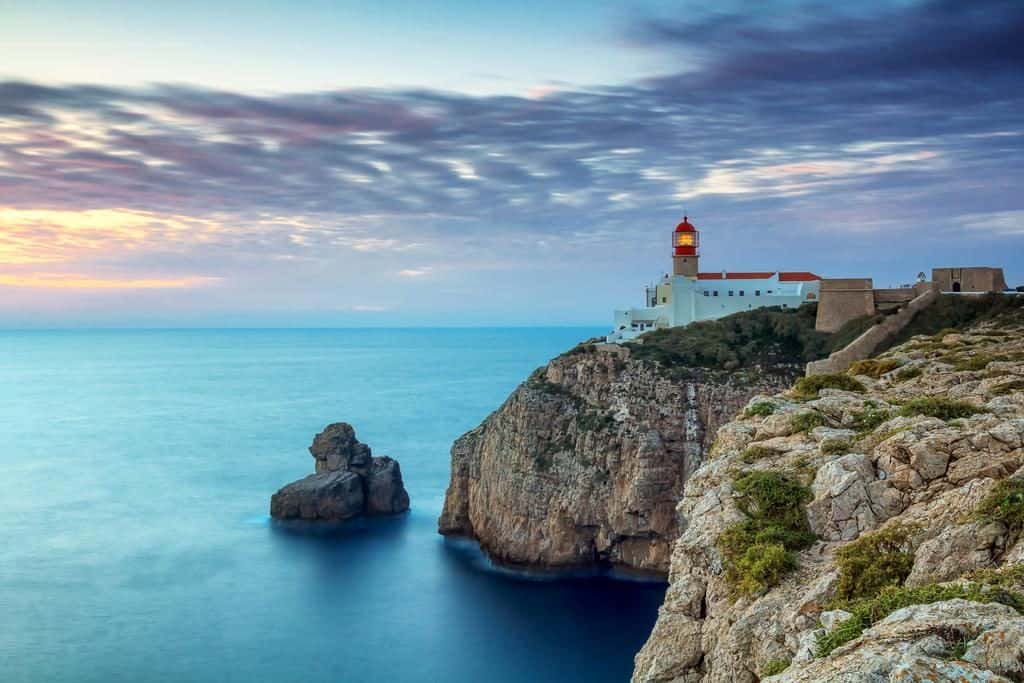
sagres portugal image cheap travel destinations

Sagres is the perfect spot to take in the gorgeous natural landscapes of Portugal. Between the gnarly waves you’ll find on the coast of the Pacific Ocean and the free hiking trails you can trek in and around the area, you won’t run out of activities on your budget trip to this European hidden gem.

This destination has many perks for the budget traveler. It is both affordable and doesn’t tend to get very crowded in the summer.

There are some incredibly nice hostels in the area too. The Goodfeeling hostel is within 10km to Sagres and starts at $17 a night with free beach transfers.

Flights to Sagres start for as low as $466!

What is not to love about this exciting cheap travel destination?

Verona, Italy

Verona is the setting of Shakespeare’s Romeo and Juliet and a beautiful romantic setting for travelers looking to save a buck or two.

I originally found in my research that you can eat for as cheap as $6.75 per person, per meal. But later found in some forums that if you are in the more touristy areas of the city, you will need to expect to pay around 15 Euros per meal.

So plan where you will eat before you go, to save money.

There is plenty to do for cheap or free. The churches are breathtaking and only cost a couple of Euros to enter. If you sight see anything without entering, it can be for free!

If you are already in Europe, you can fly to Verona for as low as $109 round trip. If you fly from the U.S. (like us) you are looking at $1,000+ round trip because let’s face it, it’s far. But once you’re there, your budget travel dreams are endless.

World’s most impressive Roman ruins you probably haven’t heard of

Slide 1 of 46: Unless you’ve been living under a rock – or a temple – it’s likely that you’ll have heard of the famous Roman ruins of Pompeii and the ancient architectural gems of Rome. At its peak, the Roman Empire covered nearly two million square miles – spanning large swathes of western Europe, Africa and even parts of Asia – so there are plenty of lesser-known wonders to explore without the crowds.

Slide 2 of 46: Founded by the Greeks and later conquered by the Romans, this captivating site showcases the best of the Hellenistic and Roman eras. Found just a couple of hours to the east of the famous ancient Greek city of Ephesus in the village of Geyre, it has been beautifully preserved. You’ll find far fewer tourists here than at some of Turkey’s more popular sites.

Slide 3 of 46: Less than 12 miles from the coastal resort town of Sarandë, this ancient Roman city sits in its own national park and was salvaged from its state of disrepair by funding from the lords Rothschild and Sainsbury in the late 1990s. While it is also home to Greek and Byzantine ruins, the Roman influence at Butrint is unquestionable, with a bathhouse on site as well as an aqueduct. There's a fascinating museum, which details the area's historical significance, and the area is a leafy, tranquil escape from the Mediterranean sun.

Slide 4 of 46: The city wall in Lugo is so well preserved, it’s almost hard to believe it was built in the Roman era. Lugo’s wall was originally constructed to protect the Roman city from barbarians and at its tallest point is almost 40 feet (12.1m) high. Today’s visitors can walk along the wall and see fantastic views of Lugo and beyond.

Slide 5 of 46: Jerash is Jordan's second most popular archaeological site and is often dwarfed by the country's mesmerizing ancient world wonder of Petra. North of the capital Amman and once known as Gerasa, the site remains remarkably intact considering the numerous earthquakes it has survived.
Slide 6 of 46: Midway between Tel Aviv and Haifa, Caesarea is one of the few places where the Roman Empire met the sea. Its namesake national park protects many of the archaeological treasures created by King Herod in the 1st century BC. The park is home to the world’s only underwater museum where you can dive among ancient ruins. Check out 30 of the world's most jaw-dropping underwater attractions. 

Slide 7 of 46: Once snaking its way across the north of England from Wallsend near Newcastle to Bowness-on-Solway in Cumbria, Hadrian’s Wall was built by the conquering Romans in around AD 122 to protect against northern barbarian tribes. Today, only segments of the wall remain. Some of the best-preserved forts and settlements are Housesteads, Chesters and Vindolanda near Hexham, and Birdoswald in Carlisle.

Slide 8 of 46: Located in western Cyprus, this large site has been inhabited since Neolithic times and, according to legend, is the birthplace of Aphrodite. The mosaics here are among the finest in the world, while the houses of Dionysus, Orpheus, Aion and Theseus are beautiful examples of elaborate Roman villas.

Slide 9 of 46: Roman-Berber Timgad, founded around AD 100, is on the northern slopes of the Aurès Mountains, southeast of the city of Batna. Often referred to as the ‘Pompeii of Africa’, Timgad was an ex-military colony and today you can still see remnants of the impressive 14 baths, as well as the ruins of grand houses with mosaic floors. Currently however, according to UK and US foreign office advice, tourists in Algeria should exercise increased caution and consider taking extra security measures when visiting the country.

Slide 10 of 46: These beautiful and well-preserved baths date back to around AD 300. Believed to be the biggest Roman baths to be built outside of Rome, they feature a huge hot water bath, six boiler rooms, a steam bath, an intricate under-floor heating system and a cold-water bath. There is a small admission charge of $4.45 (£3.50/€4) but it’s worth it.

Slide 11 of 46: With a deep, natural port and the nearby silver mines to the east, this city in southeast Spain was of huge strategic importance to the Romans, who took it from the Carthaginians in 209 BC. While there’s not much left here, its Roman theater has been well preserved and is the second largest in the country.

Slide 12 of 46: For over 900 years, Leptis Magna was a jewel in the crown of the Roman Empire. Found on the Mediterranean coast of Libya just 62 miles southeast of Tripoli, Leptis was the birthplace of emperor Septimus Severus and benefitted enormously from his patronage. It was discovered by archaeologists in the 1920s and is one of the best-preserved Roman cities in the world. Sadly currently both the British and US governments advise against travel to Libya due to continuing unrest. 

Slide 13 of 46: Located more than 70 miles southwest of Tunis, many of the Roman ruins found in Dougga date from AD 100 to AD 300 and remain in good condition. The site also offers superb views out across the valley of Oued Khalled. Although there are no restrictions on travel to Dougga, the UK and US advise tourists to exercise caution in the country due to recent unrest.

Slide 14 of 46: Many of the ruins here date back to the Roman occupation which began around 188 BC. Located to the east of modern-day Antalya in the Aksu area, Perge is home to a bathhouse, stadium (the biggest in Asia Minor) and theater.

Slide 15 of 46: In the northeast of Spain, modern day Catalunya, sit the Roman-Greco ruins of the town of Empúries. Overlooking the Balearic Sea, these ancient ruins are perfect for combining history with a beach break. Here you’ll find the remains of everyday life – streets, houses, mosaics, temples and drainage systems. Just 90 minutes from Barcelona, when you've paid a visit to the ruins there's plenty to see and do in the Catalan capital too. 
Slide 16 of 46: The largest Roman home ever found in Britain, Fishbourne is located in Chichester, West Sussex, on England’s south coast. It is believed to date back to around AD 75 – 30 years after the Roman conquest. Home to the oldest gardens in the country, this vast, lavish residence also boasts fine mosaics including the impressive 'Cupid on a Dolphin' (pictured). Discover more secrets of Sussex – Meghan and Harry's royal county – with our guide. 

The Best Airbnbs in Los Angeles

Slide 1 of 7: You know that $4.5 million home we just mentioned? It has floor-to-ceiling windows overlooking the Hollywood Hills from each of its oversized three bedrooms. The light-filled house also offers a fully stocked, ultra-modern kitchen and two soaking tubs (also with views) for maximum relaxation. Plus, you can get access to a number of luxury cars at extra cost (we're talkin' Rolls Royce Wraiths and Lamborghini Aventadors).
Book Now: $850 per night, airbnb.com

Andrea Wyner, the Photographer Behind One of T+L’s May 2019 Covers, Reveals How She Got the Shot

a large stone building: Rome, on the cover of Travel + Leisure May 2019

May is Travel + Leisure‘s annual Europe Issue, and for T+L subscribers, its cover depicts perhaps the most

recognizable structures on the continent.

Photographing the Colosseum is no easy task. When your subject is visited (and photographed) by 4 million tourists every year, how do you make your shot is special? And, more importantly, how do you do justice to one of the world’s greatest examples of human achievement?

T+L recently spoke with photographerAndrea Wyner, who managed to do just that for our subscriber cover — and whose images accompany writer Taffy Brodesser-Akner’s feature story about her family’s first trip to Rome. Here’s how she approached the assignment:

T+L: Do you spend a lot of time in Rome? What’s your overall impression of the place and the subject matter?

Andrea Wyner: “I’m currently based in Milan. It’s so centrally located in Europe, and allows me to travel easily throughout the continent — and more recently, the Middle East. I go to Rome often. It’s a popular destination. I think of Rome as an outdoor museum. Each time I’m there, I seem to find something new.”

What was it like shooting at the Colosseum? Is there anything particularly difficult about photographing monuments, or places that might be very busy?

“At first, I thought, how can I make something that’s been photographed so much look special — especially a monument. I had a few ideas in mind. But on arrival, I saw the construction around the Colossem (they are building a new metro line). So all I could do was wait for the right light. I think that constraint was what made the shot interesting.”

Can you describe where you were when you took the cover photo? What was going on around you?

“I was surrounded by construction and crowds, so to avoid that and get a nice perspective, I found an angle that was higher up.”

What time of day did you take the picture? What type of equipment did you use?

“The cover shot was taken right before the sun was going down — around 6 p.m. Since it was winter in Rome, I was very lucky there was any sun on the day I shot. But I wanted to avoid too much direct sun, so I went to the Colosseum a few different times during the day. I think winter sunlight gives a nice warm cast that’s also a bit cool.

I used my Nikon D700 and 23-70 lens. When I had to get a digital camera, I asked a photographer friend who I totally respect about which camera I should get — I’m so happy I listened to him.”

Do you have any other cool projects in the works that you’d like to share?

“Friends, and friends-of-friends, are always asking me for travel advice on everything from villa rentals and restaurant recommendations to best cities to visit, etc. Sp I recently decided to start a side project — it launches tomorrow — where I provide personal service for travel itineraries and insider tips.”

Many Americans Struggle to Afford Summer Vacation

a woman sitting on a suitcase: Stressed traveler

The economy may be roaring, but millions of Americans are struggling to afford a vacationthis summer.

According to a new Bankrate.com report, 39 million Americans will forego time off this summer due to financial reasons. Forty-four percent of those passing up a vacation said that day-to-day bills were a primary obstacle.

Overall, Bankrate’s research found that about half (52 percent) of Americans are planning on taking a summer vacation this year, 26 percent are definitely not planning one and 22 percent have not decided. Among those who are planning vacations, the average cost is expected to be approximately $1,979.

For those who want to take a vacation but think that they can’t afford one, Bankrate’s credit card analyst Ted Rossman suggests maximizing cash back cards and rewards.

“If you want to take a summer vacation and think you can’t afford it, consider signing up for a travel or cash back credit card,” Rossman advised. “There’s still time to turn a sign-up bonus and ongoing spending rewards into a free or discounted trip.”

Rossman recommends the Chase Sapphire Preferred, the Capital One Savor and the Wells Fargo Propel American Express Card. These cards offer sign-up bonuses ranging from $300 to $750 with lucrative ongoing rewards.

“With the median summer vacation costing $1,000, these perks can go a long way toward getting you somewhere fun for less,” he noted.

It is never wise to overspend or to take a vacation when you can’t afford to pay bills. Twenty-two percent of those who said that they can’t afford a summer vacation said that paying down debt is the biggest factor standing between them and being able to afford to take a trip, according to Bankrate.

“Paying down debt is important, but make sure you do it right so this isn’t the reason you miss out on a summer vacation next year,” said Rossman. “A balance transfer credit card with zero percent interest for up to 21 months will help you pay down your debt faster so you can get back to spending your money on more rewarding things.”

It is good news that more than half of all Americans plan to take a vacation this year, however, only 38 percent of those who get paid time off believe they will use all their vacation days. Thirty-five percent think they’ll use no more than half of their allotted time off.

It is important for workers to give themselves a break and, while vacations can be expensive, travelers can look to destinations close to home, search for inexpensive hotel deals or contact a travel agent to find a getaway that is more affordable.

Secrets of the world’s tiniest nations


Slide 1 of 30: Forming your own country might sound like a dream to many. Some creative folks though, have made their fantasy a bizarre reality. They're not recognized by any governments in the world, but so-called micronations are spread all over the globe, some of them consisting of just a bedroom. The best part? Many of these spots can be visited by tourists, who proudly collect passport stamps, money and sometimes even a title from these unusual places. Here are 10 of the world's tiniest unofficial nations and their secrets.

Freetown Christiania, Copenhagen, Denmark

Slide 3 of 30: A group of hippies initially squatted on the former military base in the borough of Christianshaven and declared the site of the barracks a "free zone". Cannabis, which remains illegal in Denmark, has been sold openly in the aptly named Pusher Street of Christiania (officially called the Green Light District) ever since but tolerated by the authorities.
Slide 4 of 30: Murals all over the buildings show the community's open approach to drugs, while those living there are happy to show Christiania off to anyone who visits. The small community now has a visitor center where you can learn more about the "nation's" history, see its former currency and stamps and its three dot flag. Walking tours help cope with the increasing visitor numbers to this quirky Copenhagen quarter, which is said to be the second most popular tourist attraction in the Danish capital, after the Tivoli Gardens.

Slide 5 of 30: Visitors are welcome, but should respect three rules written on a sign you pass upon entering the Green Light District. "Have fun", "Don't run", (as this is said to cause panic) and "No photos" of people selling or consuming marijuana.

Slide 6 of 30: First settled in 1895, the small town of Whangamomona is (controversially) located in the rural Manawatu-Wanganui Region on New Zealand's North Island. However, after the regional council redrew boundaries in 1989, the frustrated residents declared themselves a republic as an act of protest rejecting involvement in the region. They even held their own presidential elections.
Slide 7 of 30: Though its creation began as a protest, Whangamomona now sees itself more as a tongue-in-cheek republic. Its former presidents included a goat and a poodle. The town attracts tourists from all around the country and overseas, and its biennially celebrated Republic Day is attended by thousands.

Slide 8 of 30: Passports and passport stamps are issued to ensure safe travel through Whangamomona. The quirky town can be reached by following the Forgotten World State Highway, 45 minutes east of Stratford.

Discover the world's most-wanted passport stamps 

Slide 9 of 30: Located in the Prater park in Austria's capital of Vienna, this ball-shaped house was proclaimed a Republic in 1982 after a dispute between artist Edwin Lipburger and the authorities over its building permit. When Lipburger first erected it 11 years earlier without permission in Lower Austria, he was arrested and sent to jail for ten weeks.

Slide 10 of 30: Kugelmugel houses regularly changing art exhibitions, which have continued after the death of its founder in 2015. To follow in his father's footprints, Lipburger's son Nikolaus keeps the sphere open to the public.

Slide 11 of 30: The eye-catching house has the only address within the Republic of Kugelmugel, that being "Antifaschismus-Platz 2" ("2 Anti-Fascism Square"), which has since been officially adopted by the city of Vienna.
Slide 12 of 30: Who would have thought that a suburb in south London houses a tiny nation that claims to be independent from the rest of the UK? Formed in 2008 by a father and his son (the Austens), the "capital" of the Empire of Austenasia is located in Carshalton and ruled by Emperor Jonathan I. He doesn't stand alone in his fight to maintain independence, as 23 other properties in the UK and around the world claim to be part of the student's family-home micronation, pictured here.
Slide 13 of 30: Its territory is spread across the UK, along with a university campus in Australia, a holiday home in the Hebrides and houses in the US, Montenegro, India and Algeria. Austenasia proudly states it's a nation of 83 citizens and Emperor Jonnathan I (pictured in the center with two tourists in his house) is happy to welcome curious visitors to his capital "Wrythe" – subject to prior arrangement. You can even buy Austenasian coins and postcards as souvenirs.

Slide 14 of 30: Penguins outnumber humans about 10,000 to 1 (a generous unofficial estimation) in the territory of the Grand Duchy of Flandrensis. This micronation consists of five islands off the coast of western Antarctica and claims to be the only country in the world that doesn't want any people on its grounds. However, that doesn't mean you can't become a Flandrensian citizen.

Slide 15 of 30: Flandrensis is a community based in 57 countries trying to protect Antarctica. By founding his own micronation near the South Pole back in 2008, Belgian activist Niels Vermeersch wanted to raise awareness of melting polar ice.
Slide 16 of 30: The self-declared head of state, the Grand Duke Niels van Flandrensis (pictured left with Kevin Baugh of the Republic of Molossia at a micronation conference in London), keeps himself busy with involvement in environmental affairs and promoting micronationalism. If you are interested in joining Flandrensis, you can complete an online application form.
Slide 17 of 30: The Old Town of Lithuania's capital Vilnius hides a secret. About one square kilometer of it belongs to the self-declared Republic of Užupis, one of the smallest in the world, which has its own president, constitution, currency and even a navy consisting of a few small boats. Every year on 1 April it's Užupis Day, when residents celebrate their independence.
Slide 18 of 30: Užupis is a beautiful place with pastel-hued houses telling a Soviet past, cobbled streets and lots of artistic flair. In fact, it was founded by a group of local artists in 1997 and the republic's current president is a poet, musician and film director. Whether Užupis' self-proclaimed independence is to be taken seriously or not, no-one quite knows.
Slide 19 of 30: The symbol of Užupis is the "Holy Hand", a blue hand with a hole in the middle, meaning to be unbribable. The micronation's creative community regularly hosts fashion festivals, concerts, exhibitions and poetry events.

Slide 20 of 30: In 1979, 14-year old Milwaukee resident Robert Ben Madison (pictured) declared his bedroom in his house to be a sovereign state and announced it to be the Kingdom of Talossa. He invented a flag, currency, legislation, and most astonishingly its own language, Talossan, including a lexicon of more than 35,000 words. However, even though Madison's micronation still exists today, he is no longer part of it.

Slide 21 of 30: After gaining a lot of publicity in the 1990s, Talossa's kingdom, formerly consisting of only a few citizens living in Milwaukee (pictured), developed to a large internet community finally leading to Madison's abdication in 2005. It is now ruled by King John and is mainly an online community, which you can join by writing a letter to the Talossan Interior Minister.

Slide 22 of 30: It might sound somewhat megalomaniacal, but this micronation created by Illinois resident James T. Mangan comprises the entirety of outer space. The eccentric author declared the so-called Nation of Celestial Space in 1949 to the United States, Soviet Union, United Kingdom and United Nations on behalf of humanity, so no country could ever establish a political hegemony in the universe.

Slide 23 of 30: Mangan was engaged in promoting Celestia for many years, claiming almost 20,000 members in 1959 and even applied for membership of the United Nations. However, his micronation is thought to have eclipsed with the founder's death in 1970, despite still operating online. Aside from space itself, all that remains of his nation are some rare coins, the Celestons (pictured), and passports issued in Celestia's name from the 1950s and 1960s. We're still waiting for vacations to space, but in the meantime, check out what travel will look like in 2030. 
Slide 24 of 30: Situated in the outback of Western Australia, visitors to the Principality of Hutt River are welcomed by a large bust of its founder, the recently late Prince Leonard of the Hutt. In 1970 Leonard Casley declared his 29 square miles to be independent from Australia as a protest against wheat production quotas. He reportedly refused to pay a single dollar of tax until his death at the age of 93 in February this year.

Slide 25 of 30: Despite its remote location 370 miles north of Perth and accessibility only by a long dirt road, more than 40,000 tourists make their way to the self-proclaimed independent country every year. Upon crossing the border to the Principality visitors are required to get a “visa” for AUS$4 ($2.80/£2.20) and have their passports stamped. It's so frequently visited, that websites for Australian embassies around the world include information stating its unofficial status as a micronation.

Slide 26 of 30: In the "Government offices" (pictured) that also house the post office of Hutt River, stamps, banknotes and coins featuring its royal family are issued, and passports can be purchased in the country's own souvenir shop. As with many micronations, supporters can apply to become citizens. However, this process has become so popular with Hutt River Province, that it has been temporarily closed while the nation's government completes an "infrastructure expansion project".

Slide 27 of 30: Hutt River, which consists of 23 residents and 14,000 citizens overseas, also has its own flag (pictured) that can be seen flying over the capital of Nain. It's now reigned by Prince Leonard's son, Prince Graeme, who has vowed to continue the nation.
Slide 28 of 30: Not all micronations are drug-fuelled communities or strangely-shaped buildings. A stunningly beautiful island off the northeast coast of Sardinia houses the tiniest self-proclaimed kingdom in the world. Tavolara claimed independence from what is now Italy, in the early 1800s and 200 years later, still has a king on its throne.

Take a look at 50 of the most beautiful small towns in the world

Cruise Ship Doctor Says Many Hungover Passengers Claim They’re Sea Sick

a person sitting in a chair: cruise ship, sickness, sea sick

Cruise ship medical expert Ben Macfarlane has shared that people on cruises often pretend to be seasick when they’re more likely hungover.

In his book Cruise Ship SOS, Macfarlane shares what his medical colleague told him, “Seasickness is a very convenient illness.”

“You’ll notice that the people who suffer the most are the ones who were in the bar knocking back mojitos at 2 a.m. the previous night.”

His colleague also said, “You’ll also see that these people never have hangovers. They come to us with sore heads in the morning because they’re prone to ‘migraines.’”

“They feel sick when they wake up because of the air-conditioning in the staterooms, not because of all the vintage port they consumed at midnight.”

Apparently, the doctor would provide unusual cures like fried garlic and pork to those claiming to be seasick, when he knew otherwise.

“The stuff of maritime legend. A time-honoured cure for sea-sickness,” said the doctor.

The next time you’re on a cruise ship and a cruise ship doctor suggests fried garlic and pork to someone who is ‘seasick,’ you’ll know what that means.

The most unusual places to stay in the UK

Slide 1 of 40: Why stay in a standard hotel when you can choose a former military helicopter or treehouse? From converted grain stores to towering castles, there are countless quirky breaks to choose from. Here is our pick of the most eccentric holiday options out there for your next short getaway in the UK.

Slide 2 of 40: Seek shelter for the night in a Second World War bunker in the South Wales countryside, refurbished to make a cosy home that’s steeped in history. In the past, a watchman looked out for signs of air raids and lit decoy fires in the nearby fields. Now, the quiet shelter is the ideal base to enjoy Monmouthshire with the stunning ruins of Tintern Abbey nearby. 

Slide 3 of 40: Occupying the site of an old sawmill, this retro airstream resides in the woodlands on an estate in Aberdeenshire. The site has a separate lounge and kitchen, housed in a 1920s seed store cabin, for when you want to whip-up a meal. Plus there’s an outdoor Swedish wood-fired bath. Get stuck into local activities such as wild swimming in the River Dye, whisky tasting at the Fettercairn Distillery, exploring Balmoral Castle, or watersports at Knockburn Loch.

Slide 4 of 40: A dream come true for nature fans, this small spherical tree pod is suspended in the forest and has a ceiling window for stargazing. Fitted with a wood burner, the cedar shingle clad hut is safe in all weather conditions so the only thing likely to disturb your sleep is the sound of the local owl population. Come daybreak, head down to your kitchen hut and enjoy an open-air woodland breakfast in view of the babbling river. If you’re lucky you might catch a glimpse of the local kingfisher too.

Slide 5 of 40: If you’re fed up of normal hotel rooms, consider spending the night in a resorted vintage Bedford horse box at Brooks Country House, Herefordshire. Sleeping up to four people, the horse boxes are surprisingly luxurious, with en-suite bathrooms, LED lights, power showers, posh fabrics, complimentary toiletries and flatscreen TVs. Each box also has its own private terrace.

Slide 6 of 40: This off-grid cabin in the north Cornish wilderness has walls that slide to completely let the outdoors in. It comes with bunk beds and a bar stocked with beer, but this stay is about getting back to nature. After a rest, head out to explore waterfalls, a reservoir, or follow trails all the way up to Tintagel Castle at the coast. 

Slide 7 of 40: This sophisticated shepherd’s hut on a farm in Leicestershire has sleek interiors, a heated floor and bathroom. Outside, a canopy will protect you while cooking pizzas in the outdoor oven or soaking in the hot tub. If the skies are clear, put on your walking boots and head off to explore the village of Plungar, local shops and pubs, Belvoir Castle, or nearby swimming spots.
Slide 8 of 40: Less than 30 minutes from Plymouth, the Sunridge Treehouse is a childhood dream realised but with an outdoor hot tub and a terrace overlooking the canopy. The self-catering treehouse has a fully-fitted kitchen, private woodland and access to a fishing lake.
Slide 9 of 40: Whether you’re looking for a bit of relaxation, adventure or both, Camp Kátur has it all. Set in the beautiful Yorkshire countryside, the accommodation ranges from safari tents and tipis to geodomes and hobbit pods. During your stay you can enjoy a visit to the camp’s Eco Spa, participate in craft workshops and go quad biking.
Slide 10 of 40: It might look like a fairly standard country house hotel but it’s actually a converted 12th-century Cistercian abbey. The Coombe Abbey Hotel specialises in themed events, like murder mysteries and ghost tours. It also holds a medieval banquet every weekend.
Slide 11 of 40: If gently lapping water lulling you to sleep is your idea of heaven, then you’ll love the Houseboat Hotels. Moored in Sheffield’s Victoria Quays, the houseboats are heated and fully equipped with a bathroom, hot water and kitchen.
Slide 12 of 40: Love a llama? Then you shouldn’t miss an opportunity to stay at the Llama’s Pyjamas bed and breakfast. Guests stay in individually decorated rooms inspired by South America and get the opportunity to pet and trek with llamas.

Slide 14 of 40: What doesn’t look like much from the outside, is a celebration of gothic opulence and over-the-top furnishings on the inside. The Witchery by the Castle, located in Edinburgh’s Old Town, has only nine individually-designed rooms with walk-in dressing rooms, velvet-lined walls and free-standing baths. Staying in the Scottish capital? Read our guide here. 

Slide 15 of 40: The Corn Bin, in Sedlescombe, rural East Sussex is a former grain store that’s been cleverly converted to spacious, quirky accommodation with room for four people. Located next to a private airfield, you can watch planes come and go, and if you want to explore the local area, the village of Sedlescombe, historic town of Battle and the seaside town of Hastings are nearby.

Slide 16 of 40: The Bus Stop, in Gifford, East Lothian is a two-bedroom converted bus with a difference. Set on a working farm, there’s a glass roof on the bus so you can stargaze from your bed, while the hot tub, wood-burning stove and barbecue make it a cosy place to spend a holiday. It sleeps up to four, so you can bring the whole family. 

Slide 17 of 40: Sleeping in a former toilet may not sound appealing, but you’ll change your mind when you see the aptly-named Wee Retreat in Sheringham, on the north Norfolk coast. Right on the seafront, the former Victorian toilet block offers some of the county's most enviable sea views. It was converted into a modern bolthole by its current owner, who bought the property as a gift for his wife, and the two-bedroom, two-bathroom retreat is surprisingly spacious.
Slide 25 of 40: If you’re a railway enthusiast, you’ll love staying at Platform 1, Castle Howard Station, a former train station and Grade II-listed building that’s now an apartment perfect for a quirky holiday. The building, which once welcomed Queen Victoria as she arrived to take a train journey, can sleep a family of four and even comes with a welcome basket of local provisions so you can get on with exploring the beautiful scenery. 

How to spend the perfect weekend in Belgrade

Slide 1 of 12: Knez Mihailova is the main walking street and shopping zone in the center of Belgrade. It's protected by law as one of the oldest complexes in the city. Lined with 19th century buildings, the street is filled with numerous cafes and restaurants, souvenir shops and national monuments. Take a break on some of the café terraces and just watch people go by, listen to street musicians and feel the beating heart of the city.

Slide 2 of 12: Knez Mihailova Street connects the Belgrade's Fortress and Belgrade's downtown area. Located in the Kalemegdan Park, the Belgrade fortress is the symbol of the city and an impressive historic complex. The fortress lies on a hill overlooking the Sava and Danube confluence, rising above the city and protecting it. Kalemegdan's most important highlights are the Roman Well, Pobednik Statue and The Military Museum. Around the Park there are nice green areas for chilling and enjoying romantic views. Also Belgrade Zoo, one of the oldest in Europe, is located within the Park. There are a few restaurants and cafes located on the site, featuring impressive views. Boho Bar is the latest hip spot on Kalemegdan, famous for serving delicious cocktails.

Slide 3 of 12: Dive into the magical world of Nikola Tesla, the famous inventor. The museum is dedicated to the life and works of Tesla and it's dubbed as one of the best museums in the city. Here you can learn more about Tesla's life and his machines. For those keen on learning even more, there are guided tours available in English.

Slide 4 of 12: Serbia is famous for its tasty cuisine which is a mix of Balkan and oriental cuisines. Serbian food is heavy with plenty of calories and meat is the main ingredient of almost every dish. Skadarlija is a historic place with cobbled streets and in the past it was known as the main bohemian quarter. Today here you'll find lots of restaurants serving Serbian food as well as cute shops, bursting with vintage charm. The most famous restaurant here is called Three Hats and this is where you can tuck into famous dishes like cevapi, veil roast or Karadordeva steak.

Slide 5 of 12: After you've had all that delicious Serbian food, it's time to relax a bit. Tasmajdan is the second largest park in downtown Belgrade and the ideal place to get away from the city crowd and spend some time in nature.  It's not a well-known spot for tourists but locals adore it. Home to Belgrade's second largest temple, St. Marko's church, the park is not only beautiful but historically significant.

Slide 6 of 12: Essential part of Belgrade nightlife are floating river clubs anchored along the Danube and Sava rivers known as "Splavovi". These rafts are mostly nightclubs, restaurants or bar. Belgrade is world-wide famous for its entertaining clubs and great fun is a gurantee here. The best time to experience Splavs is during summer when all of the clubs are open. The clubs here play all types of music, from Serbian folk music to techno and hip hop music. Some of the best Splavs locals go to are Splav Leto, Freestyler and 20/44.

Slide 7 of 12: After a crazy night out in Belgrade and all that affordable alcohol, you'll need a high-carb Serbian breakfast to start your day. Serbians start their day with a cup of Turkish coffee or an espresso. The best way to cure your hangover and raise your energy levels is eating a rich-calorie burek and yogurth for breakfast. Burek is a pastry filled with ground beef or lamb and it's usually eaten with a yogurt on the side. Locals swear the best burek in Belgrade can be found in Petrovic bakery.

Slide 8 of 12: The Museum of Yugoslavia is the most popular museum in Belgrade, situated just a bit outside the city center. For all history buffs and those interested to find out more about former Yugoslavia, this museum is the ultimate spot. With more than 200.000 items, the museum represents Yugoslavia from start to finish. Within the museum don't miss visiting the House of Flowers which is resting place of Josip Broz Tito, president of Yugoslavia, and his wife Jovanka.
Slide 9 of 12: This church is not only the largest Orthodox Church in Serbia, it's the largest in this part of Europe and one of the largest in the world. It's considered as one of the most important landmarks in the city, so it's not to be missed! Built in Serbian-Byzantine style, the church is impressive and so massive it can be seen from all approaches to the city.

Slide 10 of 12: Belgrade's Beton Hala is definitely one of the top attractions for dining and eating out. Whether you come here just for a drink or coffee or for clubbing, Beton Hala won't disappoint you. This restaurant and bar oasis is located on the banks of Sava River, featuring impressive views and great vibes. At night, especially during the weekend, Beton Hala is the ultimate hotspot in Belgrade. Eat sushi at restaurant Sakura, try modern Balkan cuisine at Ambar or dance your heart out to live music at Cantina de Frida.

Slide 11 of 12: After lunch visit Ada Ciganlija, proudly bearing the name of "Belgrade's Sea". Ada Ciganlija is a manmade island on the Sava river, located south of the city center. With first signs of spring, it becomes the favorite spot of Belgraders. Bounded by Sava River on one and the Sava Lake on the other side, Ada Ciganlija has sandy beaches perfect for swimming in the summer. The place is packed with lively bars, restaurants and sport areas, so you surely won't be bored here!

For sun, sea and sand at a low cost, here are 5 places in Bulgaria which offer just that

Slide 1 of 5: At this beach you can find some of the purest sands the Black Sea has to offer. Not only there is sun, sea and sand but this beach has an abundance of vegetation. The bushes and trees that can be seen all around add a natural feel to the beach. There is also an aqua park nearby and those who visit this beach often partake in a number of watersports such as wind surfing or sailing.

Slide 2 of 5: Sozopol was founded way back in the 7th century by the Greeks and that should come as little surprise as the stunning waters here may have reminded them of their homeland. Lots of quaint, local restaurants surround the beach and good food isn't the only thing on the menu as live entertainment which includes singing and dancing can always be found here.
Slide 3 of 5: Albena is renowned for being the most family friendly beach on the coast and it's easy to see why. Here you can find everything fun and exciting such as aqua parks, bowling alleys and mini golf courses. The sands are pristine and the waters crystal clear which add to its charm. Something that adds a special touch to Albena is its free beach library, which visitors can use to their hearts content.
Slide 4 of 5: This part of Bulgaria is not far from the Turkish border and has much more of a rustic charm. Forget usual souvenir shops here as its rocky shore is lined with ancient wooden houses. The Nestinarka and Lipite beaches are perfect for relaxing on during the day, but for those who wish to explore a more natural surrounding there is Veleka, an impressive river surrounded by trees which are hundreds of years old.

Slide 5 of 5: This beach may be difficult to reach given that it's located in the remote Strandzha National Park, but it is worth the trip for those who enjoy the feeling of serenity whilst under the sun. You may even lay your eyes on some unexpected creatures here such as owls and deers. The waters found here are extremely clear making it a favorite spot amongst scuba divers. If you are the adventurous type, you'll be happy to know that wild camping is allowed here!

Design a site like this with WordPress.com
Get started