Secrets of the world’s most incredible castles

Slide 1 of 61: Whether they've faced down bloody wars, revolutions or even careless owners, these historic forts and castles have survived the centuries to tell a tale. From lion enclosures to hidden passages, read on to discover the secrets these magnificent treasures contain.

Slide 2 of 61: Perched within the mouth of a cave in Slovenia, it’s difficult to see where the rock ends and Predjama castle starts. This dramatic 13th-century fortress is rumored to have influenced George R.R.Martin, the author behind the TV series Game of Thrones.
Slide 3 of 61: Visitors can explore the castle’s many rooms but there’s more than sumptuous interiors to Predjama. The legend of one of the castle owners, Knight Erazem, says he stole food from the rich to feed the poor using a series of intricate cave tunnels. Today, Erazem’s network of passages can be discovered on tours of the site.
Slide 4 of 61: The imposing Alcázar of Toledo in central Spain, was built on the site of a Roman Palace in the 3rd century and completed by Emperor Charles V in the 15th century. A symbol of importance, the Alcázar was damaged in 1936 when it was held by Spanish Republicans in the country's Civil War.

Slide 5 of 61: However, the Alcázar was restored in the 1940s and is now the site of Spanish Army offices and a military museum that welcomes visitors. The interior courtyard, pictured here, is a lovely place to stop and shelter from the midday sun. Planning a visit? Discover what to see in Toledo here. 

Slide 6 of 61: The breathtaking Chateau De Chambord in the Loire Valley is a stunning example of French Renaissance architecture. Designed as a hunting lodge for King Francis I it was completed in 1547 and it's rumored Leonardo Da Vinci played a part in the design. After the French Revolution in 1792, some of the furnishings were sold but the Chateau survived.

Slide 7 of 61: Although the chateau’s interior is as grand as the outside it’s the famous double staircase that draws in the biggest crowds. The "double helix" serves all the chateau’s many floors and is designed so that if two people are using each staircase they can see each through the windows yet never cross paths.

Slide 8 of 61: This impressive feat was originally called La Cuesta Encantada (“Enchanted Hill” in Spanish). It was dreamed up by media man William Randolph Hearst, who was inspired by his childhood travels in Europe. He teamed up with architect Julia Morgan in 1919, and the pair would spend almost three decades toiling away on the castle. Poor health meant Hearst never saw it completed, but even in its unfinished state the castle contained some 165 rooms and more than 100 acres of gardens.

Slide 9 of 61: Hearst was an art lover, too, and paintings and sculptures practically spill from the property: a highlight is Venus Italica, a sculpture of Venus by Italian Antonio Canova. The castle also has a dreamy Italianate terrace and the glittering Neptune pool, also of Roman influence. A range of tours are available to the public, including those themed around art and even Hollywood (Charlie Chaplin and Cary Grant were among the glittering parade of guests to visit the castle).

Slide 10 of 61: King Ludwig II of Bavaria built Neuschwanstein Castle in the 19th century to use as a private retreat from public life. So we’re willing to bet he’d have been shocked to see the 1.4 million annual visitors the castle welcomes today. While the stunning Neuschwanstein is an attraction on its own, many of today’s visitors flock to the fortress because it was the inspiration for Disney’s Sleeping Beauty castle in California.

Slide 11 of 61: But the castle was also a dream world for its designer, Ludwig. Neuschwanstein’s interiors display Ludwig’s desire to escape into the medieval world that inspired the operas of German composer Richard Wagner. The castle is dedicated to Wagner and much of the art inside depicts the kings, poets and knights that appear in the composer’s work.

Slide 12 of 61: Mehrangarh Fort has guarded the northwestern city of Jodhpur since 1459. Built by Rao Jodha, the Rajasthani ruler who founded Jodhpur, entry to the fort is only obtained by passing through seven elaborate gates.
Slide 14 of 61: The Tower of London may now be a world-famous tourist attraction, but the castle was once a notorious prison. Built in 1078, many of the Tower’s former inmates met a grisly end including Anne Boleyn (Henry VIII's second wife who was beheaded in 1536) and Guy Fawkes, (whose plot to overthrow the British monarchy is remembered in the annual firework night on 5 November). The last prisoners held in the Tower were surprisingly recent though – the notorious East End criminals the Kray twins in 1952. 

Slide 15 of 61: As well as being a prison, the Tower has served as an armory and a menagerie and is now the home of The Crown Jewels. You can see the crown Queen Elizabeth II wore on her coronation as well as the spot where Anne Boleyn lost her head. St John's chapel (pictured) was built for William the Conqueror in 1240. These days visitors are welcome at the Tower and unlike some of its previous guests, they're allowed to go home at the end of the day... After exploring the Tower, why not see what else London has to offer?

Slide 17 of 61: Himeji also miraculously escaped damage during bombing in the Second World War and the Great Hanshin earthquake in 1995. Venture inside and you’ll find the castle’s interior is plain with little decoration. However, looks can be deceptive. Many of the castle’s walkways turn back on themselves to confuse invaders and even today’s visitors can end up bamboozled.

Slide 18 of 61: You’d need a lot of time to fully explore Prague Castle. At 735,000 square feet (68,000 square meters) the complex is one of the largest in the world and home to St Vitus Cathedral as well as several other churches. Dating from the 9th century, the castle’s architecture spans almost every design style of the last millennium and is a UNESCO World Heritage Site.

Slide 19 of 61: This picture was taken in Rudolph Gallery, one of five halls within the grounds. The gallery was first built in the 16th century but the stuccos you can see here were only added in the 19th. It's an area of the castle that's only open to the public on special occasions, such as for concerts, so it's worth planning your visit in advance.

Slide 20 of 61: One of the few real palaces in the USA, Iolani Palace was home to the Hawaiian monarchy in the 19th century. The royal residence was completed in 1882, a sumptuous property ahead of its time, complete with electricity and modern plumbing. Its architectural style is unique, dubbed “American Florentine” for its blend of traditional Hawaiian and Italian Renaissance features – its elegant columns and bold corner towers are most striking.

Slide 21 of 61: The interiors are equally as opulent, and the Throne Room is the plushest of them all. Red velvet curtains frame vast windows, chandeliers hang heavily from the ceiling and a pair of gilded thrones sit on a raised platform. King Kalakaua and Queen Kapi‘olani were the first royals to live here, moving in as soon as their regal abode was completed. The monarchy occupied the palace until 1893 when the then-leader Queen Lili'uokalani was overthrown. Today it's a public museum.

Slide 22 of 61: The formidable Malbork Castle was built by the Teutonic Knights, a group of German Catholic crusaders, in the 13th century. At the time of its completion it was the largest brick castle in the world. Malbork served as a residence for the Polish royal family until it was occupied, first by the Swedes in the 16th century, then by the Germans during the Second World War.

Slide 23 of 61: At the end of the war, the castle was returned to Poland. Visitors can explore its many rooms as well as the on-site museum. And Malbork still holds the title of the largest brick building in Europe.

Slide 24 of 61: The Saladin Citadel is a magnificent medieval Islamic fort in Cairo. Constructed in the 12th century, the citadel was the first stage of ruler Salah-al-din’s plans to defend the cities of Cairo and Fustat from the Crusaders.

Slide 25 of 61: This picture is of the Mosque of Muhammed Ali, one of three places of worship at the Citadel. The mosque was built in the 19th century and is in an Ottoman style of design. On a clear day you can see as far as the Pyramids of Giza from outside the mosque.

Slide 26 of 61: As legends go, Bran Castle is home to one of the spookiest. The 12th-century castle in Transylvania is known as "Dracula’s castle" – despite Bram Stoker, author of Dracula, never having visited Romania. The castle’s turrets and hill location contribute to its eerie air. 

Slide 27 of 61: The castle is now used to exhibit furniture and artifacts collected by Romania’s late Queen Marie. However, in 2016 two vampire fans became the first people to spend the night in Bran Castle after winning an Airbnb competition. The Canadian siblings slept in velvet lined coffins and despite some people’s fears, survived the night.
Slide 28 of 61: Perched on a hill, Amer Fort dwarfs the small town of the same name that lies below. Jaipur – around eight miles away – is known as the "Pink City" and this fortress, built entirely of red sandstone and marble is typical of the region's style. The imposing castle was started in 1592 and has been the home of many Rajasthani royals over the years. 
Slide 30 of 61: Edinburgh Castle’s imposing battlements overlook the city’s Old Town. The castle dates back to the 12th century and has reportedly been a part of 26 attacks, earning it the dubious accolade of being "the most besieged place in Great Britain".
Slide 31 of 61: Today the castle is Scotland’s most visited tourist attraction and hosts the Edinburgh Military Tattoo every year during August. Inside, the castle’s dark wood interiors emphasize its grandeur with The Great Hall, built for James IV in 1511, the palace's glorious centerpiece. If you're visiting Scotland look out for the Scottish currency as you'll find Edinburgh Castle is now even featured on some £10 notes. Spending the weekend in Edinburgh? Find out what else to discover.

Slide 32 of 61: Dario Sattui didn’t rush into building Castello di Amorosa in Napa, California in 1994 – he did his groundwork first. Modeled on a 13th-century Tuscan castle, and surrounded by acres of woodland, this romantic idyll is the perfect place to enjoy fine Italian-style wines – just as its maker intended it to be. Sattui spent years visiting Europe before setting up his winery in Napa Valley, buying and renovating a slew of smaller palatial properties in Italy before he embarked on his master project.

Slide 34 of 61: Granada’s impressive Alhambra was built during Spain’s Moorish period in the mid-13th century. The Alhambra served as a royal palace and its exquisite gardens are home to many beautiful walkways and fountains.
Slide 35 of 61: The Alhambra’s buildings are elaborately decorated from floor-to-ceiling and it’s easy to imagine Spanish royals walking through the gardens. Its beauty has inspired many works of literature and film including Washington Irving’s Tales of the Alhambra. Discover more of what Spain's Andalucía region has to offer.

Slide 37 of 61: Though it’s now rarely filled with water, this was the swimming pool or public bath in the castle complex of Gondar. Today the bath is used for the Timkat festival, a unique Christian orthodox celebration of Jesus’ baptism. Believers gather at the waterfront to watch the priest bless the water. You can also see the lower halls, kitchens, steam rooms and lion enclosures at the Gondar site.

Slide 38 of 61: The first historical record of the De Haar castle in Utrecht is from 1391, but the castle that today’s citizens know and love was rebuilt in 1892. Etienne van Zuylen van Nijevelt inherited the castle and spent 20 years restoring it with the backing of his wife’s family, the Rothschilds.

Slide 39 of 61: De Haar’s interior is decorated with richly ornamented woodcarving mirroring Roman Catholic design at the time and there are 200 rooms and 30 bathrooms, some of which are open to the public. The castle is situated in beautiful parkland and its grounds often play host to weddings too.

Slide 40 of 61: The enchanting Pena Palace, near Sintra, could be from a fairy tale. Designed in a 19th-century romantic style, it started life as a chapel. King Ferdinand II of Portugal elevated it to its current magnificence after buying the property in the 1830s.

Slide 41 of 61: This is the kitchen inside the palace where today’s visitors can get an idea of the scale of preparation needed to keep the castle’s royal inhabitants happy. Discover what else to see in nearby Lisbon and its surrounds too, with our full guide to the Portuguese capital. 

Slide 42 of 61: Oman’s Nizwa Fort, around an hour outside the capital of Muscat, was finished in the 17th century, although the original structure is from the 12th century. The construction took 12 years to complete and the design is famous for its architectural deception, involving spiked wooden doors and so-called "murder holes" used to pour boiling date syrup onto intruders.

Slide 51 of 61: In 1945, Moszna was occupied by the Soviet Red Army leading its owners to flee to Germany. The occupation caused significant damage to Moszna’s interior furnishings but this grand staircase has stood the test of time. Although the castle was briefly used as a hospital following the Second World War it’s now open to tourists as well as housing an art gallery.
Slide 52 of 61: Touting itself as “America’s largest home”, Biltmore Estate is modeled on a French chateau and was completed in 1895, after six years of construction. Location is the real draw here, though. When young George Vanderbilt, a New York businessman from a distinguished family, visited the smoky Blue Ridge mountains, he knew he wanted to make them his backyard. Upon its completion, Biltmore Estate boasted an impressive 250 rooms, including 35 bedrooms.
Slide 53 of 61: He soon filled them with friends and family, and his future wife, Edith, who he married three years later. After Vanderbilt’s death in 1914, his son William set up Biltmore Estate Wine Company and began growing vines on the property. The estate remains a winery today, and visitors can take a tasting at the bar, explore the sprawling grounds and vineyards, and stay in one of the several ritzy lodgings.

Slide 54 of 61: If you look closely at the Alcázar of Segovia, you’ll notice something unusual about its design. Despite Segovia being landlocked, the fortress is shaped like the bow of a ship. The first historical record of the Alcázar’s existence is from the 12th century but the majority of the construction was probably completed by King Philip II in the 1500s.

Slide 55 of 61: The Hall of the Galley (pictured) is in keeping with the ship theme of the Alcázar, designed in the shape of an inverted ship hull. Although the Alcázar has been used as the royal court, a prison and a military college it is now open for tourists to explore.

Slide 56 of 61: Built in the 15th century, the Citadel was designed to protect the kingdom of Alexandria in the country's north. It is believed to have been erected on the same spot as the city's famous Lighthouse, one of the Seven Wonders of the Ancient World.
Slide 57 of 61: A British invasion in 1882 heavily damaged the fortress leaving it in disrepair for several years. However, in the 20th century restoration work began and today it’s open to tourists. Although there are no artifacts on display, guests can wander the cavernous hallways and enjoy spectacular views of the Mediterranean Sea.

Slide 59 of 61: Although the castle fell into ruin after one of its owners started selling it off in parts, it was restored by the royal family in the 19th century. Members of the Luxembourg resistance even used the castle during a battle against the Nazis in 1944. Today Vianden can be visited year-round with highlights including the Renaissance-style dining room pictured here. 

A ‘Beauty and the Beast’ Themed Bar Is Opening in Disney World

a group of people sitting at a table in front of a building: Beauty and the Beast Bar at the Grand Floridian at Walt Disney World Resort

Come this fall, Disney World will invite you to be their guest at a new “Beauty and the Beast” themed lounge and bar.

Disney’s Grand Floridian Resort & Spa is opening a four-part lounge and bar, inspired by the 2017 live action film. Renovations are expected to be completed by fall 2019, according to the park.

In the signature bar area, a gold chandelier, inspired by Belle’s famous ball gown, will be the centerpiece. A motif of the Beast’s magical rose will appear throughout the room. Or visitors could take a hint from Belle and spend their time in the library room, decked out in classical baroque themes and French furnishings. The garden room will be inspired by the enchanted forest that surrounds the Beast’s castle and an outdoor patio area will be reminiscent of the castle’s terrace.

The bar is taking over the former Mizner’s Lounge on the second floor of the hotel, where nightly live jazz and high-end cocktails were in full rotation.

If you prefer the animated film Disney released in 1991 to the live-action remake, consider dining at the Be Our Guest Restaurant or Gaston’s Tavern, opened in 2012 in Magic Kingdom’s Fantasyland area. Both dining areas feature nods to the film, with French-inspired fare and menu options like “LeFou’s brew.”

If the park’s previous “Beauty and the Beast” themed spaces are any indication of what’s to come, guests can expect plenty of French-themed options on the menu and many references to the hit song “Be Our Guest.” Don’t believe me? Ask the dishes…

14 Mysteries of the Ocean Scientists Still Can’t Explain

Slide 1 of 14: Seventy percent of the Earth's surface is below the ocean, yet 95 percent of it remains unexplored to the human eye. Although the oft-heard statistic is that we know more about the surface of Mars than we do about the ocean seabed, scientists have been able to map the entire ocean floor—but the resolution is incredibly poor, so we can only visualize features larger than three miles. Ongoing research like Seabed 2030 aims to bring the ocean floor into greater focus, so we can better see and understand what's really down there. For now, we can just marvel at the most stunning deep-sea sights in the world.

Slide 2 of 14: For hundreds of years, sailors have reported randomly encountering a strange 'milky' cast to the sea as far as the eye can see, but scientists have been unable to explain it—or even know for sure if it was real. In 2006, researchers were actually able to capture a satellite image of a milky sea, and several years later, experiments discovered the glow was likely from bioluminescent bacteria that attract fish in order to be eaten and survive in their guts. But, scientists still aren't sure how or why the bacteria gather in such huge numbers as to be able to be seen from space. In addition, their glow is continuous, unlike the more commonly seen 'dinoflagellate' organisms that produce brief flashes of light.
Slide 3 of 14: In 2016, researchers from Ocean Exploration Trust (founded by oceanographer and Titanic discoverer Robert Ballard) aboard the Exploration Vessel Nautilus found a strange purple blob on the ocean floor off California. Stumped as to what it could be, the scientists joked about it being a spider egg sac or a 'tiny momma octopus,' and nicknamed it Blobus purpilis before battling with a crab to retrieve the specimen. Research is ongoing as to what the orb is, but it's hypothesized to be a new species of velutinids, a type of snails. Here are more of the most stunningly beautiful underwater photos ever taken.
Slide 5 of 14: This huge animal could be the mythical kraken featured in Pirates of the Caribbean and Jules Verne's 20,000 Leagues Under the Sea. Although it's unlikely that the giant squid actually attacked ships, very little is known about this mysterious creature of the deep. It wasn't even photographed alive until 2004 and not filmed until several years later, when it was caught at the surface. Underwater video was not accomplished until 2012. Scientists have learned virtually nothing about the lives of these deep-sea giants, not even how big they get, although some estimates predict they grow up to 66 feet. Only their cousin the colossal squid might be bigger in weight, although probably not length—but even less is known about them.

Slide 6 of 14: We might not know much about the terrain of the ocean, but we have seen is just as stunning as what's on land—and in fact, may be strikingly similar. 'Brine pools,' where the salt water concentration is greater than the surrounding ocean, create lake-like surfaces and shorelines. Earth's largest waterfall is actually underwater in the Denmark Strait, where colder water tumbles over a huge drop in the ocean floor, falling 11,500 feet (the largest land waterfall is only 3,212 feet). Underwater volcanoes erupt—the largest one ever recently happened, and scientists almost missed it. Although researchers know all of these things exist, their exact mechanisms are still being investigated, making them one of the perplexing science mysteries no one has figured out.

Slide 7 of 14: These mysterious giants of the sea are the largest animal to live on Earth—ever. But partially due to the whaling trade hunting them nearly to extinction, plus their slow reproduction, there just aren't many of them out there to study. As a result little is known about these elusive creatures, including how long they live, when they reach sexual maturity, or the specifics of their reproduction. The animals' shyness also makes them hard to observe. In 2017, a video of never-before-seen blue whale behavior off Sri Lanka caused controversy among experts as to whether or not the rolling and racing caught on camera was a mating ritual. The researchers plan to return this summer to see if they can learn more.

Slide 8 of 14: Nothing like the mysterious 'bloop' sound recorded in the South Pacific in 1997 had ever been heard before. It was very loud, low-frequency, and had a unique pattern that made some think it was a newly discovered creature lurking in the depths. (It didn't help that the sound came from near the location of HP Lovecraft's fictional sunken city of R'yleh, where a creature called Cthulhu is imprisoned.) Researchers continued to look for the origin of the noise for years, until in 2005 they announced it had been an 'icequake,' which occurs when icebergs break off of glaciers. Although that reasoning has been generally accepted, some conspiracy theorists still feel the explanation is a little thin. Check out some less mysterious, but still fascinating, facts you never knew about our oceans.

Slide 9 of 14: Could this tiny jelly hold the secret to curing cancer? Smaller than a pinky nail, this sea creature has the Benjamin Button-like ability to revert back to a polyp stage when threatened with starvation or injury, earning it the nickname 'immortal jellyfish' for how it outsmarts death. Although the species had been known about for a hundred years, it wasn't until the 1990s that this incredible phenomenon was discovered. Scientists still are unsure exactly how its cells are able to regress and regrow, but the immortal jellyfish could hold promise for fighting diseases like cancer in humans. Check out more rare photos of our ocean's invertebrates like you've never seen them before.
Slide 10 of 14: The points of the so-called Bermuda Triangle are Miami, Puerto Rico, and Bermuda—but don't worry if you've booked a trip to any of those destinations. Despite the area being known for the unexplained disappearances of ships and planes, there really isn't any evidence that it's more dangerous than anywhere else in the world, or that there's any supernatural phenomenon at work. But, the National Oceanic and Atmospheric Administration (NOAA) does admit there could be scientific reasons for the disappearances, such as the likelihood of hurricanes, rapid changes in weather due to the Gulf Stream, and the numerous islands in the Caribbean that make for tricky navigation. NOAA also acknowledges that the area could possibly mess with navigational tools, making them point true north as opposed to magnetic north; or that 'oceanic flatulence,' a burst of methane gas from the sea, could somehow have affected the vessels and planes.

Slide 11 of 14: This spot in the ocean off the Mariana Islands near Guam is the deepest point on Earth—nearly seven miles down. In comparison, Mount Everest is only 5.5 miles tall. This little-explored area of the sea has only ever been visited by three people: two oceanographers in 1960, and filmmaker/ocean explorer James Cameron in 2012 in the first solo expedition. In the trench, it's completely dark and only a few degrees above freezing, with intense pressure of eight tons per square inch. But somehow marine life has managed to survive, even thrive, in such an environment. Further research, though, is needed into the unique ecosystem. And even though it's so remote, it's not immune to pollution: Just this year, researchers found evidence of a plastic bag there in a database of images from the trench. Sadly, pollution also affects the other most stunning natural wonders on Earth.

Slide 12 of 14: Could these be the sea monsters of yore? This snake-like creature is the longest bony fish on Earth, and can grow up to 56 feet and weigh 600 pounds. But because they live at depths around 3,300 feet, not much is known about the rarely-seen-alive creature. Two dead oarfish were found on California shores in 2013, prompting scientists to wonder if ominous forces were at work to beach the normally deep-sea animals, as they have been rumored to wash up before earthquakes. But instead the incident turned out to be a boon for scientists to be able to study the specimens—since they don't even know how many species of the fish exist, DNA samples could help researchers figure that out.

Slide 13 of 14: Are they man-made steps and ancient pyramids that sank in an earthquake, or natural rock formations? These strange structures in the water off the coast of Japan, nicknamed 'Japan's Atlantis,' have baffled scientists since they were found by a diver in 1986. Amazingly, scientists are still arguing if people or Mother Nature created the Yonaguni Monument, as well as whether markings in the stone are carvings of faces and animals or simply naturally-made scratches. Today, it's a popular dive spot with tourists today and continues to puzzle people as one of the ancient mysteries researchers still can't explain.
Slide 14 of 14: We're not talking about James Cameron's 1989 movie about researchers who find a deep-sea civilization—but scientists are traveling to the real-life abyss, the area between 13,000 and 20,000 feet under the surface, to discover new marine life. A recent expedition near Australia located hundreds of new species, as well as little-known creatures like the 'faceless fish' that hasn't been seen here since 1873. Other rare specimens the scientists collected include the spiny king crab, the monkey brittle star, the smooth-head Blobfish (yes, that's its real name), and the deep-sea lizard fish. Who knows what else is down there? We sure don't—and we don't know the explanations for these unsolved mysteries about planet Earth, either.

5 Things You Should Never Do on a Cruise

In my six years of sailing the seven seas, I’ve met all kinds of new friends and interesting folks. But I’ve also met the problem passengers: the rude ones, the greedy ones, and the always-late ones.

Don’t be like them. Here are five cruising pet peeves and no-nos to avoid, so you can make sure you’re a crew favorite:

Don’t: miss the ship.

a group of people standing in front of a large ship in the background: Getty Images© Getty Images Getty Images

It’s every cruiser’s worst nightmare: to find yourself gazing up as your cruise ship sails off into the sunset…without you. Cruise lines run a tight ship, literally — and if you’re late, they will not wait. If you find yourself in this situation, it will be down to you to cough up the cash and pay for a flight to the next port of call. To avoid this, make sure you’re always on the local time. Otherwise, you could end up like British couple the Pratts, who arrived back at their Danube port only to realize their watches weren’t on central European time. It was noon in England, not Austria.

Don’t: hoard the food.

a person standing in front of a table: Holger Leue/Lonely Planet Images/Getty Images© Holger Leue/Lonely Planet Images/Getty Images Holger Leue/Lonely Planet Images/Getty Images

Much like Rebel Wilson, if my family went to a buffet growing up, we always took some home with us. No need to do this on a cruise ship. The buffet is open for much of the day, and sometimes for twenty-four hours — in fact, thinking back to my first cruise holiday as a young teen, I remember feeling like it was Christmas upon discovering this. If you’re really desperate to eat in your cabin, some vessels will even allow you to order directly to your stateroom free of charge.

Don’t: pack too much.

a bunch of luggage: Getty Images© Getty Images Getty ImagesThere is no getting away from this one…I am definitely guilty of being an over-packer. And a majority of the time, the luggage rule on cruises is: “if you can carry it, you can bring it.” Granted, if you’re taking a fly-cruise and sailing out of a far-flung location, you’re likely to find luggage restrictions on the part of the airline. But if you don’t have restrictions, that means endless pairs of shoes, dresses, and even the kitchen sink! Remember, though, that cabin space is limited. There are also laundry services onboard most ships, so feel free to pack lightly and reuse what you bring.

Don’t: steal a sunbed.

Sergio J. Pitamitz/Getty Images© Sergio J. Pitamitz/Getty Images Sergio J. Pitamitz/Getty ImagesJust picture it — it’s 6am, and you hear the thunderous sound of footsteps along the corridors. A herd of elephants, you ask? No. It’s the sunbed stealers. One of the only design flaws onboard larger cruise ships is the ratio of sunbeds to passengers; sadly, there simply cannot be enough for the mammoth number of people onboard. Far too often, scheming guests will rise at the crack of dawn, place their towels down on a vacant sunbed, and “reserve” their spot for the day — even if it only receives ten minutes of use. What they don’t realize: if this bad behavior is spotted, the crew will monitor you like a hawk, and your towel will not be long for this world.

Don’t: be rude to the crew.

a person standing in front of a door: Loic Venance/AFP/Getty Images© Loic Venance/AFP/Getty Images Loic Venance/AFP/Getty ImagesCountless documentaries have showcased the extremely hard work undertaken by cruise crewmembers. Seven-day weeks, often for six months at a time — no holidays, no paid time off. Remember: politeness costs nothing. Although it may seem obvious, always remember your pleases and thank yous. Much of the crew’s work goes unnoticed; when your cab

in steward makes your bed and leaves an artistic animal-shaped towel creation on top of your duvet, thank them. One of the biggest insults to staff is stiffing them on gratuity. These tips contribute directly towards their salaries; removing gratuity from your fare will only mean the crew is doing the same work for less money.

6 unmissable thermal baths in and around Europe

Slide 1 of 7: Planning a trip across or around Europe? Don't forget to schedule some downtime! These six locations scattered around the continent are ideal for relaxing amidst your busy itinerary. Take a break in Budapest, or get some much-needed R&R in Andorra. The choice is yours!

Slide 2 of 7: These baths in Budapest are known worldwide for their medicinal qualities due to the chemical composition of their waters. The complex's indoor and outdoor heated pools allow for year-round bathing, whatever the weather. By day, you can relax and enjoy their healing powers. By night, get ready for the craziest outdoor party in Europe as the baths turn into a 'Sparty', with bars, music and a whirlpool.

Slide 3 of 7: With bright blue, geothermal waters which naturally soothe your skin, there is no better way to relax than by plunging into the Blue Lagoon. The mud from the bed of the lagoon can even be used as a purifying face mask. For the best experience, stay at one of the nearby hotels where you can benefit from spa treatments and excellent food.

Slide 4 of 7: These incredibly beautiful hot springs are tucked away in the Tuscan countryside. Find yourself in awe, not only at the cascading warm waters, but also at the fact that they are completely free to enjoy every day of the year. Bring a picnic and set up camp on the rocks beside the springs, taking regular dips in between sunbathing.
Slide 5 of 7: Pamukkale is a small town hidden in western Turkey, and is neighboured by a small Roman spa city called Hierapolis. Although not technically in continental Europe, Pamukkale deserves a mention thanks to its unique topography. Due to its naturally mineral-rich waters, this area is dotted with several hot springs and thermal baths which create a truly idyllic landscape. Bathe in the crystal clear waters of the Antique Pool, located in Hierapolis, and watch water cascade down the white travertine terraces in Pamukkale.

Slide 5 of 7: Pamukkale is a small town hidden in western Turkey, and is neighboured by a small Roman spa city called Hierapolis. Although not technically in continental Europe, Pamukkale deserves a mention thanks to its unique topography. Due to its naturally mineral-rich waters, this area is dotted with several hot springs and thermal baths which create a truly idyllic landscape. Bathe in the crystal clear waters of the Antique Pool, located in Hierapolis, and watch water cascade down the white travertine terraces in Pamukkale.

Slide 6 of 7: Harrogate is a small English spa town North Yorkshire, known famously for its mineral springs discovered back in the 16th century. The Turkish Baths offer the chance to relax in these medicinal waters, rich in sulphur and other minerals, making this the perfect English holiday destination.

Slide 7 of 7: Caldea is a huge thermal spa complex in the Andorran Pyrenees. The baths boast four different spas with jacuzzis, waterfalls and massage jets allowing for the ultimate relaxation experience. The area is home to some of the hottest thermal spring waters in Europe, which makes Caldea the perfect place to relax and warm up during ski season.

Climate concerns don’t halt travel

Millions of Norwegians are officially off for Norway’s long five-day Easter holiday weekend that began on Thursday, with more than half of them out travelling within the country or heading abroad. There’s little sign they’re sacrificing holiday travel out of concern for the climate or the carbon emissions that flying and driving can generate.

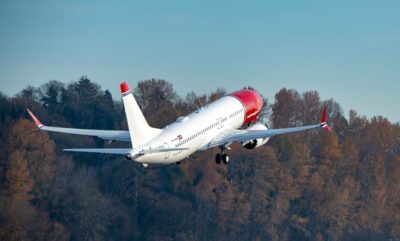
Norwegian Air’s carbon emissions rose 51 percent between 2013 and 2018, largely because of its route expansion. The airline itself claims that emissions per passenger-kilometer have declined 30 percent since 2008 because of more fuel-efficient aircraft. PHOTO: Norwegian Air

Oslo’s main airport at Gardermoen reported more huge numbers of people passing through last weekend, as many seized the opportunity to get 10 days off in a row for the price of just three vacation days from work (Monday, Tuesday and Wednesday). A new survey conducted by research firm Kantar/TNS for the national tourism employers’ organization NHO Reiseliv shows that nearly 20 percent of those out traveling flew to other countries in Europe or beyond.

Others hit the road, loading up the car and driving to mountain cabins for spring skiing, opening up holiday homes along the coast, or visiting family and friends. Fully 78 percent of those reporting that they’d leave home during the Easter holidays planned to travel to another location in Norway.

“The vast majority of Norwegians still view Easter holidays within Norway as their top choice,” Kristin Krohn Devold, a former defense minister who now heads NHO Reiseliv, told news bureau NTB.

‘The new coal’
With 55 percent of those questioned replying that they’d leave home during Easter, the travel bug continues to bite, and that worries climate activists. Oslo newspaper Dagsavisen recently reported how another new study shows that an airline now ranks as one of the 10 largest sources of carbon emissions in Europe.

The dubious distinction went to Ryanair, according to the study conducted by the organization Transport & Environment (T&E). Norway’s chapter of Friends of the Earth, Naturvernforbundet, is among the members of T&E and was sounding alarms before the Easter holidays even began.

“When it comes to the climate, Ryanair is the new coal,” claimed Andrew Murphy, aviation chief at T&E. The organization used EU data showing emissions development for around 14,000 companies in various sectors. The nine biggest generators of carbon emissions were coal-driven power plants, topped by Belchatow of Poland, which released 38 million tons of carbon last year. The 10th spot on the list was Ryanair, whose flights around Europe released 9.9 million tons of CO2 in 2018.

Route expansion to blame
Norway’s two biggest airlines, Norwegian Air and SAS, released far less, at 2.8 million- and 2.5 million tons respectively, “but that’s more than what all the diesel vehicles in Norway released in 2017,” Holger Schlaupitz of Naturvernforbund told Dagsavisen. Norwegian’s carbon emissions growth from 2013 to 2018 hit 51 percent, much higher than SAS’ 6 percent and reflecting Norwegian’s major route expansion. Ryanair’s growth was 49 percent, while carbon emissions for airlines flying within Europe rose 26 percent on average.

While carbons emissions are falling in most other sectors including coal, they’re rising within the aviation sector because of the strong growth in airline traffic. Schlaupitz notes that Norwegians have contributed to that growth with 52 million passengers passing through state airport agency Avinor’s airports last year. That’s more than double the number in 1993.

“It’s clear that it’s too cheap for airline traffic to pollute, and that the prices for jet fuel are relatively low,” Schlaupitz claimed. He has no faith that either more fuel-efficient aircraft, electric aircraft or more use of biofuels will cut emissions from airline traffic, as long as it continues to grow.

Political approval for more airline traffic growth
All indications are that it will. Avinor actively seeks new airline routes from its airports and offers incentives to the airlines to get them. Avinor also remains keen to build a third runway at OSL Gardermoen. A majority in Parliament (formed by the government parties and the Labour Party) voted down a measure proposed by other more-climate-oriented parties in opposition to block it.

The airlines, meanwhile, defend their emissions growth by contending that their aircraft have reduced emissions per passenger-kilometer. Norwegian Air claims its emissions per passenger-kilometer have declined by 30 percent since 2008 because of major investment in new, more emissions-friendly aircraft.

“Last year Norwegian paid more than NOK 1.3 billion in so-called ‘environmental fees’ to the EU’s quota system, CO2 taxes on domestic routes and the airline seat tax in Norway and Sweden,” Norwegian Air spokesman Lasse Sandaker-Nielsen told Dagsavisen. He added that Norwegian Air continues to call for a CO2 fund that could be used to promote environmental goals.

Wine Country: Exploring the Okanagan’s Golden Mile

The birds know it’s morning before you do. A single sweet note breaks the velvety silence and is quickly joined by a chorus of birdsong. Grape leaves rustle as some small creature wanders through the vineyard in search of breakfast. The inky darkness lightens to smoky grey and then brightens to gold as sunlight spills molten over the bluffs across the valley.

It’s another perfect day in wine country. And there are few places better to greet it than right here on the Golden Mile Bench.

Watching the sun rise from the guest villas at Hester Creek Estate Winery. JOANNE SASVARI

The bench is a steep, sandy, gravelly, loamy slope just south of Oliver, pop. 5,000, the little town known as the Wine Capital of Canada. It’s British Columbia’s first sub-geographical indication, a unique place within wine country that just happens to be the perfect spot to grow lush Chardonnay and elegant Merlot. Some of B.C.’s greatest producers can be found here doing just that, among them Culmina Family Estate Winery, CheckMate Artisanal Winery, Tinhorn Creek Vineyards, Fairview Cellars, Road 13 Vineyards and Hester Creek Estate Winery.

Days move lazily here, broken by delicious moments. Hop in the car—or on your bike, though it’s easier to load cases of wine in your car—and meander along the numbered country roads that lead to Black Sage Road across the valley, where wineries produce peppery Syrahs and voluptuous Viognier. Head north, past the massive boulder known as McIntyre Bluff, and you’ll bump into Penticton’s twin sandy beaches. Head south, and you’ll find yourself in the desert surrounding Osoyoos and, just a few metres further, the U.S. border. But here, between the Golden Mile and Black Sage benches, it’s all rolling hills striped with vineyards, and hidden in their folds, people who want to give you lovely things to eat and drink.

You’ll need a central location to start from, a home base. A guest house like the Tuscan-style ones at Hester Creek Estate Winery will do quite nicely. They have kitchenettes, comfy furniture and, perched as they are high above the winery, patios with sweeping views across vineyards and valley. You can make yourself right at home without having to worry about pesky details like bringing in the harvest.

Hester Creek winemaker Rob Summers with a handful of grapes. JOANNE SASVARI

The winery itself is historic in this valley. Fifty years ago, back when everyone else in the Okanagan was still planting hybrid varieties like Vidal and Marechal Foch, an Italian immigrant named Joe Busnardo planted the first vitis vinifera here, including the Trebbiano vines that still produce a bright, crisp white wine each spring. The wines he made from these noble grapes were, by all accounts, terrible, but he proved that they would thrive here.

In the 1980s, Busnardo opened Divino Estate Winery on the site, and when he sold it in 1996, the new owners named it for the creek that runs along the south side of the property. In 2004, Prince George businessman Curt Garland bought the winery and hired Rob Summers, a veteran winemaker from Niagara, to produce its wines, which, please note, are no longer terrible. Far from it. The Cabernet Franc is elegant yet approachable, all black fruit and violets, and the Bordeaux blend known as The Judge is a powerful combination of juicy fruit and supple tannins.

Grab a bottle (or two) from the wine shop and some cheese and charcuterie from Oliver Eats, the new gourmet deli from local chef Derek Uhlemann. Or pick up some authentic tacos al pastor from El Sabor De Marina, the turquoise-blue Mexican food stand just outside town, if you can wait till you get home to dive into their savoury depths. Or, if you’re feeling adventuresome, head out to one of the great restaurants in the neighbourhood, which, happily, are all located at wineries: Miradoro at Tinhorn Creek Vineyards, The Sonora Room at Burrowing Owl Estate Winery, Masala Bistro at Kismet Estate Winery, or Terrafina right here, just down the hill at Hester Creek.

Chef Bernard Casavant of RauDZ Creative Concepts serves an al fresco lunch on the patio at Terrafina Restaurant.JOANNE SASVARI

About a year ago, chef Rod Butters’ RauDZ Creative Concepts took over the Tuscan-themed restaurant, and while chef de cuisine James Hanna still takes inspiration from the Mediterranean, Terrafina’s new menu is proudly local and seasonal. It abounds in pastas, risottos and pizzas made with fresh local produce. Though truth be told, you could simply order the fully customizable boards that come loaded with marinated veg, cured meats and cheeses and be perfectly happy sipping wine at a patio table and watching the glow from the setting sun dance across the vines.

From Terrafina, it’s just a short stroll under the stars back to your guest villa. The night falls gently here, cool and fragrant, cattle lowing softly in the hills, birds trilling goodnight. Rest well in your suite, happy in the knowledge that tomorrow you can do it all again.

If you go

Getting there:

Both Air Canada and WestJet fly into Penticton airport. From there, it’s a 40-minute drive south to Oliver. However, if you plan to bring back wine, you might prefer the scenic five-hour drive from Vancouver along Highway 3.

While you’re in the south Okanagan, the hop-on, hop-off OK Wine Shuttle is a safe way to get to most of the wineries.

Staying there:

The new Coast Oliver Hotel is central, convenient and pet-and child-friendly.

For a more luxurious stay, head to the Tuscan-style Hester Creek Estate Winery Guest Villas—six well-appointed suites with a gourmet breakfast included—but be sure to book well in advance, especially during peak season.

Also check out:

Burrowing Owl Estate Winery Guest House; Kismet Estate Winery B&B or Silver Sage Winery B&B Luxury Suites.

Dining there:

Visit the local winery restaurants: Miradoro at Tinhorn Creek Vineyards, The Sonora Room at Burrowing Owl Estate Winery, Masala Bistro at Kismet Estate Winery, and Terrafina at Hester Creek Estate Winery.

Explore Europe through the eyes of experts

When I arrive in a new city, I book a private guide straightaway — someone who can bring the city’s architecture, history and culture to life. Lately, in the spirit of experiential sightseeing, I’ve been taking specialized tours that highlight unique, local experiences or historical themes. Particularly in big cities, I’ve found all kinds of focused tours, from guided night walks to musical pub crawls.

One of the most popular sightseeing trends is food tours, which reward travellers with a full meal, a local’s insights, and edible memories. For about $100, you can eat your way through a few neighbourhoods in a few hours, while an expert explains the history and tradition behind each dish. Depending on the cuisine, tours might be centred around a series of informal stand-up gourmet-snack stops, or several more formal dining experiences.

Unsurprisingly, my latest food tour in Paris was a delicious mix of culinary enlightenment and carbs. My guide taught me how to scrutinize and savour baguettes, croissants and cheese, and how to appreciate the French as expert eaters.

More adventurous foodies should seek out food tours in unlikelier places. For example, Poland’s bigger cities — particularly Warsaw — offer fascinating and flavourful food tours with a focus on vodka, fermenting techniques (for dishes like borscht), and hardy stews that originated in the country’s peasant past. These tours provide valuable perspective on how food affects culture, and vice versa.

Guided food tours provide thoughtful explanations of the authentic foods we travel so far to taste. (Dominic Arizona Bonuccelli photo)

To work off the food-tour calories, consider a bike tour. Some cities lend themselves well to cycling — and flat Copenhagen is the best of any. You’ll get to know the lay of the land efficiently, accompanied by a fun and opinionated Dane, and you’ll likely stumble upon charming corners of the Danish capital that many travellers miss. You also get a sense for local daily life, as many Danes regularly commute by bike, and stop at a few important sights (my tour finished at that must-see lady on the rock, the Little Mermaid statue).

If hard-hitting history is more to your liking, it’s well worth spending an afternoon on a tour led by academics with a passion for a specific historical era, political figure, or artistic movement. In Barcelona, I like historian and author Nick Lloyd’s deep dive into the Spanish Civil War. Both he and his partner are enthusiastic teachers, taking small groups on highly regarded walks through the Old Town to explain the war’s social context and significance in Barcelona.

Context in artwork is also much easier to absorb with a guide at your side. During my latest visit to the Rijksmuseum in Amsterdam, I was inspired by the local art historian who led my tour. I was better able to appreciate Johannes Vermeer’s 17th-century “intimate genre” paintings, which focus on domestic interiors — unique in a time when artists were normally supported by lofty patrons. During the Dutch Golden Age of the 1600s, trading ships roamed the globe and made Amsterdam wealthy. No longer ruled by the Habsburg king or obedient to the pope, the Dutch were a Protestant republic — fiercely independent and proud. Even without relying on the typical nobles, kings, and Catholic Church as patrons, Dutch artists still did just fine.

For a fresh perspective on daytime sightseeing, try a night walk. One of my favourites is Rothenburg’s Night Watchman tour — it’s flat-out the most entertaining hour of medieval wonder anywhere in Germany. The tour is as funny as it is informative, and “watchman” Georg, who for years has led visitors on this walk every night with a Cal Ripken-like constancy, manages to keep his jokes as fresh as if he’s just coming up with them for the first time. And as much as I enjoy hearing the Night Watchman’s stories yet again, it’s even more delightful to watch the enthralled faces of his younger audience members, eyes wide like those of any traveller who’s open to embracing new experiences.

Ghost walks are also popular in many cities with an old-timey core, and provide local lore and colour. While many have a well-earned reputation for being too silly to be worthwhile, I do enjoy the ones in York. On any given night, costumed characters bring out the dark side of the medieval centre’s atmospherically narrow lanes. Some tours are more historically based; others are more like street theatre than a walking tour — but all tell engaging tales of history, violence and mayhem.

And in Dublin, I like to spend an evening on a Musical Pub Crawl, getting a (literal) taste of local culture. A few Dubliner musicians meet each group in a pub and, over the course of the evening (and several pints of beer), lead you through three pubs. Along the way, they let you in on the back stories behind Ireland’s musical traditions in a way that’ll deepen your appreciation for Irish tunes far into the future.

There’s a tour for practically every curiosity and attention span. Pick your topic, take advantage of local expertise, and enjoy Europe’s most intimate cultural experiences.

Egypt is the biggest hot spot for elite travelers in 2019. Here’s what it’s like to visit as a billionaire, from luxury resorts on the Red Sea to sold-out cruises down the Nile

egypt beach


Egypt is the hottest destination billionaires are traveling to this year, according to boutique luxury travel agency Original Travel, which plans trips for high-net-worth individuals.

The country came in first in Original Travel’s ranking of top destinations where billionaires are headed in 2019, which it determined by looking at the number of bookings and performance; the latter was assessed by a combination of feedback and client inquiries. Their 2019 bookings for Egypt are set to triple last year’s bookings, Amelia Stewart, brand ambassador for Original Travel, told Business Insider.

You don’t have to look far to see Egypt’s appeal: It has a rich Pharaonic history and plenty of iconic landmarks, not to mention Greek, Roman, and Islamic influences to explore.

Like most travelers, billionaires visit Egypt to soak up its sights and history – but they do so while taking advantage of Egypt’s plentiful luxury offerings, from fine dining restaurants in Cairo to beach resorts along the coast of the Red Sea.

Below, see what’s propelling billionaires to visit Egypt – and what they’re doing when they get there. Prices indicated for hotels are representative of rates booked two months in advance.

Kenney’s election win prompts reactions Soak up dreamy desert in ScottsdaleB.C., Quebec, Ontario leaders

Scottsdale is known for its excellent restaurant scene but on a recent press visit, our host suggests something a little different — dinner in the desert.

So, about 4 o’clock on a warm afternoon, me and about eight colleagues pile into two shiny black SUVs for a trek in the Sonoran Desert to dine on gourmet goodies under the stars.

After leaving the main road, we pass the McDowell Sonoran Conservancy — some 12,140 hectares of pristine, protected desert land and mountains that fall within Scottsdale’s borders. The largest urban land preserve in the United States, it has 320 km of well-maintained trails that can be explored on foot, bike or horseback.

But we turn onto a road less travelled and continue driving until the asphalt ends, the road narrows and the gravel gives way to dirt. Soon we arrive at a clearing, where we’re greeted by Matt Cooley and Olivia Laux, the recently married couple behind Cloth & Flame.

Matt Cooley and Olivia Laux, the couple behind Cloth & Flame. The company holds large and small dinners and events in unusual outdoor places. ROBIN ROBINSON/SPECIAL TO POSTMEDIA NETWORK

Along with a crew of two, Cooley and Laux are hauling coolers, and setting up tables, chairs, lights and barbecues for our desert dining experience.

Cloth & Flame specializes in creating culinary “experiences” in unconventional places. These can be community or corporate events, private dinners like this one, or weddings. The couple have a passion for the wilderness, and have hosted events in “wild landscapes everywhere from the Grand Canyon to an Alaska mountainside,” Cooley says.

Their work has a conservancy aspect, too. They lease the land where events are held, providing income to landowners who might otherwise sell to developers. And they donate 10% of dinner proceeds to groups that protect wild places and wildlife, he adds.

This dinner is taking place on part of the Quarter Circle U Ranch in the storied Superstition Mountains.

Table set up with lights for a gourmet dinner in the desert near the Superstition Mountains with Cloth & Flame. ROBIN ROBINSON/SPECIAL TO POSTMEDIA NETWORK

While the crew prepares hors d’ouvres, we sip margaritas as we amble among the scrub brush and take photos of teddy bear cholla, saguaro and other cacti, paolo verde and mesquite trees, and mountain peaks in the distance.

Cooley, who is a fount of knowledge, answers questions about desert geography, geology, flora and fauna. He also warns us to watch out for holes in the soft dirt as these may house small animals or snakes.

Fortunately, we don’t disturb — or even see — any snakes!

While noshing on our starter — fig and brie crostini with sunflower sprouts — we watch the setting sun cast long shadows over the landscape and eventually sink behind a mountain and disappear.

A platter of appetizers — fig and brie crostini with sunflower sprouts — served during a recent desert dinner. ROBIN ROBINSON/SPECIAL TO POSTMEDIA NETWORK

As if on cue, millions of stars appear — spectacularly bright in the crystal clear midnight blue sky. Soon it’s time to gather ’round the table.

Our feast includes delicious meat and vegetarian dishes — melon and cabbage-sprout salad with rosemary-shallot vinaigrette; smoked salmon tartare with farm greens; roasted beet tartare; grilled filet mignon with roasted potato; green beans and charred pumpkin in red wine sauce; and a quinoa, roasted potato, green bean and pumpkin casserole. Each course is super delish and paired with a different wine.

Cooley joins our table after dessert — warm apple tart tartin — and spins some lively yarns about the Superstition Mountains, including the legend of the Lost Dutchman’s Gold Mine, which people still search for today.

Relaxed, happy and savouring the good food, good wine and good company, it’s the perfect end to our perfect dinner in the desert.

DESERT DETAILS

Private dinners with Cloth & Flame must be booked well in advance. Diners should wear sturdy, closed-in shoes and bring a sweater or light jacket as the temperature dips after sunset. Wondering about bathroom facilities? Events are held near places with access to washrooms, or Cloth & Flame sets up porta-potties on site. Cooley and Laux are also building some wilderness camping resorts. They aim to have one open in October. For information, see clothandflame.com.

For more on the McDowell Sonoran Conservancy, see www.mcdowellsonoran.org.

View of hot air balloons taken during a “flight” over the Sonoran Desert with Hot Air Expeditions. ROBIN ROBINSON/SPECIAL TO POSTMEDIA NETWORK

MORE DESERT EXPOSURE

Dining in the desert is not the only way to see the spectacular landscapes of the Sonoran. Visitors who don’t mind heights can get a thrilling bird’s-eye view from a hot air balloon.

Our group took a sunrise ride with Hot Air Expeditions, who picked us up from our hotel and drove us out to their launch site.

Before climbing into the hand-crafted wicker basket, we were given a short safety talk and were able to see dozens of colourful balloons being filled first with cold air, then hot in preparation for takeoff.

After lifting off, and soaring to about 1,525 metres, we enjoyed 360-degree views for about an hour.

A crew member from Hot Air Expeditions blows heated air into a balloon in preparation for takeoff. ROBIN ROBINSON/SPECIAL TO POSTMEDIA NETWORK

The first thing that struck me was how quiet it was far above the ground. While we were moving about 10 km/h, it hardly felt as if we were moving at all.

From our lofty perch, we could spy mountain ranges dotted with saguaro cacti, small animals such as jackrabbits and coyotes — even a few burros.

After a soft landing back on earth, flutes of Champagne were handed out, a gourmet breakfast was served and we all received “flight” certificates.

Dozens of Arizona companies offer these rides but Hot Air Expeditions is one of the oldest and has an excellent safety record. Sunset flights are also available. See hotairexpeditions.com.

NIGHT TIME AT THE OASIS

There is always something interesting to see at the 57-hectare Desert Botanical Garden (DBG) in Phoenix.

The living museum showcases some 50,000-plus plants that not only survive, but thrive in the world’s hottest places. The collection is organized into themed loop trails and galleries focusing on desert living, discovery, wildflowers and more.

The trails are home to about 14,000 cacti, 186 species of agave, and 400 species that are rare or endangered. About one-third of the plants are native to the area.

A sound and light installation called Electric Desert turns Phoenix’s Desert Botanical Garden into another world at night. The exhibit runs through May 12. ROBIN ROBINSON/SPECIAL TO POSTMEDIA NETWORK

Full disclosure here: I’m not good with plants. The only houseplant I have never killed is a cactus so I loved seeing the different varieties — hedgehog, beehive, prickly pear, jumping cholla, bunny ears and more — of this hardy species.

Another DBG highlight is an abundance of Arizona’s signature saguaros, which are found only in the Sonoran Desert. This mighty cactus can grow to heights of 18 metres, weigh up to 2,000 kilos and live more than 250 years!

On a previous visit, the garden had an exhibit of fantastical glass sculptures by Dale Chihuly. This time it was Electric Desert, a dream-like light and sound installation by Klip Collective. Some displays in this nighttime show appear to be moving, like the creeping devils that look like writhing snakes, or succulents that appear to have been transformed into colourful coral undulating beneath the ocean waves.

Electric Desert runs through May 12. See dbg.org.

Nine swimming pools flanked by lounge areas and palm tress make up the pool complex at The Phoenician. One of Scottsdale’s top resorts. ROBIN ROBINSON/SPECIAL TO POSTMEDIA NETWORK

CHIC SLEEPS

After a day in the desert, it’s nice to come home to one of Scottsdale’s welcoming resorts. We stayed at two — The Phoenician and Mountain Shadows.

— Pampering is a specialty of The Phoenician, one of Arizona’s grandest resorts with 643 rooms (including 62 suites), 11 restaurants, nine swimming pools, 11 tennis courts and a championship golf course, all set in 101 hectares.

The recently revamped Phoenician Spa occupies a three-storey building with 24 treatment rooms, a rooftop pool with views of Camelback Mountain and eight private cabanas, hot pools, and a relaxation lounge with fireplace. There is a full menu of massages, facials and body treatments. I tried the 80-minute Hydrafacial, which combines deep cleaning, exfoliation, hydration — using antioxidants, peptides and hyaluronic acid — lymphatic drainage and LED light therapy. It is almost like a mini-renovation for your face. But it really did leave my skin glowing and the effect lasted several weeks.

My favourite thing was the Mother-of-Pearl Pool with its iridescent tiles and adult hot tub. Children have their own areas: A Kid Zone with suspension bridge and tree house, a splash pad with spray guns, tipping buckets and water spouts, and a twisting waterslide. See www.thephoenician.com.

— The original Mountain Shadows opened in 1959. Nestled between two mountains — Camelback and Mummy — the hotel took its name from the long afternoon shadows the iconic mountains cast over the property. It attracted an international crowd that included Hollywood stars of the day such as John Wayne and Elizabeth Taylor.

Today’s Mountain Shadows is a new build near the site of the original. It has 183 rooms with a retro vibe, 42 condos and suites, an excellent restaurant with open kitchen, two pools, a hi-tech gym, and an 18-hole golf course. Some of our group spent a relaxing afternoon lounging in one of the private cabanas, sipping bubbly and nibbling fresh fruit between dips in the pool.

Design a site like this with WordPress.com
Get started