
Planning an international trip, especially your first one, is a thrilling experience. You scour Pinterest and Instagram for travel inspiration, shop for the perfect suitcase, and even use sites like Kayak to score a great hotel. You’re all set for your next adventure…right? Unfortunately, if your prep work stops there, you’re leaving yourself open to a ton of international travel mistakes.
Between visa requirements, voltage differences, and language barriers, preparing for a trip abroad takes more time and effort than a local getaway. Whether you’re gearing up for your first out-of-country adventure or just need a refresher, check out this top 10 list of international travel mistakes and how to avoid them.
#1: Overpaying for plane tickets
There’s a lot of advice on the internet for saving on plane tickets. Buy them on a Monday. No wait, a Tuesday at 7pm! Get them 3 months in advance. But 6 months if you’re going to France in the summer. And the advice changes every year based on airline industry algorithms!
Everyone know buying a last-minute plane ticket is incredibly expensive. But did you know that ticket prices can fluctuate by hundreds of dollars from one day to the next? The old wisdom of buying well in advance and early in the week doesn’t cut it anymore.
How to avoid it:
As soon as I choose my destination, I use Skyscanner to check prices and track fares. Not only does Skyscanner compare prices across dozens of airlines, it also has a handy “show whole month” feature that will help you choose the cheapest days to depart and return. And if you choose dates that aren’t the cheapest, it will let you know how much you can save by changing one of your dates. You can also set up price alerts for multiple options to see if the deals get any better.
Hopper is another great option for price alerts. Simply put in your various departure and return options (put in a few if your trip timing is flexible) and let the app inform you of price changes. I like Hopper’s notifications, because they let you know if prices are expected to drop, or if you should go ahead and book at the current amount.
#2: Failing to get an entry visa
If you’re a citizen of the US, UK, or EU, you’re spoiled by favorable travel agreements. So much so that you may not even think to look into visa requirements until a few weeks before your trip. Depending on your destination, this could be one of those international travel mistakes that ruins your entire trip before it starts.
Sometimes getting an entry visa is a simple affair. But for some countries with strict travel policies, it can take weeks to collect all the necessary paperwork and get your visa approved. And if you wait until right before your trip to apply for the entry visa, you’ll likely pay costly fines to expedite the process.
How to avoid it:
Always check your home country’s government website well in advance to confirm visa requirements. Read the rules thoroughly, as countries have different policies for things like acceptable passport expiration dates and mandatory vaccinations. Even if you’ve been to that country in the past, it’s still good to review the rules, as policies can and do change over time (the United States’ infamous travel ban, for example). If you’re a US citizen, the Know Before You Go page on the State Department’s website has a search bar where you can type in your destination country and view visa and entry requirements.
#3: Forgetting your passport
I know you’re probably thinking “how the heck could someone forget their passport?!”, but even seasoned globetrotters make grievous international travel mistakes. My husband frequently travels for work. Just a few weeks ago, I woke up at 5am to ask if he remembered to grab his passport. He had forgotten, and was literally on his way out the door when I stopped him. And he would have certainly missed his flight if he didn’t realize until arriving at the airport. Not the best way to start your international adventure!
How to avoid it:
When it comes to packing critical items like travel documents and medications, I recommend a two-fold approach.
First, always use a packing checklist. I have a very detailed base list that I use for every single trip, and I cross things off depending on where I’m going and for how long. This ensures I remember everything, from packing my passport to unplugging power strips on the way out the door.
My other trick is to connect grabbing your passport with something else memorable. For example, when I get my passport out of the safe, I take off my wedding ring and put it where the passport was. I mentally associate the two activities, because taking off my ring is so unusual for me. Try to come up with your own memory tricks for remembering to pack the important stuff.
#4: Exchanging a bunch of cash at an airport currency booth
Currency exchange booths dot every international airport, which make them the most convenient option for changing money. Currency exchange companies are keen to exploit our international travel mistakes by offering lousy exchange rates at airport booths. Aside from costing you more, airport currency booths are rarely open 24 hours. Planning to exchange funds upon arrival can backfire if your flight gets delayed and you don’t land until 1am.
How to avoid it:
At first, the solution seems obvious. You can just take out currency at the airport’s ATM/cash point once you arrive, or pay with a credit card, right? Unfortunately, not all foreign ATMs will accept your bank card, even if it’s chip-enabled. And in many countries, you’ll need cash to get yourself from the airport to your next destination.
Instead, change enough currency to cover transportation costs from the airport before you depart. Do a little research online to get an idea of the cost via public transit and via taxi, and exchange accordingly. Trust me, the peace of mind you’ll get from having some of the country’s currency in your wallet is worth it.
Assuming your destination’s ATMs will accept your bank card (always check into this ahead of time), you can take out more cash once you arrive. Base the withdrawal amount on the country’s customs, your itinerary, and your bank’s foreign transaction fee policy. For example, in Japan, where many places still operate as cash-only, it makes sense to take out plenty of money to cover your daily expenses. And if your bank charges foreign transaction fees, you’ll want to make as few withdrawals as possible.
If you need a large amount of cash for your trip and ATMs aren’t an option, many large banks and currency exchange companies allow you to order currency online. They will usually charge a flat fee for delivering the funds, but the exchange rates will be much more favorable.
#5: Not packing a travel adapter
Did you know that there are 15 types of plugs used across the world? If you’re traveling to a country that uses a different plug type, you’ll need an adapter that allows you to power your home country’s devices. Plugging directly into a USB port can help you skirt the issue. But usually your devices will charge at a snail’s pace or not at all, depending on the power needs.
How to avoid it:
Get a versatile adapter with USB ports and store it in your suitcase right away. The universal ones you can find on Amazon are decently portable and work for items that can accept a range of voltages (modern smartphones, tablets, etc.). However, if you’re traveling to the US, Japan, or any other countries that only use two prong outlets, these adapters often fall out of the socket without that third prong for support. Also, many universal adapters aren’t rated for a high enough wattage to charge power-hungry items like laptops.
My personal favorite travel adapter is Ceptics World Travel Adapter Kit. It’s a bit bulkier than the all-in-one universal adapters, but it provides plenty of power to multiple devices without falling out of the wall. A real win-win.
#6. Frying your electronic devices
When it comes to international travel mistakes, destroying your laptop and setting fire to your hotel room are pretty serious fails. Unfortunately, buying a travel adapter with the right plug shape does not mean all of your devices will charge.
Every region of the world has a different voltage (V) supply that comes from outlets. In the US, for example, the voltage supply is 120V (you may also see 110V). In Malaysia, it’s 240V. If you have, say, a hair dryer that’s rated for 120V, and you plug it into an outlet that’s putting out twice as much electrical power, bad things will happen. And plugging in a device rated only for 240V into a 120V outlet can also result in disaster.
How to avoid it:
Confused yet? Luckily, most modern electronics will accept the full voltage range (110-240V). And for countries that have very similar voltages, such as Canada and Japan, you can actually get by with just an adapter. However, items with heating elements or motors, like beard trimmers and hair dryers, are usually single voltage.
Check the plug, the device, or the manual for the accepted voltage range. If your device has a power cord with a brick or a thick type of plug, make sure you also check the rating for the cord. For example, my US Nintendo 3DS accepts a range of voltages, but the power cord is only rated for 120V.
If you really need to bring a device that’s not rated for your destination’s voltage, you have two options: buy a travel converter, or charge it via USB.
I’ve always had success with BESTEK, so if you’re traveling from the US to a higher voltage country, I recommend this step-down travel converter. You can also find step-up converters on Amazon, which allow your higher voltage devices to work in countries with lower voltage outlets (ex. going from the UK’s 220V to Canada’s 120V).
If you can charge your device via USB, you can avoid the voltage conversion hassle altogether. USB power works differently than plugging directly into a wall socket. Many hotel TVs and lamps/nightstands have USB ports that you can use. Modern hotels often have USB ports integrated into their outlet covers as well. Just be sure to leave plenty of time for charging, as USB doesn’t deliver as much power as plugging into an outlet.
#7: Running out of phone battery
Fun story: I once got lost at night in Texas because my phone died. It was 10pm, so pretty much everything was closed. Fortunately, after 30 minutes of frantically driving around in the dark, I found a Target that was open until 11. I plugged my phone into a wall outlet, booted up the navigation, and discovered that I was basically across the street from my hotel. Whoops…
A dead phone battery isn’t just about navigation. It’s also about safety, and connectedness, and capturing moments. When traveling, I use my phone to take photos, translate menus, look up train times, and contact my husband in case we get separated. When you’re on a solo adventure, a charged phone becomes even more essential.
It’s rarely good to put all of your proverbial eggs in one basket. But it’s also uncomfortable to carry around a camera, phrasebook, maps, and phone in your bag.
How to avoid it:
A rechargeable battery pack is perfect for keeping your phone alive no matter where you are in the world. Anker’s PowerCore series are my favorite, and they come in a variety of sizes and charging strengths. Personally, I always carry the Anker PowerCore II 10000 in my bag. This slim little number is small enough to keep in your pocket and holds enough juice to charge flagship smartphones 2-3 times. It also comes with a little travel pouch, which I use to hold the battery pack, USB cable, and USB wall plug (for recharging overnight).
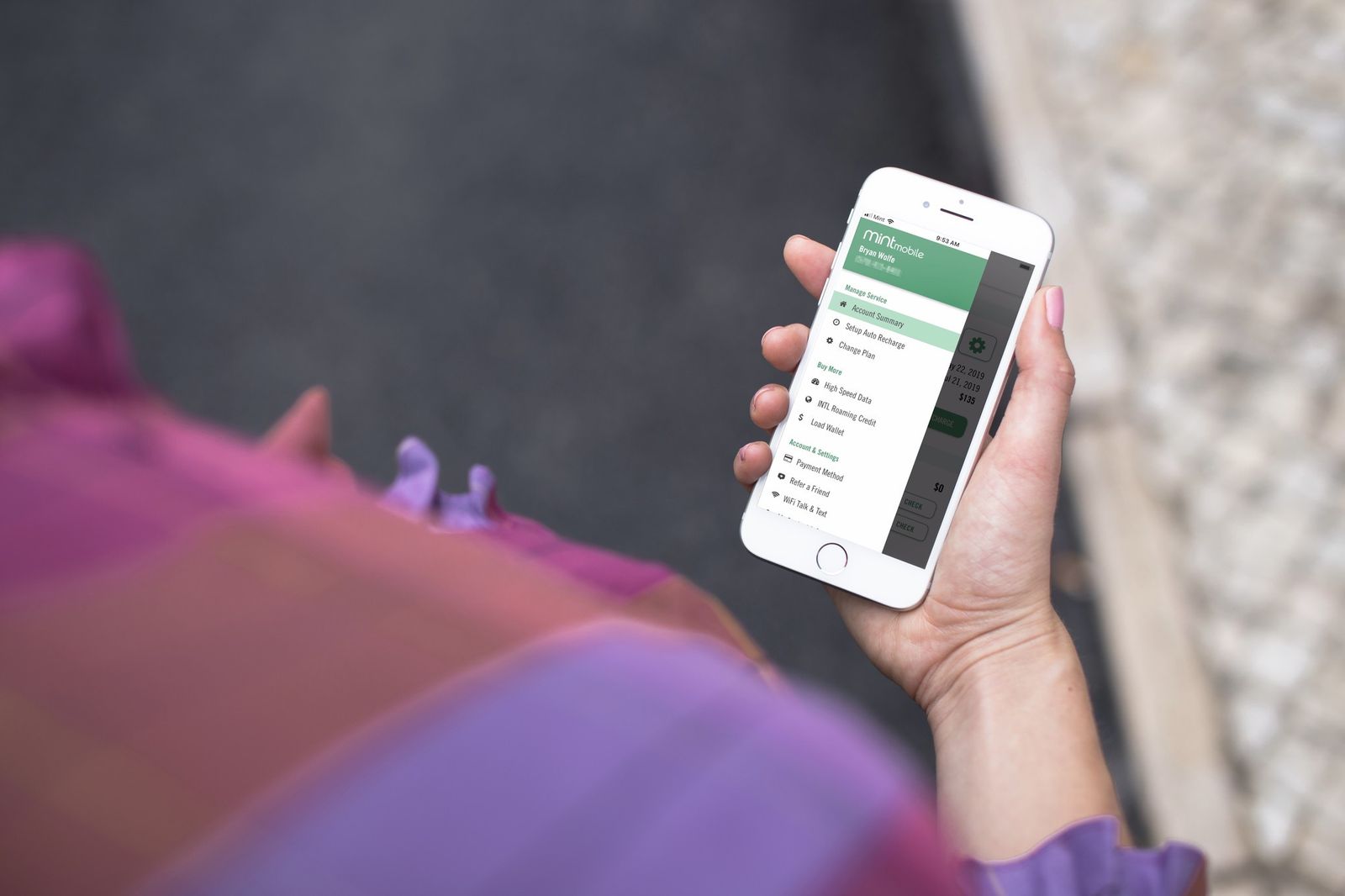 What’s Mint Mobile?










 Around The World Travel