Safety should always be a top priority when traveling the world and the good news is that there’s no shortage of safe and secure destinations worth visiting in the New Year. Here are 30 to consider for 2019.
Zambia
Renowned for the awe-inspiring Victoria Falls, Zambia earns a best-possible level 1 advisory (exercise normal precautions) from the U.S. Department of State and ranks relatively high on the Global Peace Index.
Japan
If you’ve got any reservations about touring Asia, a trip to Japan in 2019 is certain to put your mind at ease. The Economist even ranked Tokyo the safest city in the world as recently as 2017.
Slovenia
Slovenia is among the safest places you can visit in Europe and its capital city of Ljubljana received the coveted European Green Capital Award for 2016 based on its stellar environmental record.
Iceland
Iceland was the most peaceful country in the world in 2018, according to the Global Peace Index. But that’s just one of the many reasons this island nation’s tourism industry is exploding.
New Zealand
With a Global Peace Index value of under 1.2, New Zealand trailed only Iceland among the world’s most peaceful destinations last year. You’ll want to get planning soon though as spring (fall in New Zealand) is among the best times to visit.
Norway
Scandinavia is undoubtedly one of the world’s safest regions. Norway, in particular, is guaranteed to have visitors feeling safe and secure the minute they touch down.
Chile
Chile is among the safest places to visit in South America in 2019. It receives a level 1 advisory (exercise normal precautions) from the U.S. Department of State so visitors should just be careful to avoid potential scams or crimes of opportunity such as pickpocketing in crowded places.
Austria
Seeking a peaceful destination in mainland Europe? Consider Austria. Only Iceland and New Zealand ranked better on the Global Peace Index last year. Like other popular places around the world, your biggest concern if any here is likely non-violent thieves.
Costa Rica
Despite the recent murder of an American tourist, Costa Rica possesses one of the lowest homicide rates in Latin America and the Caribbean and is widely regarded to be one of if not the safest in Central America. It’s also the happiest country in the world, according to the Happy Planet Index.
Portugal
With a Global Peace Index value of 1.32, Portugal is the fourth-most peaceful nation on the planet. You’ll want to watch for pickpockets in crowded tourist areas in places like Lisbon but that’s good practice no matter where you are.
Singapore
Singapore is the most peaceful destination in Asia, according to the Global Peace Index. On top of that, The Economist named it the second-safest city in the world behind Tokyo.
Canada
The safest country in North America, Canada offers a variety of exciting destinations to visit in the New Year, including beautiful Quebec City, the closest Americans will get to Europe without venturing overseas.
Scottsdale, Arizona
Known for its numerous spa and wellness resorts, Scottsdale ranks among America’s safest cities, according to WalletHub’s most recent research, checking in at 15th among the 180 cities analyzed.
Boise, Idaho
Boise is tied with a handful of other U.S. cities for the lowest unemployment rate and ranks among the top cities in terms of home and community safety, which takes into account assaults and thefts per capita, the presence of terrorist attacks and mass shootings, among other indicators of safety.
Virginia Beach, Virginia
A popular summer vacation destination, Virginia Beach is the fourth-safest city in America, according to data from WalletHub, boasting the third-fewest assaults per capita.
Denmark
Denmark reports relatively low crime rates and ranked fifth on the Global Peace Index in 2018, cementing itself among the safest destinations in not only Europe but the world.
Switzerland
Although it boasts a population similar to that of New York City, Switzerland is one of the safest countries travelers can visit, routinely checking in toward the top of respected studies on peace, safety and threat level.
Sweden
Like its Scandinavian neighbors Norway and Finland, Sweden is one of the safest places you can travel to in 2019, narrowly edging out both of the aforementioned countries on the Global Peace Index last year.
Germany
Unlike a majority of the countries on this list, Germany receives a level 2 travel advisory from the U.S. State Department due to recent acts of terrorism. Still, visitors are only advised to “exercise increased caution” when visiting and crime is relatively low.
Netherlands
With a safety index of 84 (out of 100), the Netherlands ranks as the 15th-safest country in the world, according to SafeAround based on analysis of various sources taking into account threats such as mugging, crime, road death toll, the occurrence of terrorist attacks and wars.
With a safety index of 84 (out of 100), the Netherlands ranks as the 15th-safest country in the world, according to SafeAround based on analysis of various sources taking into account threats such as mugging, crime, road death toll, the occurrence of terrorist attacks and wars.
Malta
Visitors to Malta are certain to feel not only safe but welcome as locals on this small island nation in the Mediterranean are among the friendliest you’ll meet. Its beautiful climate and array of attractions can’t be beaten either.
Australia
Australia is well known for its natural beauty and friendly locals but you can also add safety to that list. It should come as little surprise that the continent/country ranked inside the top 15 of the Global Peace Index for 2018.
Bhutan
One of the most peaceful and safest countries in Asia, Bhutan is a breathtaking destination located between China and India on the Himalayas’ eastern edge. This predominantly Buddhist nation measures prosperity based on citizens’ happiness levels.
Mauritius
Celebrated for its screensaver-worthy beaches, this booming East African island nation possesses one of the world’s best Global Peace Index values. The U.K. government points out that petty crime is common but most crime is non-violent. What’s more, visitors can ensure a safe and pleasant trip by practicing common sense such as avoiding accommodations that aren’t registered with the Mauritius Tourism Authority. Better yet, work with a travel agent.
Cayman Islands
It’s rare for criminal activity to impact tourists in the Cayman Islands and visitors can really reduce their risk by avoiding summer’s hurricane season.
Hungary
Hungary was among the many European countries to rank inside the top 20 of the Global Peace Index in 2018, receiving a value of 1.53. That’s just behind Germany but ahead of more popular European destinations like France, Spain, Italy and the U.K.
Guadeloupe
Guadeloupe is one of the safest places in the Caribbean. Plus, few destinations are as rewarding and getting there is easier than you might think.
Horse trekking in Mongolia is the absolute best way to experience this incredible country. Why? Because nowhere in the world are horses more integral to peoples’ daily lives than in Mongolia.
It’s said that “a Mongol without a horse is like a bird without wings”. Riding to the Mongolians is more instinct than it is a learned skill. It’s in their blood. Why walk when you can ride, as they say in Mongolia.
Why Horse Trekking Is A Must In Mongolia
In a country that has as many horses as people, 3 million in case you were wondering, to come to Mongolia and not ride a horse is to miss out on discovering the true spirit of Mongolia.
Of the country’s 3 million people, 1.5 of them live in the capital of Ulaanbaatar, while the rest live as nomads, or in small villages dotted throughout the countryside. For Mongolia’s 1.5 million nomads and villagers, life revolves around horses. They’re used for transportation, herding, hunting, and sport (primarily horse racing).
Children learn to ride at 3 years old and become jockeys at just 7-8 years of age. Learning to ride a horse is a right of passage in Mongolian culture, similar to riding a bike in the West. To this day every Mongolian learns to ride a horse, whether they live in the city or the country.
Even if you’ve never ridden a horse before, I can’t think of a better place to learn than in Mongolia.
The Mongolian Horse
Some locals will claim that the Mongolian horse is like a wild horse. But don’t let this scare you. What they mean by this is is not that they are wild and dangerous, but that a Mongolian horse knows how to survive in the wild.
Horses in Mongolia are not kept in barns or pastures but are allowed to roam free on the vast Mongolian steppe, like the wild horses roamed thousands of years ago. Therefore, they need to have sharp instincts and know how to protect themselves from predators.
But, as personalities go, the horses that are trained for riding are far from wild. In all my 20+ years of experience riding horses, the Mongolian horses are some of the most friendly, docile, and sure-footed horses I’ve ever ridden. These guys never miss a beat, and can carry heavy loads, be it humans or supplies, over incredibly rough terrain for hours on end without injury or complaint.
Mongolian horses are also incredibly well trained. For a supposedly “half wild” animal, I was extremely impressed with how responsive and safe these horses were to ride. I shouldn’t have been so surprised as Mongolians are regarded as the best horsemen and women in the world.
The Best Places To Go Horse Trekking In Mongolia
In Mongolia, horses can take you where your own two feet can not. During the summer travel season, the ground is often so wet in places that the only way to get through is by horse, and even they can sink almost up to their bellies in mud. Hiking is only possible in a few specific areas where the ground is solid.
When in Mongolia, trekking is best done by horse, and man can those horses take you to some incredible places!
1. Mongolian Taiga (Tsaatan Reindeer Herders)
Meet Mongolia’s last remaining tribes of reindeer herders, the Tsaatan people. This unique community lives in teepees in Northern Mongolia close to the Russian border and survives completely off the grid by herding reindeer.
On the Mongolian Taiga, you’ll get up close a personal with the Tsaatan reindeer, taste reindeer milk tea and cheese, and even get to try your hand at milking and riding a reindeer (not at the same time, of course). Horse trekking to the Tsaatan reindeer herders is definitely a once in a lifetime trip you’ll never forget.
2. Lake Khuvsgul
Ride horses around Mongolia’s largest and purest lake, Lake Khuvsgul. Lake Khuvsgul is the second purest lake in the world. In fact, the water is so pure you can drink straight out of the lake and not get sick.
Its purity is the main reason why this lake is so revered among Mongolians. Not to mention that Lake Khuvsgul has the most gorgeous shades of crystal blue water I’ve ever seen. Trekking around the lake on horseback is one of the best ways to appreciate its beauty.
3. Hustai National Park
Home to Mongolia’s last remaining wild horses, the Takhi, Hustai National Park is a haven for wildlife and endangered species in Mongolia. Observing the Takhi in the wild is one of the most amazing experiences, and what better way to see one of the world’s last remaining wild horses than from the back of your own Mongolian steed.
4. Kagiin Kar Nuur (Black Mountain Lake)
Black Mountain Lake is a 20-meter deep glacial lake surrounded by the forested Khenti Mountains. The lake is a gorgeous oasis in the middle of the mountains. Trekking here you’ll feel like you’re riding through the middle of nowhere, just you, your horse, and nature.
5. Khan Khenti Protected Area
Made up of over 1.2 million hectares of land, the Khan Khenti Protected Area is a remote wilderness that is home to a wide variety of wildlife, including the endangered Mongolian brown bear. Khan Khenti Protected Area is also virtually uninhabited by humans, and hunting is prohibited (I’m guessing the two are related) making it the perfect place for wildlife to thrive.
6. Terelj National Park
Located just 70 kilometers from Ulaanbaatar, Terelj National Park is the ideal place for travelers looking to go horse trekking in Mongolia without any long travel days to get started. Terelj National Park is a gorgeous mix of grassland, alpine peaks, pine forest and impressive rock formations. You can ride or hike anywhere within this national park, no trails needed.
7. Bogd Khan Uul National Park
Bogd Khan Uul National Park is essentially a national park built around the Bogd Khan Mountain, one of Mongolia’s 3 sacred mountains. It’s also the oldest legally protected natural landscape in the world, having been declared a protected site by the Qing Dynasty in 1783.
Located just outside of Ulaanbaatar, Bogd Khan Uul National Park is another great place to go horse trekking that doesn’t involve any long travel days to get started.
8. Altai Tavan Bogd National Park
Altai Tavan Bogd National Park has one of the most stunning natural landscapes in all of Mongolia, the snow-capped rocky mountain peaks of the Altai Mountains. Riding through Altai Tavan Bogd National Park is an absolutely awe-inspiring experience. You’ll see golden eagles soaring through the air, and ride past glaciers, lakes, rock carvings, and numerous 4000+ meter (13,000 ft) tall mountains.
When To Go Horse Trekking In Mongolia
The best time to go horse trekking in Mongolia is in the summer and early fall from June – October.
I wouldn’t recommend going horse trekking outside of that range unless you’re really comfortable with and super prepared for cold weather. Average high temperatures in the Mongolian countryside in the winter time are a frigid negative 20 degrees C (negative 4 degrees F) with lows between negative 30 – 40 degrees C (negative 22 – 40 degrees F).
When I visited the Mongolian Taiga at the end of August temperatures were already dipping close to freezing at night.
How Many Days Do You Need To Go Horse Trekking In Mongolia?
It depends on where you want to go.
To visit the more remote areas such as the Taiga, Lake Khuvsgul, Altai Mountains, and the Khan Khenti Protected Area you should plan to spend AT LEAST 1 week to make the trip.
To visit the parks closer to Ulaanbaatar such as Gorkhi Terelj National Park, Hustai National Park, and Bogd Khan Uul National Park you only need 2-5 days depending on how much you want to see.
How To Go Horse Trekking In Mongolia
There are two ways you can go about riding horses in Mongolia. One is to book a tour, either directly through a tour company or through your accommodation in Ulaanbaatar. And the other is to go solo, buy a horse, and do an independent trek.
Which one you choose depends on how experienced you are with horses, how good your navigational skills are, and how much you value having an English speaking guide to teach you about the Mongolian landscape, customs, and to help you communicate with the nomads.
To book an organized tour, I’d recommend checking out Tour Mongolia, Steppe Riders, Stone Horse Expeditions, and Horse Trek Mongolia.
To get started planning your own independent trek, contact Steppe Riders. They provide complete training on how to complete your trek and can provide you with horses and gear for the duration of your trip.
Alternatively, you can also wait until you get to Mongolia and plan your trip in person through your hostel or hotel in Ulaanbaatar. If you’re looking to book an organized tour with a more reasonable price tag this is your best bet.
Organized Tour vs. Independent Trek
Organized Tour Pros
No need to plan your trip, just show up and have fun
You have access to an English speaking guide who can teach you about Mongolia and help you communicate with the local nomads
If something goes wrong you have an experienced guide with you to help
You don’t have to do any navigation, simply follow your guide
Tour companies provide your gear, food, and accommodation for you so you don’t have to bring or buy as much stuff
You won’t have to cook, clean, set up/break down camp, or tend to the horses at all during your trip
You don’t need any prior horse experience as your guide will help you every step of the way
Organized Tour Cons
Booking an organized horse trek is expensive, especially if you want a private tour
You have less freedom, as you’re at the mercy of the company’s predetermined itinerary
If you are an experienced horseman/woman going on a group tour could be frustrating as you’re limited by the least experienced person in the group in terms of how much you can do when riding
Independent Trek Pros
You have complete freedom to create your own itinerary, enabling you to go wherever you want for however long you feel like
You can go at your own pace, not at the pace of the group
It’s much cheaper than an organized tour
You can make whatever food you like instead of having to eat the local food every day (Mongolia is not known for its food)
You get the opportunity to really bond with your horses, unlike on an organized tour where your only interaction is your time in the saddle
You have the opportunity to improve your horse, wilderness, and navigational skills
You get to step into the shoes of the locals and learn what it’s really like to live as a nomad in the Mongolian countryside
Independent Trek Cons
You have to buy or rent your own horses and gear (you’ll need two horses, one to ride, and one as a pack horse)
If you or your horse gets injured there’s no one with you to go for help
You have to navigate yourself through the wilderness in a foreign country where there are no marked trails of any kind
You have to take care of the horses yourself including planning your route around places where they can find plenty of grass and water
You’re responsible for cooking your own food, getting your own water, and setting up and packing up your tent every day
What To Expect
Mongolia is a big country, area-wise, and is home to just 3 million people, half of whom live in the capital city of Ulaanbaatar. The result of this is that most of the country consists of nothing but gorgeous natural scenery.
And when I say nothing but, I really do mean nothing. No plumbing, no electricity, no internet, extremely spotty phone service, no hotels, no toilets, and no restaurants of any kind are available in most of the country.
This is not a luxury trip. Have no doubts, you will be roughing it. During my trip to the taiga, I went 7 out of 10 days without a shower and 8 out of 10 days without a toilet just to give you an idea what to expect.
You’ll be camping for most of your trip, whether that’s in a tent, ger, or teepee.
As for riding, expect anywhere from 3-7 hours in the saddle per day depending on your specific tour and how far the route is.
If being dirty and foregoing your comforts sounds like a small price to pay for riding horses through vast open steppes and mountains of Mongolia then this is the trip for you.
How To Ride A Mongolian Horse
Riding a Mongolian horse is actually quite simple, even if you’ve never ridden before. Here’s what you need to know.
1. “Chu” pronounced “choo” (as in a choo choo train) means go
To get your horse to move, simply tap both legs against the side of the horse at the same time and say “chu”.
2. “Whoosh” means slow down
To stop your horse, pull back on both reins at the same time and say “whoosh”.
3. Mongolians steer by neck reining, and they always keep the reins in one hand
To turn your horse left, simply move your hand to the left, pressing the right rein against the right side of the horse’s neck and pushing their neck to the left. To turn right, move your hand to the right, pressing the left rein against the left side of the horse’s neck and pushing their neck to the right.
Do You Need Prior Horse Experience To Go Horse Trekking In Mongolia?
No. In fact, most tourists that go horse trekking in Mongolia have little to no experience riding horses.
Of course, having prior horse experience certainly helps. If you’re already comfortable around horses and know how to ride your trip will be much more fun as you can do a lot more on horseback. Having prior experience will also put you at ease when it comes to navigating rough terrain, such as river crossings.
Horseback Riding Tips For People Who Have Never Ridden Before
After riding horses for over 20 years, including doing a horse trek of my own in Mongolia, I’ve got some tricks up my sleeve to help beginners fast-track their way to equestrian success.
1. Relax
Horses feed off of your energy, so if you’re nervous, they will be too, and they’ll subsequently be more likely to spook, jump sideways, or run off, all things you don’t want them to do. Relaxing will also help you to better follow the horse’s movement, which will be extremely helpful if you get the opportunity to trot and canter.
2. Trust your horse
Your horse knows the terrain in Mongolia a lot better than you do, so trust him. He’s crossed many a river and gone up and down countless muddy mountain slopes with no issue. Your horse knows the land like the back of her hoof, so don’t worry.
3. Don’t be afraid to be firm with your commands
Not all horses are perfect angels. Some horses can sense that you don’t know what you’re doing up there and will try to take advantage of that fact by maybe constantly lowering their head to eat grass, or outright refusing to move for example.
If this happens don’t be afraid to give a firm tug upwards on the reins to pull their head up from the grass, or yell “chu!” and give them a firm bump on their side with your heels to get them to move. As long as you don’t explode in a raging fit of anger you won’t hurt your horse, I promise.
4. Keep the stirrups on the balls of your feet
Once you get on the horse, position the stirrups on the balls of your feet and push your heels down. This will keep you balanced and secure in the saddle.
5. Take your feet out of the stirrups and stretch your legs out straight intermittently throughout the ride
Just trust me on this one. Riding for hours on end will cripple your knees if you keep them bent at the same angle for 5 hours without a break. Your knees are your primary shock absorbers on a horse, and they will get tired, even for people like me who have ridden a bunch in their life. Stretch frequently and all will be good.
What To Pack For A Horse Trek In Mongolia
In general, you’ll want to make sure you pack light. All of these trips, no matter where you go, have at least some portion where your stuff can only be transported by pack horse.
There’s not much room on a pack horse so you won’t be able to bring a rolling suitcase full of stuff. It’s best to pack your stuff in a small, soft backpack or duffel bag. Whatever you do, do not bring a hard-shelled suitcase.
Some specifics for your packing list include:
1. A good warm sleeping bag rated to 0 degrees F (negative 18 degrees C)
A down sleeping bag like this one would be perfect.
2. Down jacket or another winter jacket
I wish I had brought my warm packable down jacket just like this on our trip for those frosty nights and mornings. It’s lightweight, super warm, and packs down small in your bag.
3. Long rain jacket or rain poncho
You’ll want one that will protect your legs when riding like this one. We have one just like it, and it’s great not just for riding, but for hiking and cycling as well.
4. A hat with a brim and chin strap
This is to keep the sun out of your eyes, protect your hair from getting caught in branches in the forest and to keep the hat from flying off of your head in the wind. This lightweight foldable sun hat would be perfect for horse trekking.
5. A riding helmet if you feel it’s necessary
Most tours in Mongolia do not provide helmets for riders, as Mongolians don’t ride with helmets. In the US I always ride with a helmet, but I did forgo it on this trip, mostly because helmets are such a pain to travel with.
A bike helmet would also do for this trip.
6. Gloves with a grip on the palm for riding
Wearing gloves will protect your hands from getting scraped against brush in the forest as well as from getting rubs from holding the reins. Any thin glove with grip on the palm will work. Leather gloves are also great if you have them.
If you don’t have anything already that will work you can click here to find these, cheap, durable, good quality riding gloves on Amazon.
7. Refillable water bottle
Any type of Nalgene or plastic sports bottle will do the trick. It just needs to be durable and reusable. We prefer to use squeezable plastic bottles as they’re much easier to drink out of while riding.
8. Boots with a heel for riding
These could be specific leather riding boots (you can also buy a pair in Mongolia) or rain boots. The boot just needs to be fitted to your foot so that it fits in the stirrups and have a heel so that your foot can’t slide too far forward in the stirrup or get caught in the stirrup if you fall.
These short riding boots are super comfortable and really easy to travel with. Not to mention they’re really versatile and can be worn for more than just riding.
The Post Office has released its annual Long Haul Holiday Report, revealing the cheapest destinations to take a long-haul trip. Based on the prices of 10 tourist items, including meals, drinks and sun cream, the report revealed the best places to grab a bargain overseas after examining 30 of the most popular destinations. Counting down to the cheapest, which might just surprise you, here’s how some of the top long-haul destinations fared.
30. Rio de Janeiro, Brazil – total costs of essentials: £160
A 45% rise in the prices of holiday essentials in Rio has made Brazil’s best-known city this year’s highest-priced destination on the list – it’s more than three times as expensive as the cheapest destination in the report.
Dubbed one of the flashiest countries in the world, Dubai isn’t known as a cheap break. However, prices are down 21% this year, meaning the Emirate is no longer the most expensive destination in the survey. It is, however, one of the most expensive places to eat, with the average three-course evening meal for two costing £109.63.
Alongside Dubai, prices of holiday essentials are down 21% in Oman this year, where a cup of coffee will set you back over £3 and a glass of wine over £10.
The capital of Australia’s Northern Territory, Darwin’s pricey restaurant scene brings up the total cost of a visit to the waterside city significantly, with the average meal for two costing around £97.58.
The most expensive Caribbean island to take a holiday, Barbados is certainly more luxury than budget. A meal in the picturesque resort of St James will cost almost three times as much as the cheapest city in the report, while staples such as sun cream (£11.75) and bottled water (£1.87) are among the most expensive on the list.
Home to a plethora of super yachts and fancy bars, Auckland isn’t the place to go for a cheap trip. A meal for two will cost you around £90 and a single cocktail averages around £8.66.
Essential holiday items have now risen by 27% in Santiago, Chile (£126.10), where a bottle of sun cream will cost as much as £12.58, and insect repellent a staggering £18.53.
Located on the southeastern side of the island, Scarborough is one of the most picturesque areas of Tobago. It doesn’t come with the cheap prices often found in other Caribbean islands, but you can pick up a bottle of beer for £1.62 – bargain.
The biggest price rise this year was Lima, which was 8th in last year’s survey, which is now 54% more expensive. At £120.62 for all essential items on the list, this sent Peru’s capital tumbling to 21st place.
In 2014, China became the world’s biggest economy, meaning it’s no longer the budget destination it used to be. Prices for tourist staples average at £120 in the capital.
The biggest fall in prices on this list has been in Antigua (Jolly Beach), where the cost of being a tourist has plummeted 27% to £114.72, taking the island from 32nd to 19th place.
The exotic island of Mauritius isn’t known for being a cheap holiday destination, but eating and drinking when you’re there won’t break the bank – the main expenditures aside from fights and accommodation will cost around £114.31.
The bustling city of Vancouver isn’t the cheapest city to visit, but the prices of holiday essentials are all fairly average. The cost of a three-course meal for two is likely to hover around £81, while the average bottle of sun cream will you set you back 50% less than in Mauritius.
One of the most popular long-haul city breaks for tourists, New York isn’t known for being a cheap destination, however it’s this far down for a reason. In the Big Apple, you can dine on a three-course meal with wine for £71 for two, and grab a cup of coffee for £1.33.
Eating out in Seoul is expensive, but everything else comes pretty cheap. The cost of a meal for two in the metropolitan capital will cost around £81.02, but a bottle of lager is just £2.95.
The biggest year-on-year falls have been in three of the leading Caribbean islands, which had been looking expensive in past Post Office surveys. A 25% fall to £105.36 in St Lucia (Rodney Bay) has helped the island move up to 13th place from 28th last year.
Cancún, Mexico has dropped to 12th in the table from 6th in 2016 after prices rose 30%. Dining out in the popular holiday hotspot will set you back £69.83.
Phuket, Thailand fell from 7th to 11th place on the back of a 17% rise to £88.84, making Thailand’s top resort over 15% more expensive than rival backpacking destination Hoi An in Vietnam.
Another of the Caribbean islands to have seen a price drop over the past year is the Dominican Republic. In Punta Cana, the easternmost tip of the island, essentials average at around £85.34 in total.
Orlando has managed to retain its place in the top 10 cheapest destinations, primarily due to cheap food and drinks. Dinner for two averages at around £49 – over half the price of dining out in Rio.
A new entrant to the list, Costa Rica, was named alongside Japan and Vietnam as a hot holiday choice for 2017, and visitors attracted by the direct flights now available to the country will find prices down 8% in Tamarindo. This has taken Costa Rica from 12th to 7th place.
Known for its volcanic mountains and beaches, Bali is a popular long-haul holiday destination for many, and it’s easy to see why. It’ll set you back just £76.95 for some of the main expenditures.
Princes in Colombo, Sri Lanka are up by 7% this year, but it still remains the fourth cheapest long-haul destination to visit, thanks to low dining costs.
One of the cheapest places in the world for food and drink, it’ll cost just £1.37 for a cup of coffee in Mombasa and £45.78 for an evening meal for two.
Cape Town isn’t necessarily the cheapest city to visit for accommodation (a double room here will set you back around £310 for two nights), but the money you’ll save on eating out will make up for it. The average three-course meal for two costs just £40.12, and it’s worth going for the food alone.
Japan has a reputation for being a little more expensive than your average long-haul destination, mainly due to a dearth of affordable hotels, but the capital is growing increasingly affordable for UK travellers. In fact, the food in Tokyo was found to be the cheapest across all cities. A three-course evening meal will set you back an average £35 for two people. This means that the price of three meals in Japan will cost around the same as just one meal in Singapore.
Step back in time for a nostalgic tour around the USA. From bridges to dams, monuments to boardwalks, we’ve dug around the archives to find historic images of America’s greatest-ever tourist spots.
Thanks to its sandy beach and Atlantic Ocean views, Coney Island became a hot spot for New Yorkers in the early 1900s. And those looking to escape the city’s hustle and bustle were helped by the expansion of the railroad to the southern part of Brooklyn. Luna Park was one of the many amusements and rides that sprung up, opening in 1903, with the boardwalk added in the early 1920s.
Due to a fire in 1944 Luna Park closed permanently. However other rides and attractions remained, with the New York Aquarium, first opened in the 1950s, remaining a big draw for families. Pictured here are some daring holidaymakers in 1946.
Today Deno’s Wonder Wheel is still twirling amid the sticky smell of cotton candy and legendary Nathan’s hot dogs. Bigger and faster attractions have risen up all around it, but it’s this creakily low-tech family-run Ferris wheel that makes the memories.
Measuring an impressive 746 feet high (above the water) and 4,200 feet long (the distance between the towers), San Francisco’s Golden Gate Bridge is one of America’s top-visited attractions, and it’s easy to see why. On top of being an architectural feat, it also defied critics at the time, who believed building a bridge across the windy straight to the Pacific would be impossible.
Golden Gate Bridge opened to the public on 27 May 1937. Celebrations lasted for a week and amassed more than 200,000 foot passengers (some even wore roller skates). At the time, it was the longest and tallest suspension bridge in the world. Here the bridge is pictured in the early 1950s.
Today, the Golden Gate Bridge is one of the most Instagrammed places in San Francisco, and one of the most photographed bridges in the world, attracting more than nine million visitors a year.
Built by local businessman Fred Swanton, the Santa Cruz Beach Boardwalk opened in 1907 and is still every bit as popular today as it was in its heyday. Here, Santa Cruz’s annual Easter Egg Hunt is in full swing in the Eighties, but these events were later canceled as they became too popular.
Boasting more than 40 attractions including restaurants, bars, roller coasters, and even a pier, this Boardwalk receives its fair share of visitors. As the oldest theme park in California, it’s loved by locals and tourists alike.
Santa Cruz Beach Boardwalk, California
Today, the Boardwalk employs over 1,600 staff and hosts a number of yearly events including the annual Clam Chowder Cook Off every February – not to be missed.
New York’s iconic 103-story Art Deco skyscraper is one of the city’s most-visited landmarks. Construction was completed in 1931, taking just one year and 45 days to build. It was the world’s tallest building up until the 1970s.
Empire State Building, New York
While its construction garnered much publicity and fanfare at the time, it remained relatively empty and unvisited until the 1950s. By 1976, the Empire State Building Observatory had welcomed its 50 millionth visitor.
Today, more than four million visitors from around the world visit the Empire State Building’s 86th and 102nd floor observatories each year. Soaring more than a quarter of a mile above Manhattan, it’s easy to see why.
Located on the border of Nevada and Arizona to the southeast of Las Vegas, the Boulder Dam was constructed between 1931 and 1936, during the Great Depression. It was officially renamed the Hoover Dam by the then-president, Herbert Hoover, in 1947.
The Hoover Dam opened for tours in 1937, but this was suspended during the Second World War. It consequently reopened after the war (pictured here in 1948) with tourism hitting 448,000 by 1953. In 1995, a new visitors center was built and the annual number of tourists hit a peak.
Seattle’s striking Space Needle officially opened to the public on 21 April 1962 as part of the Century 21 Exhibition, a space-aged themed World Fair. This futuristic landmark, measuring more than 600 feet tall, has since become one of the world’s most recognized landmarks. Here you can see visitors enjoying the views in 1962.
Seattle’s striking Space Needle officially opened to the public on 21 April 1962 as part of the Century 21 Exhibition, a space-aged themed World Fair. This futuristic landmark, measuring more than 600 feet tall, has since become one of the world’s most recognized landmarks. Here you can see visitors enjoying the views in 1962.
Space Needle, Seattle, Washington
During the 1962 World Fair, more than 20,000 people used the lift to reach its summit each day, drawing over 2.3 million visitors overall. Approximately 1.3 million people now visit the Space Needle each year, and it has amassed nearly 60 million visitors since its opening 57 years ago.
The Space Needle offers panoramic views from three main viewing areas, including the world’s first revolving glass floor, which was installed in 2018. The summit, which measures 520 feet, takes just 43 seconds to access by lift.
Running from 59th street to 110th street, Central Park is an oasis in the heart of buzzing Manhattan. Originally opened in 1858, the park saw a series of improvements and expansion in the following 15 years. It was the first landscaped public park in America. This postcard, from circa 1910, reveals people enjoying one of its many green spaces.
By 1865, Central Park was receiving more than seven million visitors a year. Popular attractions included summer afternoon concerts and ice skating in the winter on the lakes – both remain popular activities today. In 1871, Central Park opened its doors to a zoo, which quickly became one of its most popular features. Pictured are children near the elephant enclosure in the late 1800s.
While Central Park is man-made, it’s still a haven for wildlife and nature and boasts more than 26,000 trees. It’s also home to 9,000 benches and, unsurprisingly, happens to be the most filmed public park in the world.
Nowadays, Central Park receives more than 42 million visitors annually. Gondola rides are still available (pictured here in 1894) from the Central Park Lake.
One of the seven natural wonders of the world, the Grand Canyon is thought to have been inhabited since the Ice Age. It achieved National Park status and officially opened to the public in 1919, where it’s thought to have attracted 44,000 visitors.
Measuring over 277 miles long, 18 miles wide, and a mile deep, the Grand Canyon is one of the largest canyons in the world. It’s also home to all manner of wildlife, including 373 species of bird. Located on the South Rim of the Grand Canyon, Hopi House (pictured) was built in 1905 to sell artisan arts and crafts and still functions today as a museum and gift shop.
Today, the Grand Canyon is visited by more than six million people each year. With a year-round on-site shuttle service available, plus day-long and even helicopter trips from Las Vegas, tourism is certainly still going strong.
Unveiled to the public in 1941, the Mount Rushmore National Memorial features the faces of presidents George Washington, Thomas Jefferson, Theodore Roosevelt and Abraham Lincoln carved into Mount Rushmore in the Black Hills of South Dakota.
The idea for Mount Rushmore was conceived by historian Doane Robinson, who was looking for a way to attract more tourism to the state. It certainly worked: close to half a million people visited in the first year alone.
Today, Mount Rushmore is South Dakota’s top tourist attraction, luring more than two million visitors from around the world each year. Facilities include a visitors center, the Lincoln Borglum Museum, the President Trail, and the Grand View Terrace.
Yosemite Valley, California
Located in California’s Sierra Nevada mountains, Yosemite Valley National Park features all manner of impressive waterfalls, rock formations, and sequoia trees. It started attracting tourists in the early 1850s, with its first hotel being built in 1879.
After officially becoming a national park in 1890, tourism increased at the turn of the 20th century. Notable visitors included President Theodore Roosevelt, pictured here at Glacier Point in 1903.
Nowadays, Yosemite National Park attracts more than four million visitors a year. In 2016, the park even broke its own visitation records, recording more than five million visits. Popular activities, in addition to the sensational hiking, include nature walks, stargazing and rock climbing.
Based on Neuschwanstein Castle, Bavaria, Germany, the Sleeping Beauty Castle at Disneyland, California is surely one of the USA’s most recognizable tourist attractions. Disneyland (renamed Disneyland Park in the 1990s) opened on 17 July 1955. Walt Disney was inspired by his family to open the amusement park, saying: “It came about when my daughters were very young and Saturday was always daddy’s day with the two daughters.”
Disney’s vision wasn’t without its critics but the concept proved the doubters wrong, despite some teething problems. On opening day 28,000 people visited, some jumped the fence without paying and a heatwave apparently caused the new tarmac to melt. Here tourists are pictured enjoying Frontierland, a recreation of the Old West, in 1955.
Clean, spacious and filled with wholesome fun, Disney’s park was also packed with innovations that competitors would struggle to match. For example the Monorail transport system, pictured here in the 1960s, was the first one of its kind in America.
These days Disneyland employs 30,000 ‘cast’ members and sees around 18 million visitors pass through the gates. Star Wars: Galaxy’s Edge is the latest addition to the park, set to open towards the end of 2019.
In a moment that revolutionized Florida’s tourism industry, the gates to Walt Disney World were finally opened on 1 October 1971, bringing in 10,000 eager fans. Initially, the resort consisted of six individually-themed lands: Main Street USA, Adventureland, Fantasyland, Frontierland, Liberty Square and Tomorrowland.
While its creator, Walt Disney, didn’t live to see its creation, the park has since expanded to include the Magic Kingdom, Disney’s Animal Kingdom and Disney’s Hollywood Studios. Epcot, pictured here in a plan from 1978 and opened in 1982, was always part of Walt’s original vision for the resort.
Walt Disney World Resort, Florida
Walt Disney World now attracts more than 52 million people a year, making it the most visited vacation resort in the world. And there’s plenty to explore: its surface area is twice the size of Manhattan.
We all know Hollywood, Santa Monica and Downtown LA, but there are so many areas in Los Angeles worth exploring, and you probably haven’t heard of half of them unless you live there. Even then, the city is so vast, you could probably dine somewhere new every day for years and still not traverse the whole City of Angels.
Below are three parts of town we think deserve a shout out either for their walkability, diversity, food and beverage options or all of the above. Next time you head west, make sure you take a day—or at least a few hours—to tour these neighborhoods. They’ll 100 percent win you over.
Encino
In LA’s San Fernando Valley, there’s a place called Encino. You may have never heard of it or if you have, there’s a chance you know it as the land of the strip mall. There’s actually quite a bit you can do here, though. From escape rooms and the Getty Center to Lake Balboa and even a Japanese Garden, there are many things to do that are family-friendly and chock-full of local culture.
There is also a little hidden gem here called Scratch Bar & Kitchen, which really makes Encino special and worth visiting. Located on the second story of an unassuming shopping center, Scratch boasts a 20+ course tasting menu with wine pairings and possibly the coolest and most down to earth chefs, bartenders and kitchen staff in all of LA.
Dinner starts at the bar and then moves to either bar seating or tables overlooking an open kitchen. It’s truly an experience worth writing home about and one you’ll want to experience again and again.
Next door to Scratch is Woodley Proper, the restaurant’s sister bar. If you’re looking for a very elevated experience and want to get out of town for a couple of days, head to Scratch’s newest concept in Montecito, the exciting (and pricey) fine-dining establishment, Silver Bough.
Highland Park
A neighborhood (like much of LA) that gets its culture, food, street art and more from its Latin roots is teeming with things to do as many shops and restaurants either pick up and move to Highland Park or open second outposts of their already existing and successful stores there.
There are plenty of coffee shops in the area (Civil Coffee, Cafe de Leche, Kindness & Mischief Coffee to name a few), artisanal stores that sell every perfume, oil, smudge stick and greeting card you could ever want or need and delicious restaurants and bars (can’t-miss the Moroccan-spiced fried chicken at Cafe Birdie or house cocktails like the One Way Ticket at Good Housekeeping).
Park your car here and plan to explore the area on foot. The first ever Forever 21 (since 1984) is here, as is Highland Park Bowl, which was renovated a few years back and has kept some original fixtures, for a throwback day or night of bowling with pizza and beer you won’t soon forget.
If you want pastries, there’s Mr. Holmes Bakehouse—be sure to visit early before your favorites sell out—and Silverlake Wine when you need to pick up a bottle. Dog lovers can visit Rosie Bunny Bean for treats, toys and personalized dog tags and music lovers will rejoice at Gimme Gimme Records.
Possibilities are endless here, with food trucks parked in the area regularly and Block Partyto satisfy all your beer and frozen drink cravings. On a nice day (who are we kidding, they’re all nice days in Cali!) head to the backyard, have a snack and some drinks and stick around a while. There is nothing like a Los Angeles sunset with a drink in hand and great company to share it all with.
Los Feliz
Sandwiched between Atwater Village, Silver Lake and East Hollywood, this neighborhood is also walkable and a great place for date night, girls’ night or taking a stroll with the whole family.
There is the classic Dresden bar/restaurant, where scenes from “Swingers” were filmed, a theater down the block, Skylight Books (an incredible bookstore that hosts book signings and speakers on the regular), thrift stores and, of course, great food.
Little Dom’s and Figaro Bistro are cult favorites, while All Time and Atrium bring something new and beautiful (not to mention delicious) to the table. While All Time’s menu is handwritten daily, this homey spot has the most carefully curated and locally-sourced dishes for breakfast, lunch and dinner.
Because it changes so often, All Time will list its menu on Instagram so head there to read everything in mouthwatering detail. If it’s a beautiful dinner or weekend brunch you’re looking for, the hidden-ish Atrium will hit the spot. With high ceilings and a hip-hop playlist, what’s not to like here? You must try the grilled cauliflower shawarma and the octopus al pastor tostada. Both will leave you wanting more.
What can you tell us about this place?
Onigiri Asakusa Yadoroku, Tokyo’s oldest onigiri restaurant, has a quaint, inviting charm. Behind a counter designed for eight diners, owner Yosuke Miura is hard at work sculpting his famous flavor bombs by hand. Surrounding him is a crowd of voracious diners, eager to gulp down the snack as fast as he can build them.
What’s the crowd like?
They are an enthusiastic bunch, ordering their onigiri a half-dozen at a time.
What should we be drinking?
Tea and soft drinks.
Main event: the food. Give us the lowdown—especially what not to miss.
A reliable Japanese snack parlor is an increasingly precious commodity; thankfully, this place does it dependably, just as it has for decades. Start with the the shrimp and miso onigiri, then see how far outside your comfort zone you’re willing to climb.
And how did the front-of-house folks treat you?
Keep it moving, they say. They’ve got a lot more onigiri to get through today.
What’s the real-real on why we’re coming here? Anything we should keep in mind?
This is a quick and easy snack stop for a small group of friends. Consider it an opening act for dinner and do the the main event elsewhere.
So, what can you tell us about this place?
Asakusa Imahan is a massive, multi-leveled shrine to sukiyaki and shabu-shabu. Slip your shoes off, climb into a private booth, and heat up some top-quality meat.
Got it. Who else is here?
Couples on first dates, businessmen bunched into booths, and full families crowding around in-table skillets.
What should we be drinking?
Sake and pints of Sapporo.
Main event: the food. Give us the lowdown—especially what not to miss.
Asakusa Imahan excels in traditional sukiyaki, with impeccable, finely marbled beef that’s ready to hit the grill. Adding to the experience, you’ll sit cross legged on a tatami mat.
And how did the front-of-house folks treat you?
Although they’re not often visible, they routinely check in, just to be sure you’re set.
What’s the real-real on why we’re coming here?
Sukiyaki is for all occasions, whether it’s a business dinner, date night, or family meal.
So, can you tell us a little about this place?
More of a food stall than a proper restaurant, Karaage-ya Oshu Iwai is an unbeatable option for on-the-go fried chicken in Tokyo. A wooden placard mounted above a series of white noren banners is all there is by way of decoration, but as far as advertising goes, those take a backseat to the unmistakable aroma of chicken and garlic wafting into the street.
Who else is here?
Groups of 20- and 30-somethings.
What should we be drinking?
Soda and iced green tea from a mini-fridge.
Main event: the food. Give us the lowdown—especially what not to miss.
The secret to the chicken’s success here is the optimal ratio of crispy breading to juicy meal. There’s also a wide range of finishes, including spicy, garlic fried, sweet, and soy-glazed. Orders are served right from the fryer in a small carton with toothpicks as utensils. Not sure where to start? Go for the Iwaii Bento, a crowd favorite.
And how did the front-of-house folks treat you?
Staffers are fast and courteous from their position behind the counter. The menu is written in Japanese, so ask for help if you need it.
What’s the real-real on why we’re coming here?
Come for lunch and evening to-go snacks. The more friends you come with, the more you’ll get to try.
What can you tell us about this place?
Han no Daidokoro Kadochika is a sleek lounge tucked into the fourth floor of the Dogenzaka Center Building. Inside, the wood appointments are inlaid with a circular metal thatch—the key indicator of yakiniku, or grilled meats. The name of the game here is wagyu, but not just any wagyu; rather, beef from Yamagata, a prefecture second to none in its caliber of cattle-raising.
What’s the crowd like?
Somber businessmen (loosening up with each passing round) and gregarious groups of carnivorous friends.
What should we be drinking?
Ice-cold lagers: the perfect accompaniment to seared wagyu beef.
Main event: the food. Give us the lowdown—especially what not to miss.
Seared Yamagata beef is a beautiful thing—and not just for your Instagram feed. It melts in your mouth, leaving nothing but a trail of unctuous umami in its wake. Order the Yamagata Gyu Ittougai, a sampling of as many as six varieties of wagyu, all sliced thin and ready to hit the grill.
And how did the front-of-house folks treat you?
Incredibly helpful and eager to please. If they suspect you need help with the grilling, they’ll cheerfully step in.
What’s the real-real on why we’re coming here?
Come here with your favorite carnivores, and leave the vegetarians at home.
What can you tell us about this place?
Taiyaki Wakaba’s glass-encased kitchen is viewable from the street and bordered by a green awning. Inside, craftsmen crank out a traditional seafood dessert as they’ve been doing so skillfully here for more than a century. Most Americans have never heard of taiyaki; here you can discover firsthand what you’ve been missing.
What’s the crowd like?
A mix—everyone who lines up is excited to try this time-honored Japanese treat.
What should we be drinking?
Free hot green tea.
Main event: the food. Give us the lowdown—especially what not to miss.
Sea bream, red bean paste, and batter combine to form an unlikely confection. Molded into the shape of an actual fish, this afternoon snack strikes the perfect balance between salty, sweet, and savory.
And how did the front-of-house folks treat you?
They take your money; they give you taiyaki. There’s pretty much nothing more to the transaction.
What’s the real-real on why we’re coming here?
A lighthearted spot to take your kids or an unexpected detour on a day date.
You can spot Shichisai by its white brick façade and hungry crowd of ramen devotees queuing up outside. The noodles here are pounded and shaped from dough in front of your very eyes. It isn’t just impressive to watch; it makes for a profoundly more satisfying noodle that’s thick, chewy, and perfectly wavy. Don’t be afraid to pile on extra chashu, but if you’re craving something lighter, go for the hiyashi chuka, which features thinner noodles in a tomato-based broth.
Tamai Nihonbashi Honten
So, can you tell us a little about this place?
Tamai Nihonbashi Honten, an anago—or eel—destination, is a dense space with black-painted wood and a paper lantern hanging high overhead.
What’s the crowd like?
A spirited assortment of salarymen and Ginza locals, young and old.
What’s the drink situation?
Non-alcoholic: hot green tea, assorted soft drinks.
Main event: the food. Give us the lowdown—especially what not to miss.
Anago, or saltwater eel, is the star of the show here. And if you want to enjoy its full flavor potential, start with the hako-meshi; the signature preparation of Conger eel that’s been seared and basted in a warm paste of sugar-sweetened soy.
And what’s the service like?
Staff work hard to keep everyone moving, but don’t expect to make friends.
What’s the real-real on why we’re coming here?
If you’re traveling with seafood enthusiasts who want to experience an under-appreciated aspect of Japanese cuisine, this is the spot for them. Loud and compact, it’s not exactly a romantic setting; for date night, head elsewhere.
Seirinkan
With unadorned concrete walls, Seirinkan, Tokyo’s original pizza hideaway, feels like it’s built inside a bunker. Susumu Kakinuma, the owner and pioneering pizzaiolo, cut his teeth in Naples, returning to his native land well equipped to roll some dough. Here he keeps the menu purposely simple, with just two pies: a traditional margherita and a cheese-less marinara. The crust bubbles and chars in small pockets, thanks to a short blast in the wood-fired oven, and holds a crisp exterior before revealing a satisfying underlying chew.
Tadashi Hosokawa is a soba whisperer, having earned a Michelin star for his Zaru-style preparation: thick buckwheat strings served alongside a smoky and salty tsuyu dipping sauce. At his pint-size restaurant, you can opt to enhance your soba with tempura or fried vegetable and dashi. The plate might appear minimal—even boring—but you’ll be wowed by the flavors and textures once you did in. It’s enough to inspire the endless queues that form every afternoon.
Tokyo is home to thousands of noodle shops. So how, exactly, do you set yourself apart in the world of ramen? First: patience. At Nakiryu, a Michelin-starred destination, it takes days to refine and condense the rich and unctuous broth before hand-pulled noodles and house-made sauces added. Top it off with tender roast pork so tender, and it’s no wonder why folks stand in two-hour queues just to taste it. If you’re willing to brave the line, try the tongue-tingling Spicy Tantanmen, a gritty orange broth with complex aromas and flavors.
These days when we travel there are more accessible adventures and amazing opportunities on offer than ever before. But as the following pictures prove there are some experiences that money can’t buy – a glimpse of the attractions and hot spots from yesteryear that have disappeared off the map. Whether because of nature, mankind’s unthinking actions or climate change, we take a peek at travel hot spots that we’ll never get to visit.
The former Penn Station, which opened in 1910, was a striking sight: designed in the Beaux Arts style, it featured pink granite, vaulted glass windows, giant stone pillars and archways. Unfortunately, like many grand buildings, it cost a hefty sum to maintain, so in 1962 it was demolished – despite the backlash of many New Yorkers.
Today’s Penn Station is a far cry from what it once was, a smaller, underground network complete with neon lighting and all the mod cons. But its modest size means that the now-increasing number of rail passengers create a strain on the building, so new plans have been put in place to expand it.
Once a Victorian masterpiece, this impressive glass and steel structure was built in 1851 in London’s Hyde Park but it was later moved to Penge Place, where it remained for 82 years. In its heyday, it was home to a mind-boggling array of delights: a roller coaster, festivals, cricket matches and even a garden complete with model dinosaurs all featured within its grounds in the south of the capital.
Tragically, the building was swallowed up by flames in 1936 and it’s still not known how the fire was started and if it was intentional. Currently, remnants of the palace including terraces, sphinxes, and a huge bust of its designer Sir Joseph Paxton can be seen in the park, which has been renamed Crystal Palace Park.
If you picture San Francisco, attractions like the Golden Gate bridge, Alcatraz or Lombard Street might spring to mind. But did you know that the city was once home to the world’s largest indoor swimming pool establishment? The impressive complex included six saltwater pools and one freshwater pool, with capacity for 10,000 people.
After struggling financially for many years, the Sutro Baths closed in 1966, and later burned down in June of that year. Now, the foundations remain as a reminder of the Victorian attraction, with the cliff-side setting making it a popular spot for walkers.
Pink and White Terraces, Lake Rotomahana, New Zealand
Back in the mid-19th century, these gorgeous naturally-formed cascading pools attracted tourists from across the globe and were one of the biggest draws for those visiting the southern hemisphere. Often dubbed “the eighth wonder of the world” they were destroyed by the eruption of Mount Tarawera back in 1886, and now their glory is captured only by a handful of paintings, like this one by English artist Charles Blomfield.
Pink and White Terraces, Lake Rotomahana, New Zealand
Nowadays, Lake Rotomahana remains a beautiful sight, although the exact location of the Pink and White Terraces is not known. However, researchers are using the diaries of geologist Ferdinand von Hochstetter, who wrote detailed notes on its location before the eruption, to try to pinpoint and excavate the terraces – meaning they could one day be restored.
Daring skiers would once have dreamed of ticking the notoriously tough Chacaltaya mountain, the highest ski resort in the world, off their bucket lists. The ancient glacier which sits within it spanned more than 2,000 square feet back in 1940 but rapidly decreased in size over the years until 2009, when it completely melted away.
In 1998 experts predicted the glacier would survive until 2015 but due to climate change, it melted six years earlier than estimated. Now, Chacaltaya is pretty barren, but despite the lack of skiing it remains a popular spot for mountaineers looking to hike its summit.
While it may not possess stunning architecture or natural beauty, this former amusement park was an institution for thrill-seekers and adventure-lovers alike. The attraction offered several historic rides, including the City Wave Roller, a wooden roller coaster built in 1922, and a carousel built in 1906.
Thirty-seven years ago, on the border between Paraguay and Brazil, lay the most powerful waterfalls in the world. Comprising a series of 18 falls, with the tallest 130 feet high, this natural wonder attracted tourists from across the globe, who were captivated by its immense power and beauty.
In October 1982, the falls fell victim to a giant engineering project. They were closed and dynamited to create the Itaipu Dam, which now provides 75% of the electricity used by Paraguay and 25% of the electricity in Brazil. While they’re clearly a viable source of renewable energy, whether it’s worth the price of losing such a natural spectacle is another question altogether.
Today, Brighton’s Palace Pier is a beloved attraction in this seaside town, but just along the coastline you’ll find the skeletal remains of an older pier. Opened in 1866, during the Victorian boom for seaside holidays, the West Pier featured a concert hall, funfair and tearoom and was extremely popular in the late-19th and early-20th centuries.
The West Pier fell into financial decline in the 1960s, before closing in 1975 and falling into disrepair. Since then, it partly collapsed due to a storm in 2002 and caught fire the following year, in a suspected act of arson. Despite being mostly destroyed, the hollowed-out structure makes for a spooky yet beautiful silhouette for photographers.
If you’ve ever smashed a piece of porcelain crockery, a 260-foot tower made from the stuff might not sound like the smartest idea. Yet surprisingly this architectural gem lasted for around 400 years, from the 14th to 19th centuries, before being destroyed by rebels. In its day, it showcased a traditional pagoda style, adorned with colorful Buddhist imagery and lit up by lanterns at night.
In 2015, the tower was reborn in the form of a modern, steel and glass construction when property developer Wang Jianlin donated $156 million (£118m) to the construction of a new building. Complete with multiple viewing platforms and surrounded by a futuristic Buddhist-themed museum, it certainly provides a new take on the historical site.
If you had walked down to 1120 6th Avenue in New York 100 years ago, you’d have been greeted by the sight of this spectacular theater. The giant 5,697-seat Hippodrome was the brainchild of entrepreneurs Frederick Thompson and Elmer Dundy, who enticed new middle-class customers with lower ticket prices and made theater accessible for all.
As was the case for other grand turn-of-the-century buildings, the Hippodrome fell into the trap of high maintenance costs. Despite going through the hands of numerous owners, it finally had to close in August 1939 and was demolished later that year. In the 1960s it was replaced by a parking lot and an office building, which has remained ever since.
Yes – it’s just a tree, but it’s possibly one of the most pictured ever after landscape photographer Ansel Adams brought it to fame back in 1940. With its dramatic, keeled-over shape, the tree became a popular photo spot for visitors to Yosemite National Park, showing the effects of over 400 years of windy weather.
Nature took its course and, in 1977, the tree finally died. However, it remained upright, looking even more striking for its bleached wood, until 2003 when it toppled to the ground after a storm. Jeffrey Pine remains in its former spot and attracts the fascination of visitors and photographers, despite no longer standing tall.
This quirky tradition saw tourists flocking to the City of Love to express their amor by signing theirs and their partners’ names on padlocks, before attaching them to the Pont des Arts over the River Seine. The practice became so popular that at one point the bridge contained a million padlocks weighing 45 tons.
In a moment of extreme irony, in 2014 part of its fence broke due to the weight of these symbols of ‘everlasting’ love. The following year, city officials began to remove padlocks and replace the bridge’s metal grilles with plastic panels, which have now been replaced by glass panels. Determined to keep the tradition going, some have begun to attach padlocks to lampposts along the bridge instead.
Seen from a distance, this piece of rock jutting out from Franconia Notch might not have looked like much. But when seen from the north, the rock once resembled the profile of an old man, with a clearly-define forehead, nose, lips and chin. Hence it became known as the “Old Man of the Mountain”, an iconic symbol in New Hampshire.
After existing for an estimated 12,000 years, the poor Old Man fell off the mountain one fateful night in May 2003. Local people mourned the loss of their mascot, creating a memorial in Profiler Plaza at the base of the mountain. This picture shows the now-missing section.
You might recognize this stunning natural formation – it’s been featured in Game of Thrones, The Count of Monte Cristo and Clash of Titans, as well as many an Instagram feed. The arch was formed by the collapse of a coastal cave, probably in the 19th century, and was a popular spot for photographs.
The Azure Window, Gozo, Malta
When heavy storms hit the Maltese archipelago in March 2017, the world was devastated by the announcement that the iconic arch had collapsed. However, it wasn’t all bad news, as the fallen rock formation has now added to the intrigue underwater, attracting scuba diving enthusiasts to the area.
Palmyra, Homs, Syria
This ancient city, which was built in the third millennium BC, combines Greco-Roman, Persian and Arabian architecture. A UNESCO World Heritage Site, among its ruins are the Temple of Bel, the Great Colonnade, Damascus Gate and a Roman amphitheater. But tragedy hit in 2015, when the site was captured and partially destroyed by Isis.
Palmyra, Homs, Syria
Between 2015 and 2017, the militants rampaged and blew up parts of the ancient city, including the Temple of Bel and the Arch of Victory. While it may no longer contain some of its original features, humanity can continue to be inspired by its history, as UNESCO has funded renovations and the site is set to reopen later this year.
Start your day with a traditional French breakfast
When in France, the classical way to start your day off is with having a nice traditional breakfast. France is most famous for its tasty, mouth-watering baked goods and you can find bakeries serving fresh, hot croissants and pain au chocolats everywhere you turn. Some of the most famous bakeries around the city center are the Boulangerie Brier, Patisserie du Lion d’Or and Maison Doucet.
After you’ve had some nice food, start your sightseeing tour in the main central square known as Grand Palace. The square is actually officially named Place du Général de Gaulle as a tribute to Lille’s most famous resident, president Charles de Gaulle. Here you can gaze the 17th century Flemish buildings surrounding the square, creating an impressive sight. The square is a meeting point for locals and a famous hub for cafes and restaurants, so to get a glimpse of everyday life in Lille, sit at one of the nearby cafes, drink coffee and watch people pass by and admire the marvelous architecture around you.
The historic center of the city is known as Le Vieux Lille. It’s characterized by colorful Flemish buildings, old redbrick houses and churches. Get lost in the labyrinth of narrow cobblestone streets that are full of cafes, boutiques, souvenir shops and cute restaurants ideal for a light brunch. From luxury goods to delicacy shops and affordable clothing boutiques, Lille is famous as a shopping destination. In the neighborhood you’ll find the Cathedral Notre Dame de la Treille, an impressive example of Gothic architecture. Streets are paved with stone and lined with impressive tall medieval buildings, making an ideal setting for a pleasant stroll.
Lille is famous for housing the largest flea market in Europe every year, taking place during the last week in August and the first week in September. If you’re not in town then, don’t be disappointed because Lille has some good markets open all around the year. The most famous farmers market is the vibrant Wazemmes market, open during the weekend. It’s the prime spot in the city for buying fresh groceries and experiencing the city as a local. The market is a paradise for foodies, with famous French cheese at every turn and pastry shops serving warm baked goods. Flowers, antiques, material, souvenirs and almost everything you can think of can be bought here!
Go book shopping in front of the Old Stock Exchange
Vieille Bourse or Old Stock Exchange is one of the most beautiful sites in Lille. The architecture of the landmark is just majestic as the building consists of 24 identical houses built around an arched courtyard. With its unique architecture and lavish ornament facade, it’s dubbed as the finest building in the city. For the full experience, visit the Flemish masterpiece in the afternoon when booksellers sell second-hand books and locals play chess on the little square
Satisfy your sweet tooth with a Merveilleux cake
In Lille there’s no shortage of amazing pastry and food shops. If you’ve gotten an afternoon sweet craving, there’s a seemingly endless list of delicious patisseries. A must try in Lille is the Merveilleux cake, originating from Belgium and also very popular in France. As the name suggests, the cake is really marvelous and the typical desert to eat in this region of France.
For the most famous waffles in town, visit La Maison Meert. Meert is a sweet-tooth’s paradise, serving iconic waffle sandwich filled with vanilla cream. With an impressive selection of chocolates and pastries, this 170-year-old place is a bit pricey, but definitely worth the splurge!
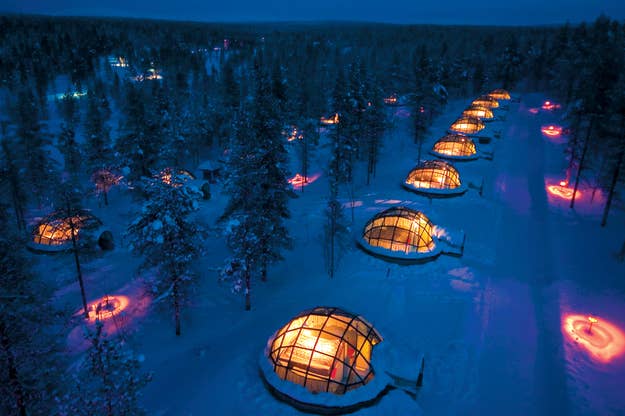
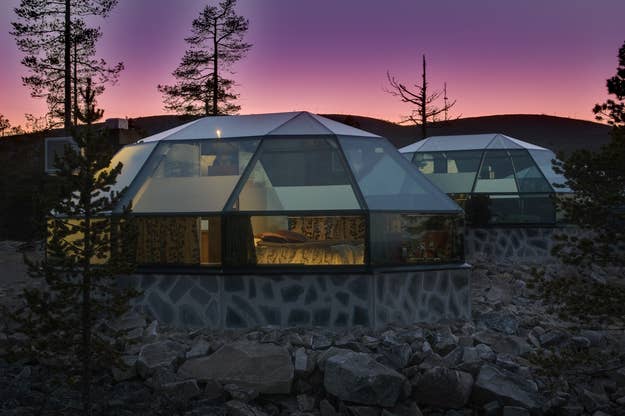
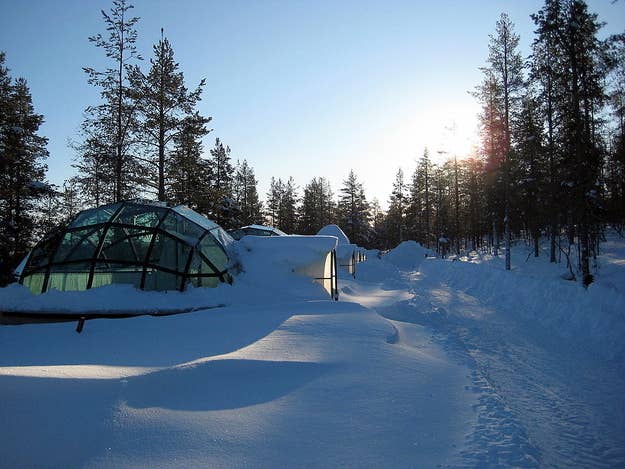
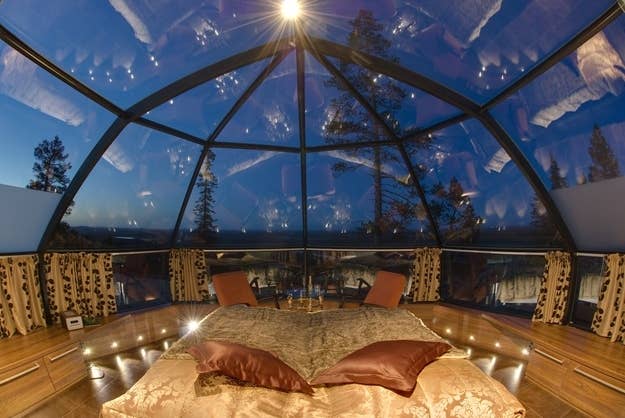
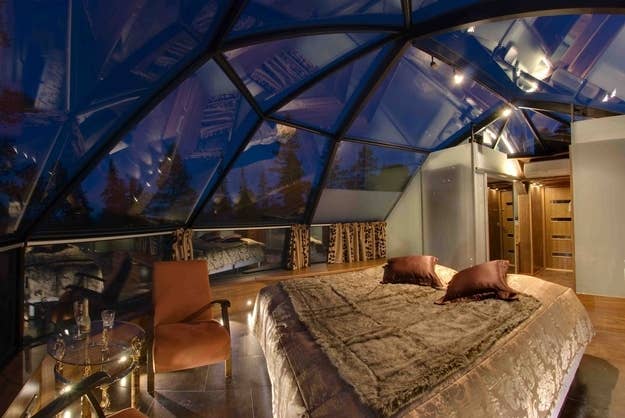
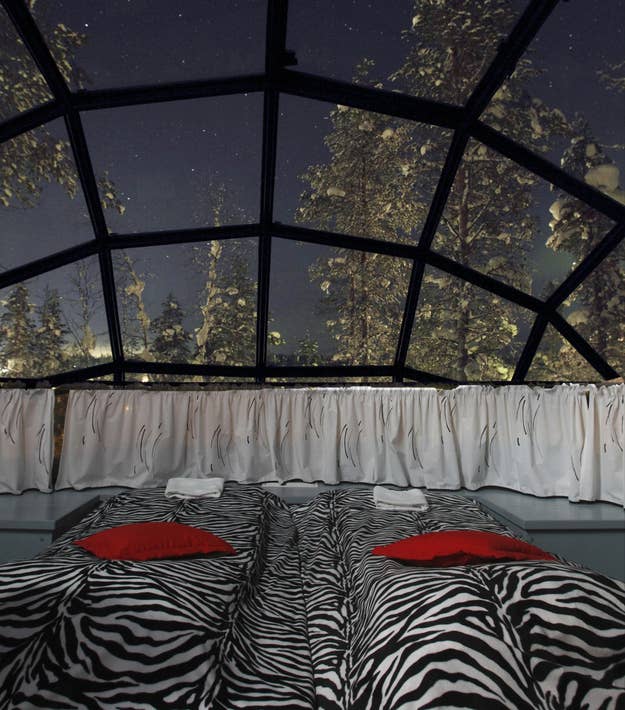
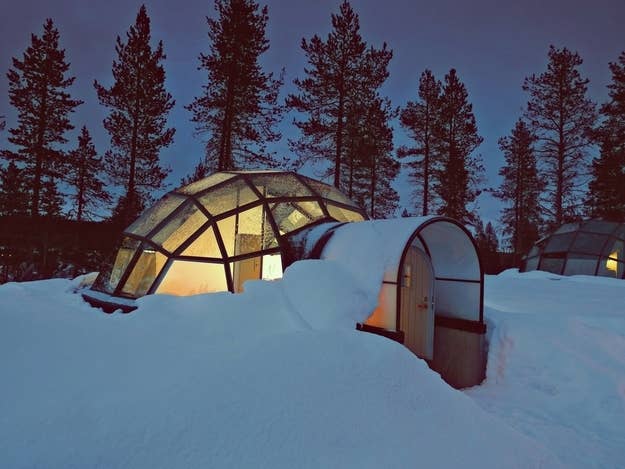
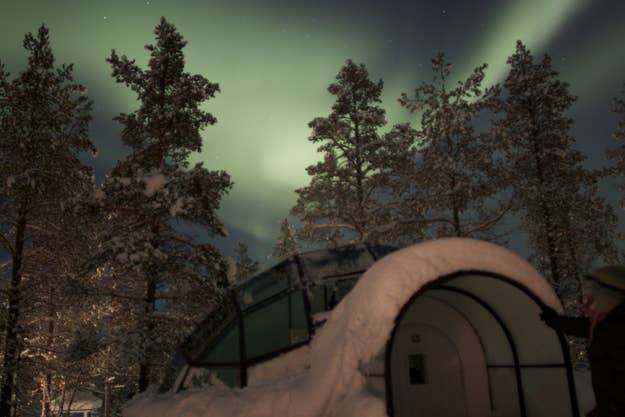
You Can Rent A Glass Igloo In Finland To Watch The Northern Lights
Imagine looking up at the Northern Lights from a cozy hotel room 250 km above the Arctic Circle.
From the resort’s website
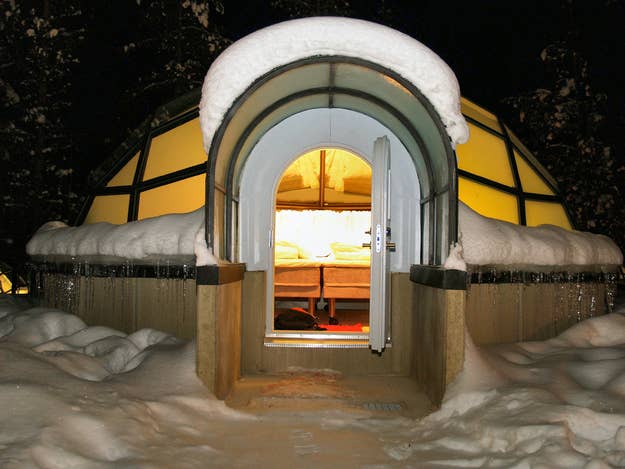
Glass igloo provides an one of a kind opportunity to admire the northern lights and millions of stars of the crystal clear sky in a comfortable room temperature. Built from a special thermal glass the temperature inside the igloo always stays a normal level. It also prevents the glass from not getting white frosted, hence keeping the view clear even when the temperature outside drops to under -30°C. Every igloo is equipped with a toilet and luxury beds.
The KonMari method goes far beyond weeding through the stuff that takes residence within the four walls of our homes. In fact, you can apply the method to just about anything.
So how does one travel like Marie Kondo? Folding methods aside, this article is meant to both provide insight on gear that keeps your belongings super-organized, but also reminds you to pack only what sparks joy, of course.
One of the moments I like best in Marie Kondo’s Netflix series is how she takes the opportunity to bless each house she’s about to transform, letting the families know how important it is to express gratitude toward their home.
It seems to me, this is also a good strategy for travelers to practice while they are packing. After all, it’s a privilege to have the opportunity to leave town.
Here are 6 items that will make Ms. Kondo proud:
A Lunchbox With Style
Carry your lunch fashionably and sustainably.
Goodbye paper bags, plastic lunch boxes and take out. Modern Picnichas revolutionized the traditional lunchbox into a snazzy fashion-forward bag that will make you want to pack your own food no matter where you are in the world. The Luncher is designed to keep your food cool during your commute and is made with premium vegan leather on the outside.
The brand founder, Ali Kaminetsky, set out to bring a more functional, eco-friendly way for bringing your lunch (or snacks) with your while never feeling that you have to sacrifice your style for sustainability.
The Everything Bag
The Modern Bag is anything you need it to be.
PHOTO COURTESY OF POND LA
I’m not sure what to even call this work of genius, which I guess is why it’s appropriately named the Modern Bag, because it can be anything. Crafted from beautiful Italian pebble leather and finished with a waterproof coating, The Modern Bag by POND LOS ANGELES is for work, baby, travel and beyond. The interior is uniquely organized to separate shoes (or diapers) with plenty of room for a laptop and tablet. The coolest part: you can convert it from a shoulder carry, to backpack, to top handle.
“In today’s fast-paced world, a woman is busier than ever, yet her handbag has not evolved to keep up with her demanding schedule. In my previous job, many women carried multiple bags to fit all their personal and work essentials, and I thought, there just had to be a better and easier way to get through the day,” says Daphne Chen, founder of POND LOS ANGELES.
The Ultimate Carry-On
Meet the carry-on that has a spot for everything.
COURTESY OF TORTUGA
The Outbreaker travel backpack from Tortuga is a dream for the organized traveler. There are just enough interior pockets in the main compartment so you don’t feel confined by the packing space. The next compartment is all about your electronics. Whether carrying your laptop or tablet (or both), there are fleece-lined sleeves for your precious cargo. The front panel is for all of the little stuff that tends to get lost without some order: your passport, pens, keys, sunglasses, etc. Even the hip belt has pockets for the stuff you want to easily access without taking off the backpack. With two different lengths, the Outbreaker is meant to cater to individual body size. For more features and even a sample packing list, check out the product page.
Portable Air Purifier
Give your hotel room an uplifting scent.
COURTESY OF THE PURE COMPANY
We’ve all been in hotel rooms with unpleasant odors. If you’re lucky, you can switch rooms. But, if you simply don’t want to deal with the hassle or the hotel is booked solid, The Pure Company’s Portable Air Purifier will bring the life back into your travels by making the air feel cleaner. The device is lightweight, quiet and even has a built in aromatherapy pad that allows you to scent the room with your favorite essential oils.
Road Trip Necessity
Carry you picnic on your back
COURTESY OF HYDRO FLASK
Hydro Flask isn’t all about the water bottles. Stumbling upon this backpack cooler helped make family road trips a cinch. In true Hydro Flask style, food and drinks stay chilled up to 48 hours. “Advanced Thermal Mapping” with “Ultralon Buoyancy Foam” puts the insulation where it needs to be. With no bulk and lots of comfort, the kids may even offer to carry this lightweight pack (depending on how many goodies are stored inside). A bonus: it stands on it’s own when you set it down!
An All-Occasion Shoe
Shoes don’t need to take up space in your luggage
COURTESY OF OLUKAI
A big dilemma when packing is often the question of how many shoes to bring along. Versatile shoes are best for the obvious reason of taking up less space and weight in your suitcase. But, to find a pair that does all the things and sparks joy? For women, OluKai’s Pehuea Leather is that shoe. The comfort certainly matches the style. Some colors are embossed suede, making for a look of total sophistication. Men, check out the Nalukai Slip for your go-to.




 Around The World Travel