The Most Expensive Cities in the World

a large body of water with a city in the background

In the past few months, a number of rankings have appeared, determining everything from the best cities in the world for expats to the best country in the world. Yet another survey has recently been released: The Economist Intelligence Unit’s 2019 Worldwide Cost of Living rankings, which proclaims Singapore, Hong Kong, and Paris the world’s most expensive cities—the first time that three places have shared top billing.

The annual report, which ranks 133 cities based on a twice-yearly survey, collects more than 400 individual prices across more than 160 products and services—including food and drink, clothing, rent, transportation, utility bills, private schools, domestic help, and recreational costs—to arrive at the overall cost of living. A glimpse at some of the intel: In Paris, a two-pound loaf of bread costs $5.66 on average; in Hong Kong, a two-piece business suit will run you an average of $1,874.65. In Singapore, which had topped the “most expensive city” list for five years in a row prior, a women’s haircut averages $96. (For comparison’s sake, in the world’s “cheapest” city, Caracas, Venezuela, that same haircut would cost $1.77.)

Though the list is dominated by Asian and European cities, New York and Los Angeles cracked the top ten after being jointly tied for 39th place a mere five years ago. The reason? Sharp currency appreciation, or a stronger U.S. dollar, which means that U.S. cities have become more expensive globally. In fact, all but two U.S. cities rose in the list’s greater rankings this year, with the highest climbers being San Francisco (25th up from 37th previously), Houston (30th from 41st), Seattle (38th from 46th), and Detroit and Cleveland (joint 67th from joint 75th).

Interestingly, the report notes that certain regions are typically more expensive for certain things: In the U.S., for instance, domestic help and utilities remain expensive. Asian cities, meanwhile, tend to be most expensive for groceries, while European cities are hit hardest by household, personal care, recreation, and entertainment costs.

A full list of the most expensive cities can be found below.

1. Singapore

1. Paris, France

1. Hong Kong

4. Zurich, Switzerland

5. Geneva, Switzerland

5. Osaka, Japan

7. Seoul, South Korea

7. Copenhagen, Denmark

7. New York, New York

10. Tel Aviv, Israel

10. Los Angeles, California

The Venetian’s $450K Package Includes a Private Jet and Diamonds

a large building: Venetian, las vegas, palazzo, resorts

The Venetian is giving “the world” to its luxury travelers with a four-night $450,000 package. The “Want The World” package pulls out all the luxury stops in some outrageous ways.

Travelers who book the package will arrive in Vegas by private jet, be picked up by a Maybach car and whisked away to the Venetian.

They’ll receive a VIP check-in experience and be taken to the hotel’s presidential suite which includes a private, personal butler on-hand at all times. The suite comes with its own workout room, cedar-wood sauna, game room and baby grand piano.

With the package, guests will be able to enjoy a crystal-encrusted magnum bottle of Moet Champagne and munch on a cake adorned in a 2.5 total carat ruby and diamond necklace and a matching 2.47 carat Burma ruby and diamond ring from Bellusso Jewelers all in their comfortable monogrammed red silk pajamas.

They may even want to pair the cake with a red velvet cake batter CrazyShake from Black Tap with a 5.5 carat diamond bracelet or with the Forbidden Love Cocktail, a 21-year-old Japanese blended Suntory Hibiki whiskey with gold flakes and served with caviar.

The package offers more pampering like an in-suite champagne pedicure and diamond massage, as well as a four-course custom dinner served in the suite and a two-hour salsa dancing lesson. And when brunch rolls around, guests will enjoy the “24K Brunch and Bubbles” by Yardbird which includes a 24k gold-dusted chicken n’ waffles and Cristal mimosas.

If all that wasn’t enough, guests will have a personal photographer to document the entire experience so they can show their friends just how glamorous their stay was with this luxury Venetian package.

Why Finland Is Consistently the Happiest Country on Earth

a boat is docked next to a body of water: Jetty on a sunny summer day neat Helsinki, Finland

If you’re feeling low, it may be time to book a trip to Finland.

The results of the seventh annual World Happpiness Report have revealed that residents of Finland are the happiest in the world — for the second year in a row. But it’s not something inherent in Finnish DNA, according to the researchers.

“It’s true that last year all Finns were happier than rest of the countries’ residents, but their immigrants were also happiest immigrants in the world,” John Helliwell, co-editor of the report and a professor of economics at the University of British Columbia, told CNN. “It’s not about Finnish DNA. It’s the way life is lived in those countries.”

And that same sentiment can be extended to countries geographically near Finland. Despite winters without much sunlight, Scandinavian residents are the happiest in the world, according to this report. The following most happy countries were Denmark, Norway, Iceland and The Netherlands.

The report, which is produced by the United Nations Sustainable Development Solutions Network, ranks 156 countries around the globe based off of “how happy their citizens perceive themselves to be.” Categories considered include wealth, life expectancy, social support, freedom to make life decisions and levels of government corruption.

While Scandinavia may have reason to celebrate, the rest of the world is not so happy. According to the report, world happiness has fallen in recent years, largely driven by a significant decrease in India. Emotions like worry, sadness and anger have increased throughout Asia and Africa in that same time.

The U.S.’s ranking in the survey slipped from 18 to 19, which researcher credit in large part to rampant “compulsive pursuit of substance abuse and addictive behaviors,” including consumption of digital media and gambling.

“We are living a moment of transition to a new age and this generates a sense of uncertainty,” Andrea Illy, Chairman of illycaffè and Member of the Board of Fondazione Ernesto Illy, which co-sponsored the study, said in a statement. “Social happiness is therefore even more relevant, in order to give a positive perspective and outlook for the present and for the future.”

Get a glimpse of unspoiled Italy and explore the region of Puglia

Slide 1 of 12: Itria Valley, known also as Trulli Valley, is most famous for its peculiar architectural structures called trulli. These stone huts are characterized by their cone-shaped roofs and whitewashed walls. They were once the homes of peasants, but today they're a symbol of the whole Puglia region. Trulli can be found all over the valley, but some of the most popular places to find them are villages of Locorotondo, Cisternino and Martina Franca. The town of Alberobello has the most famous collection of trulli. In fact, the town consists entirely of trulli houses, 1,500 to be exact, and it's a UNESCO World Heritage Site. Wander around trulli-lined streets and enjoy this unique place, unlike anything you've ever seen before. To get an authentic sense of what's it like living in these domed huts, you can even spend the night in a trulli.

Slide 3 of 12: At first glance, this magnificent city might remind you of Greece. Sitting on a hilltop, this charming town is famous for its whitewashed houses and maze-like alleys, hence the name the White City. Its shimmering architecture creates a dramatic contrast to the surrounding greenery. And just a few kilometers from the Adriatic Sea, this town features astonishing views over the water. Get lost in the city's lovely, narrow streets and feel the dolce vita vibes everywhere you turn!
Slide 4 of 12: This spectacular network of caves stretches several kilometers underground, making you feel like you're on a journey to the center of the Earth. Considered to be the most important and largest karst complex in Italy, these caves are a truly spellbinding sight. Take a guided tour and admire the impressive stalactites and stalagmites, incredible underground landscapes, and canyons hiding inside. Also, a huge underground performance happens here all year round called Hell in the Cave. The show represents the first part of Dante's Divine Comedy and it's a truly extraordinary and one-of-a-kind experience.

Slide 6 of 12: Gargano is one of Puglia's most beautiful areas, renowned for its majestic cliffs, steep hills and beautiful coastline. Known as the "spur" of boot-shaped Italy, it's famous for its diverse landscape, with golden beaches and impressive coves on one side and the lush forests of Gargano National Park and Umbra Forest on the other. Its small towns feel like corners of paradise surrounded by crystal blue sea and bursting with old-world Italian charm. Slip away from the crowds, stroll around cobbled streets and feel the relaxed energy of the local culture. Also, the area is perfect for diving and hiking enthusiasts!

Slide 7 of 12: This unusual castle is characterized by its octagonal shape with towers supporting each corner. The geometrical design of the fortress makes it unique, so it's no surprise it was declared a UNESCO World Heritage Site. The masterpiece of medieval architecture sits on a green hill, dominating the surrounding low-lying countryside. Get a guided tour to find out more about the castle's rich history and immerse yourself in the medieval atmosphere!

Slide 8 of 12: Situated on Adriatic coast, the fishing port of Monopoli is lovely town with rich history. The city's name comes from the Greek word monos polis, which means singularly unique. Monopoli definitely stands up to its title, with glorious fortified sea-front walls, a 16th-cenury castle, a lovely harbor and a charming, historic city center full of white-washed churches and narrow alleys. The town is usually not crowded with tourists, allowing you to get a sense of the real Puglia. For a glimpse of local life, go to the city's port and watch fishermen coming in with their small boats or repairing nets as they sit along the seafront promenade.
Slide 9 of 12: Who needs to fly to the Maldives when you've got golden sandy beaches and crystal clear blue water in Puglia? The beach at Pescoluse is nicknamed the Maldives of Salento and as soon as you get here you'll realize why. Stretching for miles and surrounded by sand dunes, its Caribbean-like clear water is heaven for sunbathing, swimming and watersports.

Slide 10 of 12: The capital of Puglia is a true gem, often overlooked by tourists coming to the region. It might not have the attractive baroque architecture of Lecce or the stunning beaches of Gargano, but it doesn't lack impressive nature and historic attractions. Wander around medieval streets in the Old Town, known as Bari Vecchia, where you'll find great places to refresh yourself with a cup of Italian espresso and lots of historic monuments. One of the most famous landmarks in town is the Basilica di San Nicola where the remains of St Nicholas are being kept. To feel like a true local, get up early in the morning and visit the town's old port, known as Porto Vecchio, and buy a fresh catch of the day.

Slide 11 of 12: Translating to Cave of Poetry, this natural wonder is one of the most beautiful natural pools in the world. The 30-meter-wide sinkhole is surrounded by a stark, rocky landscape and the blue-green water of the Adriatic. An unforgettable experience is guaranteed here, but for a peaceful swim arrive early in the morning as it gets really crowded around noon. This amazing natural formation is also a major draw for adrenaline junkies who enjoy leaping from the high cliffs into the clear waters. It's also a hub for scuba divers from all around the globe who swim from the sinkhole through an underground cave to get back out to the sea.

Slide 12 of 12: This seaside town is the perfect place to get a glimpse of unspoiled Italy. When translated, the city's name means beautiful city, and it doesn't disappoint! Sitting on the Ionian Sea, the town features a beautiful beach and historic city center. Surrounded by water and ancient walls, this city will win your heart with its laid-back, easy-going atmosphere, fresh seafood and narrow paved streets. The town was once part of ancient Greece, so it's a must for history buffs. With its picturesque Old Town that can only be reached by a 16th century bridge, maze of alleys, majestic fortress and towers, Gallipoli will make you feel as if you've stepped back in time. Also, the town is famous for its fish market and excellent seafood in restaurants, delivered fresh by local fishermen every morning. Don't forget to try sea urchins here, because they're a specialty of Gallipoli.

A Look Inside Under, Norway’s Underwater Restaurant

a close up of a rock next to a body of water


When we first reported about Under, Europe’s first underwater restaurant, in 2017, we were wowed by the renderings: They showcased a periscope-like concrete structure submerged along Norway’s southern coast with diners sitting in front of a 36-foot-wide acrylic window with direct access to the sea life outside. But at that point, that was all they were—renderings. There was no menu, no news as to when Under would open, or even if it would come to fruition. But now, interested travelers can finally make reservations, and the underwater restaurant will officially start serving diners in April after a soft launch this month, Reuters reports.

The space, designed by Oslo- and New York-based architecture firm Snøhetta, takes diners on a physical journey underwater. First, you walk from the coast along a 40-foot bridge out the restaurant’s wood-paneled entrance. Then, you make a pit stop in the mezzanine bar for a glass of champagne before finally heading down a grand staircase to be seated 16 feet under sea level in the concrete-walled dining room. “Part of it is allowing people to have a deeper relationship with the ocean,” Snøhetta’s co-founder Craig Dykers told the Wall Street Journal. “Humans are mostly made up of water. We’re tremendously connected. Being in the restaurant will take us back to our ancient history.”

But the concrete tube isn’t just meant for the diners’ enjoyment: in an effort to attract sea creatures like mussels to settle into its nooks and crannies, the architects left the exterior in its raw form. It offers an opportunity to study the jellyfish, cod, and mackerel that make these Norwegian coastal waters their home. According to the Wall Street Journal, marine biologists will be studying fishes’ reaction to light from the ocean-floor-to-ceiling windows in the dining room when the restaurant is not serving dinner. But the soon-to-form colonies on the restaurant’s exterior serve another purpose: they purify the water, making it more appealing for other fish to settle in and easier for diners to see out. Don’t worry—they’re not only relying on mollusks here to keep the water clear. The restaurant sends divers into the sea twice a week to clean that enormous panoramic window so you can actually see through it, it told WSJ.

If you’re intrigued by the architecture alone, be ready to fork over a bit of dough for your meal: the 18-course, seafood-heavy meal with wine pairings at Under will cost 3,700 krone (about $430), or 2,250 krone ($260) without wine. A sample menu hasn’t been released, but you’ll be in the capable hands of Nicolai Ellitsgaard, who previously worked at Traveler-fave Henne Kirkeby Kro in Denmark. The 40-seat restaurant has also already filled up all of its online reservations through mid-August, so be sure to book a table first and then start setting flight trackers to get a great deal. Since the restaurant is off the coast of Båly, about a five-hour drive south of Oslo, we’ve just got one thing to say: summer road trip, anyone?


Under, Europe’s First Underwater Restaurant, In Photos

Get paid to travel this summer, but there’s one unique catch

One travel company is offering six people the adventure of a lifetime; to travel across a continent on an all-expenses-paid trip worth £8000 (€9316) this summer. The days will be spent having unique new experiences and capturing content. There’s only one catch; Instagram’s audience gets to dictate their next move.

Smiling young lady using cell phone against urban bridge at dusk
The experiment will see Instagram users casting votes on what the travellers should do next. Image by d3sign

Launched by travel company Busabout, The Great Travel Experiment will see successful candidates capturing videos and images while travelling. Every day holiday decisions will be in the hands of other Instagram users, from choices like whether to skydive or white water raft in Switzerland or whether or not to eat a deep-fried insect in Bangkok. Through the use of interactive polls on Instagram Stories, audiences will have their say in each and every moment of the winners’ global adventures.

Succesful applicants will travel through the USA, Europe or South East Asia. Image by Thibault Vr / EyeEm

The six winners will travel in pairs through either the United States, East Asia or Europe. There are two positions available in each destination, including an Instagram storyteller (someone who is confident in front of a lens and passionate about sharing tales from the road), and a videographer who has a flair for filming and editing engaging content. All successful candidates, no matter what their chosen position, will be required to get involved in the challenges set by Instagram’s audience. “We’re looking for adventure-loving-up-for-anything individuals. With the Instagram audience dictating their every move, the ideal candidate will be a fearless, charismatic storyteller that can show how being flexible and spontaneous creates better travel experiences,” Busabout managing director, Duncan Robertson told Lonely Planet Travel News.

The southeast Asia and USA itineraries both last for six weeks over the summer, while the 11-week European itinerary hits the hotspots across the continent, culminating with beer and pretzels at Oktoberfest in Munich. All six content creators will be paid £200 (€232) each week on top of the trip.

The Great Travel Experiment is open now for submissions. Applicants can select their chosen position and preferred destination and are asked to record a 60-second video showcasing the best bits of their own hometown. Candidates can apply as a pair or singly. Entries are open until 8 April, before a shortlist is selected for a public vote.

4 Amazing Pueblos Blancos of Colombia

Source : Connectedhorizons.co.uk

In recent years, Colombia has been a very common destination on the backpackers radar. The country’s relatively cheap prices and great variety of landscapes – from wild jungle to pristine beaches – have always been the perfect match for seeing the best of Colombia even for those on a tight budget. Nevertheless, those travelers who opt to stir away a bit from the most touristy destination and pay a visit to the less-known Pueblos Blancos will be greatly rewarded.

The Pueblos Blancos is a category of small villages (usually isolated) that the Colombian government has listed as being crucial to the country’s cultural heritage. That said, these villages also happen to be the most gorgeous and unique in their own way!

Currently, there are 17 villages on the list scattered all over the country and after visiting some of them here’s the list of our 4 Top Favorites!

1. Santa Cruz de Mompox (Bolivar)

Among the ones we visited, this was undoubtedly the pueblo that took us more by surprise. At the time, we were traveling to Mompox from Rodadero (a small beach department of Santa Marta) and the journey that was supposed to last 6hrs ended up being a hellish 10hrs night ride. Thankfully, even at night the village seemed perfectly safe and – it may sound weird – kind of welcoming. Anyway, the next day we we spent it visiting town and we literally fell in love with it.

https://i0.wp.com/connectedhorizons.co.uk/wp-content/uploads/2018/06/MG_9348.jpg?fit=1200%2C800&ssl=1

https://i0.wp.com/connectedhorizons.co.uk/wp-content/uploads/2018/06/MG_9330.jpg?fit=1200%2C800&ssl=1

https://i1.wp.com/connectedhorizons.co.uk/wp-content/uploads/2018/06/MG_9340.jpg?fit=1200%2C800&ssl=1

Gorgeous architecture, lots of nature, a river nearby and plenty of very friendly locals made our stay better than we could have ever expected. Whether you’re planning for a short half-day or more days stop, there’s no way you won’t enjoy spending sometime around here. And did we mention that during our stay we met just ONE tourist ?

2. Barichara (Santander)

Not so far from the adventure town of San Gil, this village is a popular stopover for all those planning to see/hike the breathtaking Chicamocha Canyon. Even though Barichara is a well-known destination along the tourist route, the presence of tourism thankfully doesn’t spoil the undeniable beauty of the place.

https://i0.wp.com/connectedhorizons.co.uk/wp-content/uploads/2018/06/MG_9867.jpg?fit=1200%2C800&ssl=1


https://i1.wp.com/connectedhorizons.co.uk/wp-content/uploads/2018/06/MG_9690-1.jpg?fit=1200%2C800&ssl=1

https://i0.wp.com/connectedhorizons.co.uk/wp-content/uploads/2018/06/MG_9658.jpg?fit=1200%2C800&ssl=1

The colonial architecture, a beautiful cemetery and overall a friendly atmosphere are just some of the town’s highlights. But should that not be enough, the surroundings of Barichara offer plenty of outdoor activities from hiking to paragliding and even walking on a part of the ancient Inca Road.

3. Jardin (Antioquia)

If you’re looking for something truly Colombian then don’t hesitate to visit Jardin. This little village somewhere halfway-through Medellin and the coffee triangle, is the one place in Colombia where we actually managed to see some real colombian lifestyle. On top of that, the village boasts some beautiful colorful houses, plenty of hiking trails in the surroundings coffee plantations and the only national reserve for the rare bird species Gallito de Roca.

https://i0.wp.com/connectedhorizons.co.uk/wp-content/uploads/2018/07/MG_9904.jpg?fit=1200%2C800&ssl=1

https://i0.wp.com/connectedhorizons.co.uk/wp-content/uploads/2018/07/MG_9791.jpg?fit=1200%2C800&ssl=1

https://i0.wp.com/connectedhorizons.co.uk/wp-content/uploads/2018/07/MG_9984.jpg?fit=1200%2C800&ssl=1

If you can make sure to be there during week-days to make the most of it as on weekends loads of people from surrounding towns come over to take a break from their jobs. TIP: If you wanna visit the national reserve for the Gallito de Roca, make sure to head there – just on the village outskirts – as early as 5am in the morning to get the best results.

4. Villa de Leyva (Boyaca)

After sometime traveling throughout Colombia, it was in Villa de Leyva that we experienced the first cold mountain weather, long forgotten from our days in Europe. During our time in the town, finally having a chance to walk and hike around with sweaters was a big relief from the overwhelming heat of Tayrona. Villa de Leyva – or as many locals refer to it VDL – is the perfect place to relax, sip over some tasty artisanal beer and take a break from the backpacking routine.

https://i0.wp.com/connectedhorizons.co.uk/wp-content/uploads/2018/06/MG_9956.jpg?fit=1200%2C800&ssl=1

https://i1.wp.com/connectedhorizons.co.uk/wp-content/uploads/2018/06/MG_9948.jpg?fit=1200%2C800&ssl=1

https://i2.wp.com/connectedhorizons.co.uk/wp-content/uploads/2018/06/MG_9971.jpg?fit=1200%2C800&ssl=1

That said, the old part of the town feature some great pre-colonial architecture (similar to an ancient borgo) and a huge plaza once used as a marketplace. Nowadays, even though the town is pretty touristy, finding cheap accommodation and places to eat is pretty easy, making a great stop also for budget-travelers.

Whether you decide to visit some of these towns or any other in the list of the Pueblos, we’re 100% sure you won’t regret it. There has not been a town in the list that we visited that didn’t let us down: from the North to the deep South of Colombia every new town was a new and beautiful discovery.

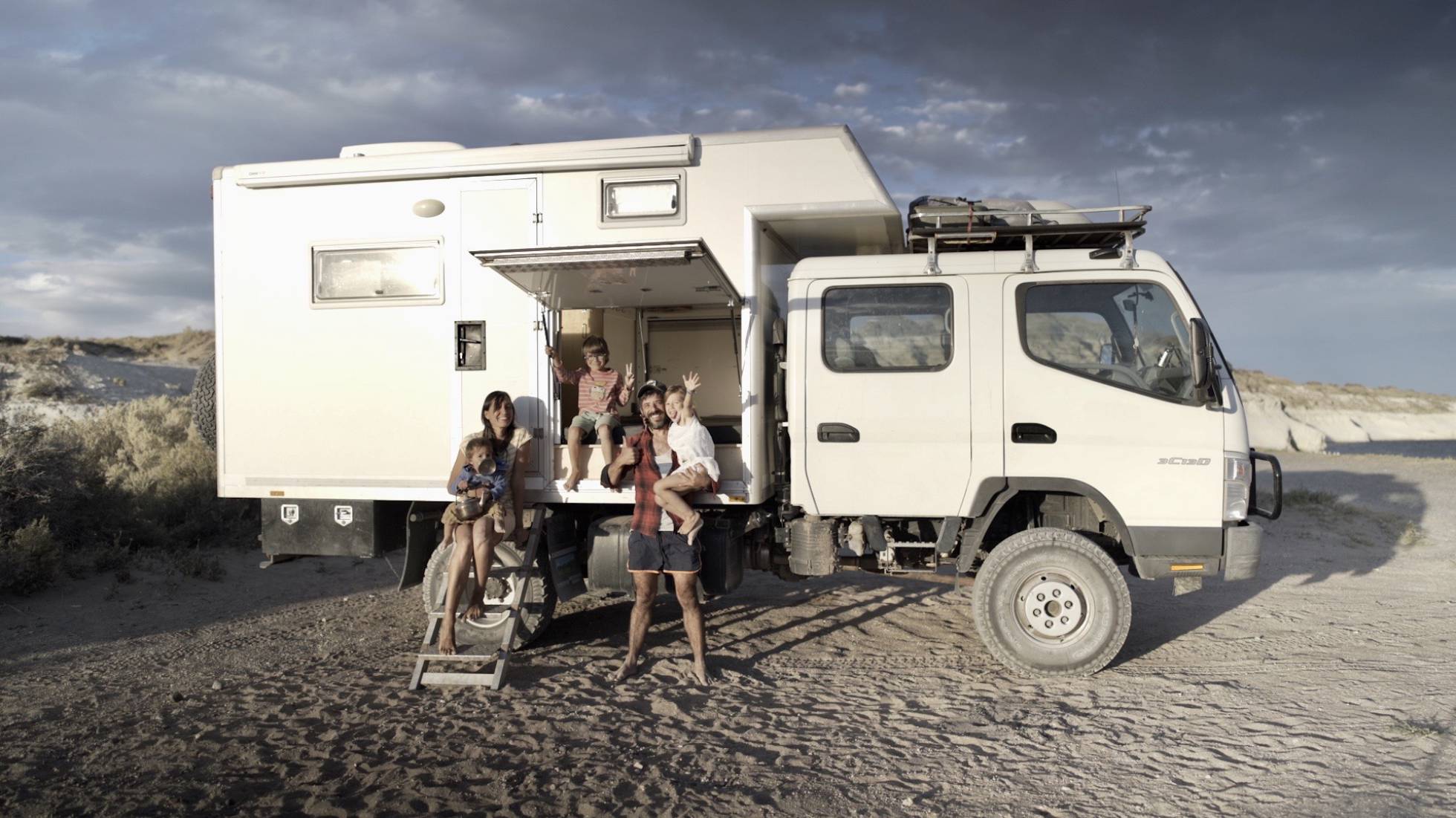
Meet the Spanish family traveling the world in a truck

Marta Bruyel, Daniel Gimeno and their three young children have left behind their home in Madrid to begin a six-year journey across America, Asia and Africa

Source : elpais.com

The Spanish family planning to travel the world in a truck. M. B.

After many trips together and a lot of thought, 38-year-old Martya Bruyel and 42-year-old Daniel Gimeno decided to leave everything behind and travel the world in a truck with their three small children, who are aged one, three and six. They have left behind school, their apartment and the locksmith company that supported them, but also Madrid’s traffic, pollution and noise.

In the first part of their trip, which began in December, the family will spend two years traveling across the Americas, all the way from Patagonia to Alaska. After that, they plan to travel throughout Asia for two years and then around Africa for another two. However, these exciting adventures do have their complications. The family has had to learn how to live together in an eight-square-meter truck and work out what to do when the children become agitated, explains Bruyel on a video call from a parking lot south of Chile, while the children wave in the background. “We try to give the children a routine within which every day is different,” she says.

After waking up and eating breakfast, Tao and Dhara, the eldest children, are home schooled by Bruyel, who teaches them to read, add and subtract, while Gimeno looks after the youngest.

Bruyel is currently following the textbooks that her children began in September in Madrid. Starting next year, Tao will be enrolled in the Education Ministry’s online distance education program (CIDEAD) and will have to study the regulated content so he can be examined online. But his parents value more the kind of education that isn’t found in textbooks, such as communication skills and the lessons learned while traveling. “I obviously passed natural science,” says Tao.

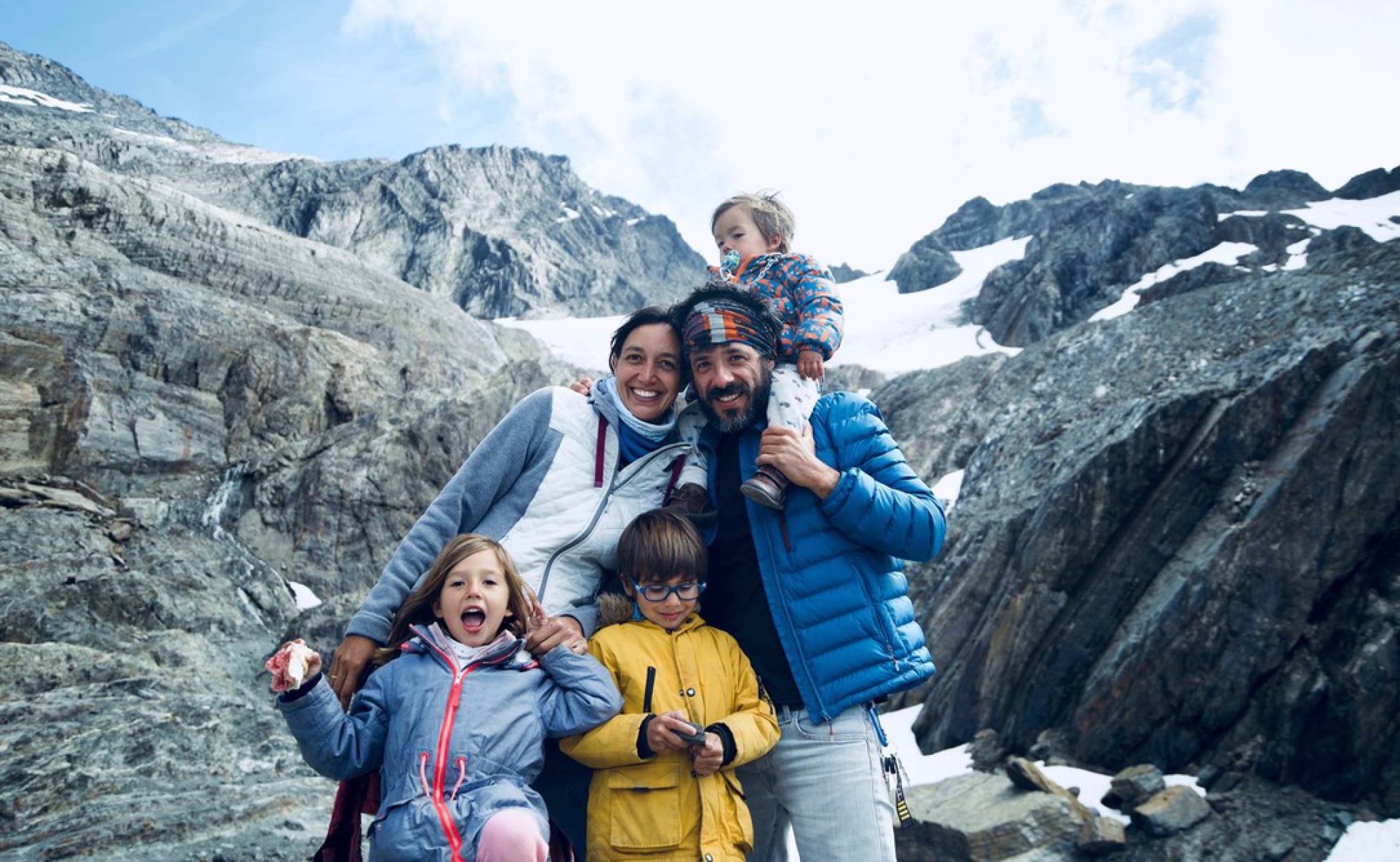
The family in the Martial Mountains in Argentina in January. M. B.

Although they have an itinerary, Bruyel understands that it’s not easy to plan such a long and ambitious trip. “We want to learn how people live in other countries,” she says, explaining that they have proposed shooting a documentary series as a way to finance their adventures, which are currently being paid for by their family savings.

Since the family’s truck arrived in Uruguay at the end of 2018, they have been driving south to reach the end of the continent. The family spent Christmas in the Sierra de la Ventana, a village in Argentina, where the children painted images on the truck to help Santa Claus in case he got lost, and Three King’s Day in the province of Río Negro, in the Patagonia region of Argentinian. Bruyel’s birthday was spent in Ushuaia, the southernmost city in the world. After Christmas they drove north to the Perito Moreno Glacier in Argentina and into Patagonia on the Chilean side.

Before starting their international adventure, “Los Mundo” (The Worlds), as the family is called on social media, went on a few trips to practice traveling with the children. In 2017, they visited Thailand and Vietnam with the two children they had at the time, and last year they traveled around Morocco in a van that they also slept in. It was in Vietnam where the couple decided to leave everything behind and travel the world. “We saw our children playing with Vietnamese children and we recognized their ability to communicate through the game they had created,” says Bruyel.

The internet, although not always available, has allowed the family to remain in contact with relatives and friends back in Spain. Tao and Dhara frequently write to their classmates and Bruyel and Gimeno periodically send videos back to their parents, who never understood their decision to travel. “My parents fought almost until the last day,” says Bruyel. The next time the grandparents will see their grandchildren will be in the summer. And it won’t be in Spain, it’ll be in Peru.

A Reader’s Guide to Travelers’ Rights When Crossing the Border

While law enforcement has greater power at the border than elsewhere inside the country, it may not go as far as you think – especially if you’re a U.S. citizen. But there’s still a lot gray area involved in what happens at ports of entry, so we’ve laid out what we know about what CBP officers can do there, what rights people have when they’re crossing the border and what is still nebulous.

Hundreds of travelers wait in long lines at the Otay Mesa Port of Entry after Customs and Border Patrol officials shut down crossing lines in San Ysidro. / Photo by Adriana Heldiz

Government officials have different authority at ports of entry than they do elsewhere.

That’s because people trying to enter into the United States are effectively presenting themselves to the government for search and analysis when they come through ports of entry, which are designated areas for entering the country like seaports, airports and land crossings.

As a result, interacting with U.S. Customs and Border Protection officers at one of these locations is not like interacting with a police officer after getting pulled over. The difference owes in part to the legal authority given to border officials that allows them to stop, detain and search any person or item at the border, even without probable cause.

The unique legal authority on the border is newly relevant after the discovery by NBC San Diego that border officials kept a database of advocates, attorneys and journalists who worked with or covered the fall’s migrant caravan. Officials kept dossiers of some individuals in the database, pulled others aside for additional questioning during crossing attempts and placed security alerts on the others.

It is not the first case to draw scrutiny on the limits of this special authority. The American Civil Liberties Union is challenging how that authority extends to electronic devices and whether people can take photos and record in parts of ports of entry that are in public view, for instance.

“The fact is that someone trying to enter the United States has fewer rights than someone who has actually entered,” said Barbara Hines, an adjunct law professor at the University of Texas at Austin.

Following NBC San Diego’s scoop, the Department of Homeland Security’s Office of the Inspector General announced it was investigating whether border officials had nonetheless infringed on those limited rights. The office said it opened an investigation to “ensure that all appropriate policies and practices were followed.”

But Josiah Heyman, director of the Center for Interamerican and Border Studies at the University of Texas El Paso, said it’s time for the public to debate how unrestrained the government’s authority should be at ports of entry. “None of that has been really fully resolved and I think it’s important for us to have a serious discussion just exactly how helpless are you before the power of the state at borders,” he said.

While law enforcement has greater power at the border than in the interior, it may not go as far as you think – especially if you’re a U.S. citizen. There’s still a lot of gray area involved in what happens at ports of entry, so we’ve laid out what we know about what CBP officers can and can’t do there, what rights people have when they’re crossing the border and what is still nebulous.

How CBP’s Authority at the Border Works

Border officials have broad powers in the 100-mile border zone.

CBP officers can inspect any person trying to enter the country and their belongings or vehicle. They can question individuals about their citizenship or immigration status and ask for documents that prove they can enter the United States. At ports of entry, officers don’t need a warrant or reasonable suspicion to do this.

A person’s first encounter at a port of entry is in primary inspection. It’s where a person either walks or drives up to an officer, and shows their documentation, like a passport, SENTRI card, green card or visa.

A lot of things happen during and before this encounter, Heyman said.

When people present themselves at the border, they are making themselves available to be searched, making it a suspicion-less search, Heyman said.

But large, sophisticated ports of entry, like the one in San Ysidro, gather information before you get to an officer. Technology can take pictures of people’s faces or read license plates and share the information with the inspectors. Sometimes travelers scan their documents before reaching the officer, giving the officer time to go through information about the person before they ask any questions.

CBP’s databases flag criminal history, warrants and other issues. Those flags can lead to secondary questioning.

To ensure flagging in these databases is accurate and not abused, CBP said it follows “standard operating procedures when inputting information into law enforcement databases which are reviewed by supervisors to ensure full compliance with all policies and procedures.” There have been instances of abuse in the past, though, like this case where an officer placed a bogus security alert on an innocent man.

Information in the databases isn’t the only thing that can lead to secondary. Inspectors also look at body language and gauge whether people’s explanations for why they’re crossing are suspicious.

“The officer looks at this person as a social caricature,” Heyman told me in August. “If you fit into a suspect story, they’ll wonder about you. That’s one part. At another level, they’ll look at bodily behavior. Do they look uptight? Are they clenching their teeth?”

Officers also randomly pull a certain percentage of travelers into secondary.

CBP officers have to maintain the flows of people crossing at ports of entry while trying to find those smuggling people or drugs or who may pose a threat to national security. Their authority comes with a lot of discretion.

Officers cannot, however, determine someone should be searched or sent to secondary inspection based on their religion, race, national origin, gender, ethnicity or political beliefs.

CBP has the same wide-ranging authority to conduct searches without a warrant in secondary as it does in primary inspection, an agency spokesperson told Voice of San Diego. That authority only ends when CBP decides to undertake a more invasive procedure, such as a body cavity search. For those kinds of actions, the CBP official needs to suspect a person is engaged in illicit activity.

Former Department of Homeland Security officials and other experts told the Union-Tribune that intelligence-gathering from travelers is also not out of the agency’s purview if it’s for national security purposes.

“I don’t think the gathering of the information is surprising or objectionable,” said Alan Bersin, who served as CBP commissioner under President Barack Obama, told the U-T.

Border-Crossers’ Rights

The rights of travelers crossing the border vary by situation. They also differ if someone is a U.S. citizen versus a lawful permanent resident or a visa holder.

A U.S. citizen who has presented officials with a valid passport must be let into the country. They don’t have to answer officers’ questions, though refusing to answer questions, particularly about the nature and purpose of your travel, may result in further inspection. U.S. citizens can’t stop CBP officers from searching their vehicle or luggage at ports of entry.

“For U.S. citizens, once citizenship has been established, CBP has to admit you into the United States,” said Mitra Ebadolahi, a senior staff attorney for the ACLU’s Border Rights Project. “If that’s not happening that’s an abuse of authority. We’re seeing increased reports of that, which is troubling.”

Lawful permanent residents or non-citizen visa holders are in a stickier situation. Non-citizen visa holders in particular can be denied entry for refusing to answer officers’ questions.

“People always have the right to remain silent, but obviously a failure to answer questions at least sufficiently to establish citizenship can lead to denial to entry,” Ebadolahi said.

For questions that seek information beyond citizenship, the purpose of travel and what someone is bringing in the country, U.S. citizens and lawful permanent residents can push back a little harder.

One American photographer in the database unearthed by NBC 7, for example, told the outletshe was asked about what she observed at migrant shelters and whether she rented or owned her home.

U.S. citizens do not have to answer questions about religious or political beliefs, associations and practices, which are protected under the First Amendment. Non-citizen visa holders and lawful permanent residents don’t have to answer questions about their religious beliefs and political opinions, but that may lead to additional questioning or not being allowed into the country, Ebadolahi said.

The ACLU recommends requesting to speak to a supervisor if someone asks those sorts of questions. Hines said she doesn’t believe people should answer questions like that “because they are not related to your right to enter the United States nor any criminal activity.”

CBP told ProPublica travelers are not entitled to have an attorney present during primary or secondary inspection. Ebadolahi said she recommends travelers have a telephone number of an attorney on them anyway, and that they should ask to contact the attorney if they’ve been detained for an unusually long period.

Travelers who are told they’re under arrest, or for whom it’s become clear are suspected of committing a crime, should ask to speak with a lawyer before answering any further questions, the ACLU recommends.

People routinely pulled into secondary inspection can contact the Department of Homeland Security’s Travel Redress Inquiry Program to see if there is an erroneous information in DHS’s system that can be corrected. Incorrect information in the databases can also be removed through an expungement if a lawsuit is filed, Ebadolahi said.

There’s Still a Lot That’s Unclear

Several aspects of travelers’ rights and CBP’s authority are still nebulous.

One of the biggest gray areas is how CBP’s authority extends to travelers’ electronic devices. Searches of devices surged in 2017.

The ACLU sued DHS on behalf of 11 travelers subjected to warrantless searches of their devices. The lawsuit is making its way through the courts. The litigation seeks to establish that the government must have a warrant before conducting such searches.

In 2018, the agency released a new policy requiring a heightened level of suspicion for advanced or forensic searches, which involve external equipment that connect to an electronic device to scan, analyze or download its data. It also states that officers cannot search information located remotely, like on a cloud instead of on the device itself. But the policy reasserts CBP’s authority to conduct other searches of electronic devices without any specific suspicion.

If CBP asks travelers for a password to their electronic device, once again, the outcome depends on the situation. U.S. citizens cannot be denied entry to the United States for refusing to provide passwords or unlock devices, but refusal to do so might lead to delay, questioning or officers seizing a device for further inspection. Lawful permanent residents and non-citizen visa holders may be denied entry for refusing to cooperate.

Another gray area still working its way through the courts is the right to take photos or record parts of the port of entry that are in public view. Travelers are never allowed to record in private spaces, like holding cells while being questioned, but the lawsuit addresses whether they can take photos or record while in public areas, like while waiting in line to go through primary inspection.

International Roaming With Prepaid SIM Cards: Now Much Better Deals For Travelers

Shutterstock

In the past few years if you traveled overseas and used your phone, communications costs could be very high. U.S. carriers were not competitive in pricing and were routinely charging a minimum of $1.25 per minute or more for voice calls, and up to twenty dollars per megabyte for data access. While you could subscribe to certain carriers and special plans with somewhat reduced costs, staying in contact while outside the country was still expensive.

Smart travelers purchased an international SIM card (or phone) that was good for roaming in most countries. If you were just going to one country, then the alternative was to buy a SIM that would only work locally, but local SIMS posed problems because they also had local phone numbers. Anyone trying to contact your phone from the U.S. would have to make an expensive overseas toll call. In order to deal with the call forwarding issue, most travelers elected to use International SIM cards because they were normally provisioned with both a U.S. and UK phone number. This meant that your local cellular U.S. number could be call-transferred to the SIM for seamless communications, usually at rates of about $.19-.25 per minute in foreign markets.

International SIM cards from the largest and most popular provider, EKIT (Telestial) were a good deal until recently. I had often written about this company in the context of how to reduce communications costs in foreign countries. Their prepaid SIM packages could be found at every airport and they made life simple and affordable for foreign travelers coming to North America, and for U.S. residents going to virtually any country.

Their rates were typical: from $.19/minute for Europe, and higher for different areas in Asia and the Middle East. They also charged a one-time connect fee of up to $.49, and their data rates were high as compared to other less expensive plans. While there had always been a lot of competition in this market, EKIT has been the acknowledged leader. One of the ways they were able to reduce calling rates was to use “call-back” schemes to take advantage of the difference in prices for inbound versus outbound calls to European GSM carriers. Customers would make a call and immediately hang up and wait for the system to call them back. While these schemes worked, they were often a hassle.

In 2013, things began to change. I wrote about T-Mobile which had just introduced a revolutionary plan for its subscribers that essentially made international roaming an equivalent to making calls and using data at home.

The plan provided for no data or text message charges worldwide, and a flat $.20 per minute for voice calls to and from virtually anywhere. Then it allowed its U.S. customers to roam in Canada and Mexico just like at home, with no extra charges. The plan continues to be highly competitive which brought a lot of new customers to T-Mobile, but it also initiated a war between carriers for international traffic, not only for American subscribers, but also for residents of the EU.

Last year, AT&T and Verizon introduced their daily travel passes, which have essentially the same pricing: ten dollars per day for unlimited voice calls and 500 MBytes of high speed data. If you exceed that data usage, then the speeds will be throttled back to 3G or 2G, but still the data is free. There are slight differences between these two carriers in their offerings. AT&T allows calls to and from any of their 200+ countries included in the plan, whereas Verizon only allows in-country calls and calls back to the U.S. Depending on your use patterns, these are both good deals.

T-Mobile is still, in my view, the most competitive if you make less than fifty minutes of voice calls a day. Above that threshold, you are better off with one of the daily passport plans on AT&T and Verizon.

The European Union has now caught up with the U.S. in protecting the consumer from high roaming charges. This had always been a major point of contention for residents of the 28 members of the EU that were hit with very high roaming rates when outside of their home country. By June 2017, they had had enough; the EU adopted the policy that T-Mobile started in 2013. They mandated that roaming tariffs would be on the same terms as they were in the home country. They called it “Roam like at home.
Like the U.S. carriers, there were conditions attached to this new EU roaming plan:

  • The plan was for occasional travel outside your home country and not for permanent roaming. This means a “fair use” policy of roaming;
  • Data limits are imposed, and the cost depends on whether you are on a prepay or post-pay plan;
  • Carriers are allowed to monitor your usage over a three to six-month period to insure compliance with their terms and conditions of use;
  • Voice, data, and text allotments may be limited to certain countries, so you should check your plan to make sure it includes the countries you want to visit or call;
  • Roaming by ship or plane may not be included in the plans and depends on whether there is a terrestrial cell site that can be accessed, or connectivity is via satellite. Some cruise lines and aircraft may be included in these plans and others are excluded.

I just interviewed a senior customer service supervisor at EKIT at their headquarters in Jersey, Channel Islands about how the roaming landscape has drastically changed as the result of the new EU policy this summer. In my view, EKIT and similar offerings are no longer such a good deal, and your choice depends on individual call and use patterns. I was told their usage model has also significantly changed; they are seeing a transition to data usage that far exceeds voice calling. The average voice call is now about one minute.

EKIT told me that they have dropped their initial call connection charge for the first minute, but have almost doubled the per-minute rate to $.35. Their data charges are about $.06/MByte, which is high in comparison to $10/day for essentially unlimited text and data on AT&T and Verizon, or totally free on T-Mobile.  EKIT is also charging a $2 per month fee for a U.S. number for roaming in North America, and their data plans expire in thirty days from purchase.

If you arrive at a EU airport you will also find local or regional carriers offering SIM packages for tourists. I was recently in Paris at Charles de Gaulle airport and spoke with Orange about their roaming SIM rates.

Again, your use patterns or expected communications needs will dictate which plan and carrier is the best.

Mobile Hotspots

Another option is to use international hotspots, which are available at many airports and on-line. These are portable devices that talk to cellular carriers and link to your phone or computer via WiFi. They can connect via cellular carriers or satellite providers such as Inmarsat or Iridium. Their charges are normally about ten dollars a day, or forty dollars a week for 500 MBytes of data, for global roaming.

Knowroaming is the best option available for international travelers where they can select from different plans for data and call.

Skyroam is perhaps the best known and most available service. Hotspots will only provide data access to the internet, but you can always make voice calls via VoIP carriers such as Skype, Vonage, Blackberry, WhatsApp, Facetime, Signal, and other social media sites. These devices usually cost about $150.

You can purchase the equivalent device from Verizon or AT&T (called a Jetpack) and pay the ten-dollar-a-day fee for essentially unlimited data. This, in my view, is a better deal.

Options to consider

There are many available options when choosing the right international plan and SIM card for foreign travel and communications. Here are the questions to consider that can guide your decision as to which carrier, plan, duration, cost, and type of service that will best suit your needs.

  • Do you need high speed Internet access on a 4G network, or will 3G or 2G suffice;
  • Will you be making international calls from the foreign country to the U.S. and to other parts of the world;
  • Will you be texting (SMS) to and from overseas;
  • Will you make a few, or a significant number of calls within a foreign country to other locations from that same country, to different countries, or back to the U.S.;
  • Will your SIM work in any unlocked smartphone;
  • Are you going to purchase a phone overseas? If so, is it unlocked, or does it require the use of an EU SIM for a few minutes before it will work with other SIM cards;
  • What size SIM does your phone require: standard, micro, or Nano? Nano (same size as iPhone) is the standard for most phones now;
  • Is tethering allowed? This means that you can create a personal hotspot. Some carriers will not allow tethering to a smartphone with their daily plans;
  • Is the phone number that is associated with the SIM card U.S. or foreign;
  • How long is the SIM card valid after first use, and after each top-up;
  • How many voice minutes, text messages, and MBytes are provided under each plan;
  • How do you prepay for service, and can cards be topped-up on the Internet or through your smatphone;
  • Is there a connection charge for each call;
  • Does the SIM have one or two assigned numbers;
  • Do you have an unlocked phone, and will it accept one or two SIM cards;
  • If you choose to purchase a data SIM, will it work in phones, tablets, computers, or hotspot devices;
  • Is there a recurring monthly charge to keep the SIM active;
  • What countries are included in the coverage plan;
  • What are your projected usage patterns for voice, data, text, and Internet;
  • How do you place most of your calls: by voice or data-based services;
  • Do you need a local phone number in foreign destinations? Some SIM cards can be provisioned for multiple local phone numbers.
Source : Forbes
Design a site like this with WordPress.com
Get started